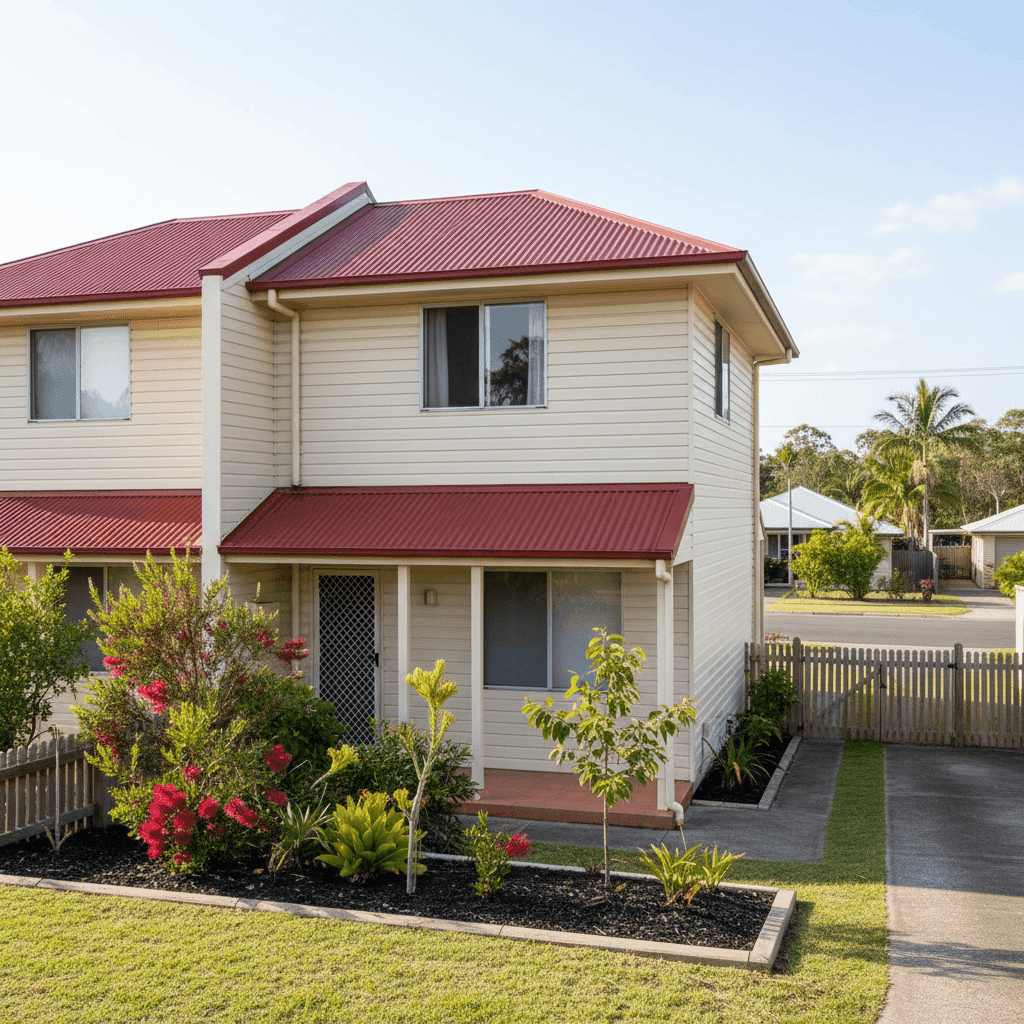
Macleay Island is a peaceful island community nestled in Moreton Bay, southeast Queensland — and like many island and coastal suburbs, it comes with its own unique set of considerations when it comes to home insurance. This article breaks down a real building insurance quote for a three-bedroom semi detached home in Macleay Island (postcode 4184), comparing it against local, state, and national benchmarks to help you understand whether you're getting a fair deal.
---
Is This Quote Fair?
The quote in question is $2,613 per year (or $250 per month) for building-only cover on a three-bedroom, one-bathroom semi detached home, with a building sum insured of $398,000 and a $1,000 excess.
Our price rating for this quote is CHEAP — below average — which is genuinely good news for the homeowner. At $2,613 annually, this premium sits comfortably below what most comparable properties in the suburb are paying. In fact, it comes in under the suburb's 25th percentile of $2,686 per year, meaning fewer than one in four similar quotes in Macleay Island are priced this low.
For context, the suburb average sits at $3,341/yr and the median at $3,209/yr — meaning this quote is roughly $600 below the median for the area. That's a meaningful saving, and worth noting if you're a homeowner currently paying more than this for a similar property.
---
How Macleay Island Compares
To put this quote in broader perspective, here's how Macleay Island stacks up against Queensland and the rest of the country:
| Benchmark | Average Premium | Median Premium |
|---|---|---|
| Macleay Island (4184) | $3,341/yr | $3,209/yr |
| Redland LGA | $3,312/yr | — |
| Queensland | $4,547/yr | $3,931/yr |
| National | $2,965/yr | $2,716/yr |
A few things stand out here. First, Queensland premiums are significantly elevated compared to the national average — the state average of $4,547/yr is more than 53% higher than the national average of $2,965/yr. This reflects the heightened risk profile of much of Queensland, including exposure to severe weather events, flooding, and storm damage.
Macleay Island's suburb average of $3,341/yr is notably lower than the broader Queensland average, which is a positive sign. The Redland LGA average of $3,312/yr aligns closely with the suburb figure, suggesting pricing in this pocket of Moreton Bay is relatively consistent.
Interestingly, the national average ($2,965/yr) and median ($2,716/yr) are both higher than this particular quote — meaning this homeowner is paying less than the typical Australian homeowner for building cover, despite being in a Queensland island location.
You can explore full pricing data for Macleay Island on CoverClub, compare it to Queensland-wide statistics, or view national home insurance benchmarks.
---
Property Features That Affect Your Premium
Several characteristics of this property are likely contributing to its competitive premium. Here's what matters most:
Construction Materials
The home features Hardiplank/Hardiflex external walls and a steel/Colorbond roof. Both are well-regarded materials in the insurance industry. Fibre cement cladding like Hardiplank is non-combustible and resistant to rot and termites, while Colorbond steel roofing is durable, low-maintenance, and performs well in storm conditions. These materials generally attract more favourable premiums compared to older timber weatherboard or tiled roofs.
Foundation and Flooring
Built on a concrete slab with tile flooring, this home has a solid, low-maintenance base. Slab foundations are generally considered low-risk by insurers — there's no subfloor cavity that could harbour moisture or pest damage, and slab homes tend to fare better in flood-adjacent scenarios (though insurance outcomes still depend heavily on the specific flood risk of the land).
Year Built
Constructed in 2011, the property is relatively modern. Homes built after 2006 in Queensland typically comply with updated building codes that introduced stronger cyclone and wind-load standards — even in areas not formally classified as cyclone zones. Newer builds often attract lower premiums as a result.
No High-Risk Add-Ons
This property has no pool, no solar panels, and no ducted climate control system — all of which can add complexity (and cost) to a building insurance policy. Keeping the insured asset straightforward often translates to simpler underwriting and more competitive pricing.
Semi Detached Format
Semi detached homes occupy an interesting middle ground in insurance terms. Shared walls can reduce some weather exposure compared to a fully detached home, but they also introduce considerations around shared structures and potential liability. Insurers price these individually based on the specific dwelling, so it's worth confirming your policy covers your portion of the structure clearly.
---
Tips for Homeowners in Macleay Island
Whether you're reviewing your existing policy or shopping for the first time, here are some practical steps to make sure you're adequately covered — and not overpaying.
1. Review Your Sum Insured Annually
The $398,000 sum insured on this policy reflects the estimated cost to rebuild the home — not its market value. Construction costs have risen significantly across Australia in recent years, so it's worth recalculating your rebuild estimate each year. Underinsurance is one of the most common and costly mistakes homeowners make.
2. Consider the Island's Access Constraints
Macleay Island is only accessible by ferry, which can affect the cost and logistics of repairs after a major weather event. Make sure your insurer is aware of the property's location and that your policy accounts for any additional costs associated with getting tradespeople and materials to the island.
3. Understand What's Excluded
Building-only policies cover the structure but not your contents. If you have valuable furniture, appliances, or personal belongings, a separate contents policy (or a combined building and contents policy) may be worth exploring. Check your Product Disclosure Statement carefully for exclusions around storm surge, flooding, and gradual damage.
4. Shop Around at Renewal Time
This quote is already competitively priced, but premiums can shift significantly between insurers — even for the same property. Using a comparison platform at renewal time takes minutes and could save you hundreds of dollars per year.
---
Compare Your Own Quote
If you own a home in Macleay Island or elsewhere in Queensland, it's worth checking whether your current premium is competitive. Get a home insurance quote through CoverClub and see how your property stacks up against real suburb, state, and national data — in seconds.