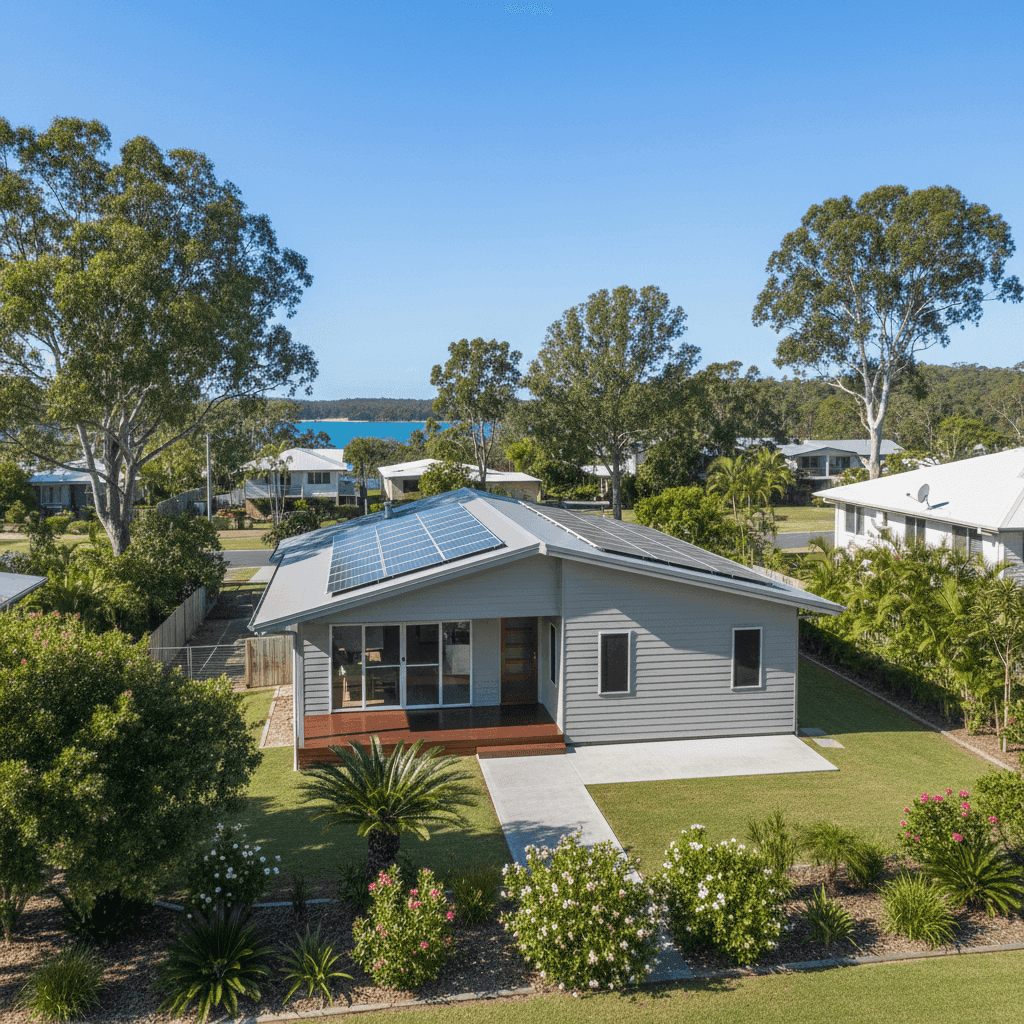
If you own or are considering buying a free standing home on Macleay Island in Queensland's Moreton Bay, one of the first financial questions you'll face is: what will home insurance actually cost me? Macleay Island is a unique and relaxed island community — but its location, local building trends, and Queensland's broader insurance landscape all play a role in shaping your premium. This article breaks down a real home and contents insurance quote for a 2-bedroom property in postcode 4184, and puts it into context against suburb, state, and national benchmarks.
---
Is This Quote Fair?
The quote in question comes in at $2,372 per year (or roughly $227 per month) for a combined home and contents policy, covering a building sum insured of $321,000 and contents valued at $20,000. Both the building and contents excess are set at $2,000.
Our price rating for this quote is CHEAP — below average for the area. That's genuinely good news for the homeowner.
To put it plainly: this premium sits well below what most comparable properties in Macleay Island are paying. The suburb's average annual premium is $3,267, and the median sits at $3,076. Even the 25th percentile — meaning the cheapest quarter of quotes in the area — comes in at $2,491 per year. This quote undercuts even that threshold, placing it among the most competitively priced policies seen in this postcode.
For a property built in 2023 with modern materials and a solid slab foundation, securing cover at this price point reflects both the quality of the build and the value of shopping around. It's a strong result.
---
How Macleay Island Compares
Understanding where Macleay Island sits relative to broader benchmarks helps homeowners make more informed decisions. You can explore the full data on the Macleay Island insurance stats page.
| Benchmark | Average Premium | Median Premium |
|---|---|---|
| Macleay Island (4184) | $3,267/yr | $3,076/yr |
| Redland LGA | $3,178/yr | — |
| Queensland | $9,129/yr | $3,903/yr |
| National | $5,347/yr | $2,764/yr |
A few things stand out here. Queensland's average premium of $9,129 per year looks alarming at first glance — but that figure is heavily skewed by high-risk postcodes in Far North Queensland, cyclone-prone coastal zones, and flood-affected regions. The state median of $3,903 is a more realistic yardstick for most Queenslanders.
Macleay Island's median of $3,076 sits below the state median, which is a positive sign. It also tracks closely with the Redland LGA average of $3,178, suggesting the island's risk profile is broadly consistent with the wider local government area.
Nationally, the median sits at $2,764 — slightly below Macleay Island's local median, which reflects the modest but real risk premiums associated with island living and Queensland's weather patterns. Browse the Queensland state insurance stats and national benchmarks to dig deeper into the numbers.
---
Property Features That Affect Your Premium
Several characteristics of this particular property work in the homeowner's favour when it comes to pricing.
New construction (2023): A home built just two years ago benefits enormously from modern building codes. Queensland's post-2011 standards require improved structural resilience, better waterproofing, and more robust connections between roof and wall frames. Insurers recognise this reduced risk and price accordingly.
Hardiplank/Hardiflex cladding: This fibre cement cladding is well regarded in the insurance industry. It's resistant to rot, termites, and moisture — all significant concerns in a coastal island environment like Macleay Island. Compared to older timber weatherboard homes, Hardiflex cladding is seen as a lower-risk external wall material.
Steel/Colorbond roof: Colorbond steel roofing is one of the most insurer-friendly roofing materials available in Australia. It's durable, lightweight, resistant to corrosion, and performs well in high-wind events. It also carries a long lifespan with minimal maintenance requirements — all factors that reduce the likelihood of a claim.
Slab foundation: A concrete slab is a stable, well-understood foundation type that carries fewer risks than older stumped or suspended timber foundations. Insurers generally view slab construction favourably.
Solar panels: The property has solar panels installed. While these add to the replacement cost of the home, many modern policies include solar panels under the building sum insured. It's worth confirming with your insurer that your panels are explicitly covered, including for storm damage or inverter failure.
Ducted climate control: Ducted air conditioning systems are a meaningful asset — and a meaningful replacement cost. Ensure your building sum insured accounts for the full cost of reinstating this system if it were damaged or destroyed.
No pool, no cyclone risk zone: The absence of a swimming pool removes a common liability consideration, and the property falling outside a designated cyclone risk area is a notable premium advantage in Queensland, where cyclone loading can significantly inflate costs.
---
Tips for Homeowners in Macleay Island
1. Review your building sum insured regularly. At $321,000 for a 105 sqm home built in 2023, the sum insured looks reasonable — but construction costs have risen sharply in recent years. Use a building cost calculator annually to ensure you're not underinsured. Underinsurance is one of the most common and costly mistakes homeowners make.
2. Confirm solar panels and ducted systems are covered. Modern add-ons like solar panels and ducted climate control are significant assets. Check your policy wording carefully to confirm these are included in your building cover, and that the sum insured is sufficient to replace them at current prices.
3. Consider your excess carefully. Both the building and contents excess on this policy are set at $2,000. A higher excess typically lowers your premium, but make sure you could comfortably cover that amount out of pocket in the event of a claim. If cash flow is a concern, a lower excess — even at a slightly higher premium — may be the smarter choice.
4. Shop around at renewal time. This quote has achieved a below-average price, but that doesn't mean staying with the same insurer indefinitely is always the right call. Premiums can creep up at renewal. Make it a habit to compare quotes annually — even a 10–15 minute comparison exercise could save you hundreds of dollars.
---
Compare Your Own Quote
Whether you're a Macleay Island local or researching the island as a potential home, it pays to know what the market looks like before you commit to a policy. CoverClub makes it easy to compare home insurance quotes side by side, so you can see exactly where your premium sits relative to the suburb and state averages.
Get a home insurance quote at CoverClub and find out if you're paying a fair price — or if there's a better deal waiting for you.