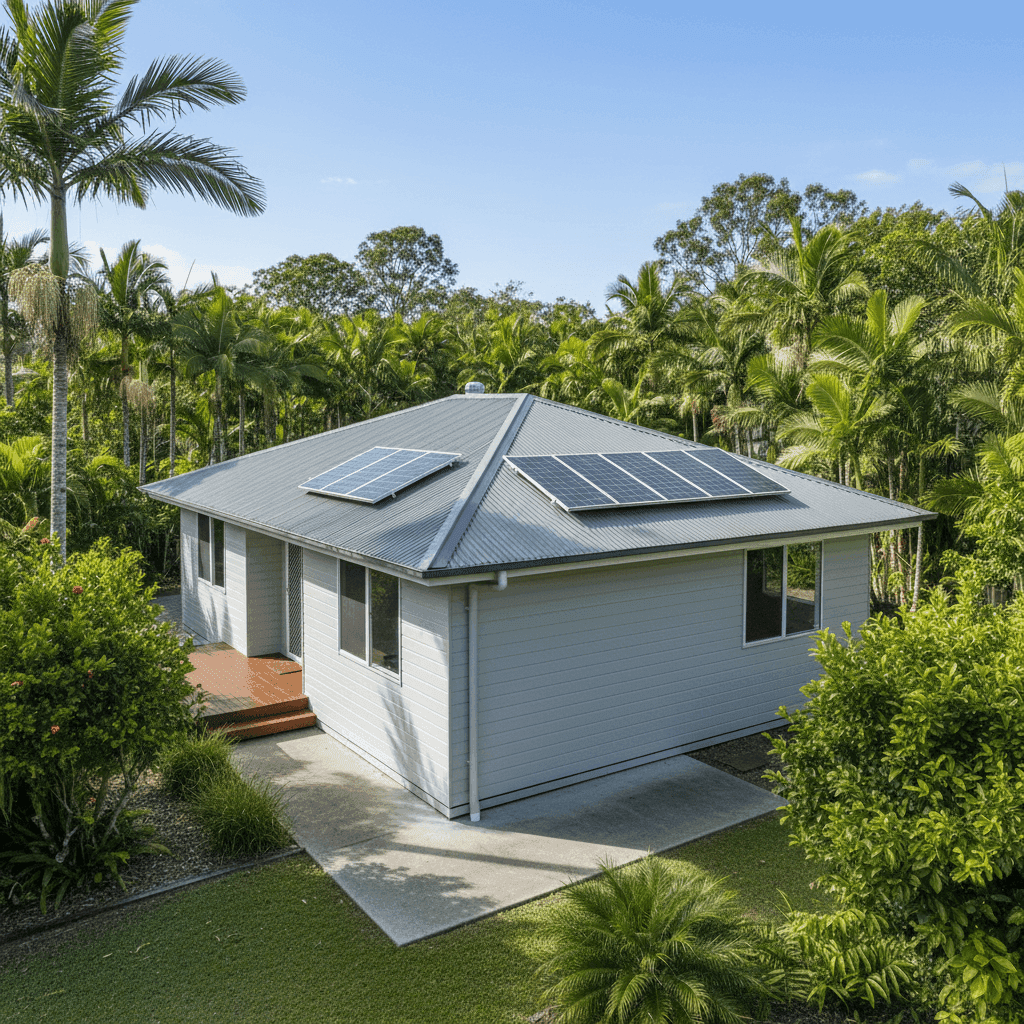
Home insurance on a bay island can feel like a bit of a mystery — you know the risks are different from the mainland, but it's hard to know whether the quote you've received is reasonable or whether you're being overcharged. This article breaks down a real home and contents insurance quote for a 2-bedroom free standing home in Macleay Island, QLD 4184, and puts the numbers in context using suburb, state, and national data.
---
Is This Quote Fair?
The annual premium for this property came in at $2,456 per year (or $235/month), covering a building sum insured of $321,000 and $50,000 in contents — with a $1,000 excess on both building and contents.
Our price rating for this quote is CHEAP (Below Average), meaning it sits below what most comparable properties in the area are paying. Specifically:
- The suburb average for Macleay Island is $3,267/yr — this quote is roughly $811 cheaper than average.
- The suburb median is $3,076/yr, meaning more than half of local quotes are higher than this one.
- Even the 25th percentile for the suburb sits at $2,491/yr — so this quote is competitive even against the cheapest quarter of local policies.
For a property on a bay island — which typically attracts loading due to access and supply challenges — landing a premium this far below the local average is a genuinely strong result. If you're a homeowner in the area, this gives you a useful benchmark to measure your own policy against.
---
How Macleay Island Compares
To understand just how significant this quote is, it helps to zoom out and look at the broader picture. You can explore full data on the Macleay Island insurance stats page, the Queensland stats page, and national insurance statistics.
| Benchmark | Annual Premium |
|---|---|
| This Quote | $2,456 |
| Macleay Island suburb average | $3,267 |
| Macleay Island suburb median | $3,076 |
| LGA (Redland City) average | $3,178 |
| QLD state average | $9,129 |
| QLD state median | $3,903 |
| National average | $5,347 |
| National median | $2,764 |
A few things stand out here. Queensland's state average of $9,129/yr is extraordinarily high — a reflection of the significant cyclone, flood, and storm risk that affects large parts of the state, particularly in Far North Queensland. The median tells a more grounded story at $3,903/yr, but even that is well above this quote.
Nationally, the average sits at $5,347/yr, again skewed upward by high-risk postcodes. The national median of $2,764/yr is actually slightly above this quote, meaning this property is being insured for less than what the typical Australian homeowner pays — despite being located on an island with its own unique risk profile.
The Redland City LGA average of $3,178/yr is also a useful reference point, as it captures the broader bayside region. This quote undercuts that figure by over $700/yr.
---
Property Features That Affect Your Premium
Several characteristics of this property likely contribute to its competitive premium:
Modern construction (2023 build) New homes are generally cheaper to insure. A 2023 build means the structure meets current building codes, uses contemporary materials, and is far less likely to have hidden defects or ageing infrastructure. Insurers view this favourably.
Hardiplank/Hardiflex external walls Fibre cement cladding like Hardiplank is considered a resilient and fire-resistant wall material. Compared to older timber weatherboard homes — which are common on Macleay Island — this construction type typically attracts lower premiums.
Steel/Colorbond roof Metal roofing is durable, low-maintenance, and performs well in storm conditions. It's a preferred roofing type for insurers operating in South East Queensland, where heavy rain and wind events are a seasonal reality.
Concrete slab foundation Slab foundations are considered stable and are less susceptible to movement or moisture-related damage than raised timber stumped homes. This reduces the likelihood of structural claims.
No pool Pools add liability and maintenance risk to a property. The absence of one simplifies the risk profile.
Solar panels While solar panels add some replacement value to the property, they're a common feature on modern homes and most insurers factor them into standard building cover. It's worth confirming your policy explicitly covers solar panel damage.
Ducted climate control Ducted systems are a higher-value fitting that may contribute to the building sum insured, but they don't typically inflate premiums significantly on standard residential policies.
No cyclone risk zone Macleay Island falls outside the designated cyclone risk area, which is a meaningful factor. Properties in cyclone zones — particularly in North Queensland — can face substantial premium loadings. Being outside this zone keeps costs more manageable.
---
Tips for Homeowners in Macleay Island
1. Review your building sum insured annually Construction costs have risen sharply in recent years, and island properties can carry additional rebuild costs due to barge transport and access logistics. Make sure your $321,000 sum insured reflects what it would actually cost to rebuild — not just the market value of the home.
2. Confirm solar panels are explicitly covered Solar panels are a meaningful asset. Check your policy's product disclosure statement (PDS) to confirm they're included under building cover and understand the claim process if they're damaged by storm or hail.
3. Don't auto-renew without comparing This quote is already below average, but premiums can shift significantly at renewal. Use a comparison tool like CoverClub each year to ensure you're still getting a competitive rate — loyalty doesn't always pay in insurance.
4. Consider your contents coverage carefully $50,000 in contents cover is a reasonable starting point, but it's easy to underestimate the cumulative value of furniture, appliances, electronics, and personal belongings. Do a room-by-room audit to check you're not underinsured.
---
Compare Your Own Quote
Whether you own a home on Macleay Island or elsewhere in Queensland, understanding how your premium stacks up against local and national benchmarks is the first step to making sure you're not overpaying. CoverClub makes it easy to compare home and contents insurance quotes side by side.