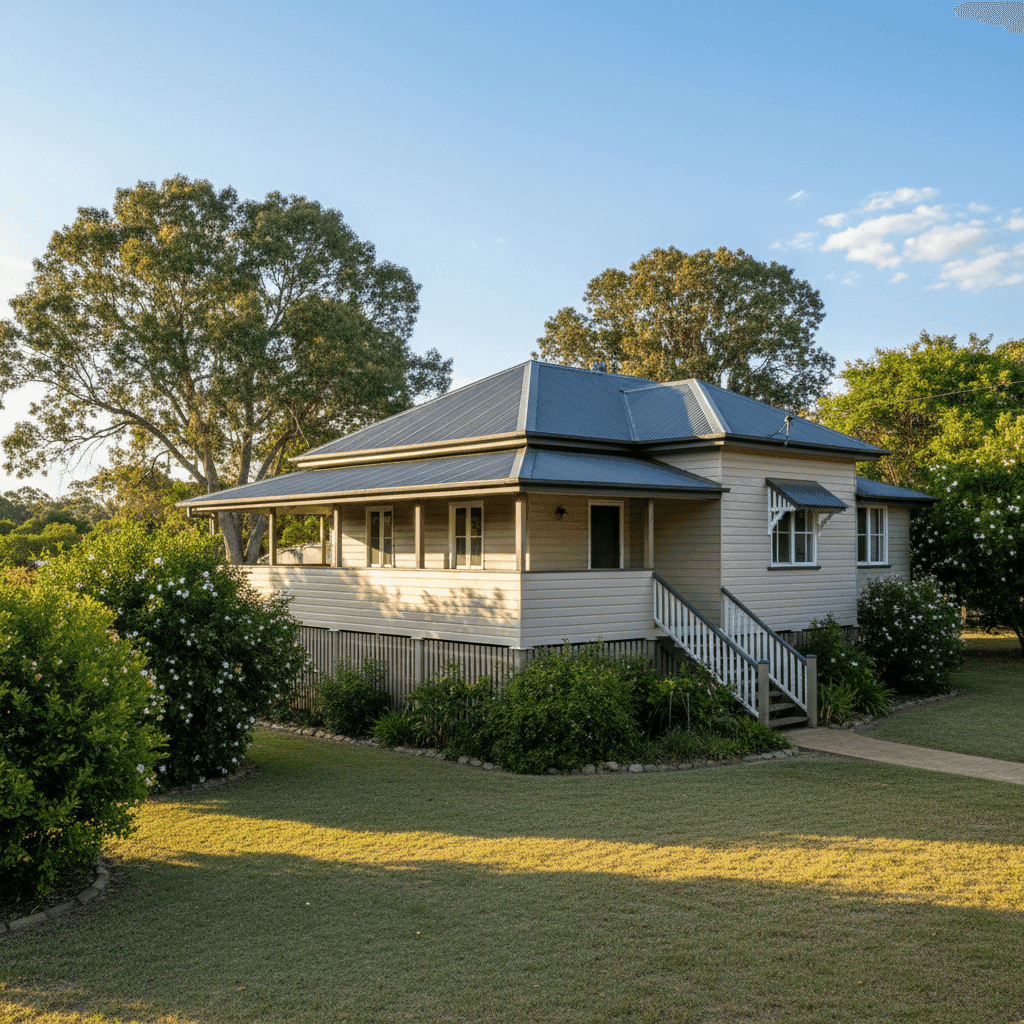
If you own a free standing home in Maidenwell, QLD 4615, you've probably wondered whether you're paying a fair price for home insurance — or leaving money on the table. This article breaks down a real building insurance quote for a three-bedroom property in Maidenwell, compares it against suburb, state, and national benchmarks, and explains exactly which property features are moving the needle on price.
---
Is This Quote Fair?
The short answer: yes — and then some. This quote came in at $1,791 per year (or roughly $172 per month) for building-only cover on a 3-bedroom, 1-bathroom free standing home insured for $336,000. CoverClub's pricing engine rates this as CHEAP — below average for the area.
To put that in perspective, the suburb average premium in Maidenwell sits at $4,159 per year, with a median of $4,052. That means this quote is coming in at less than half the typical price paid by comparable homeowners in the same postcode. Even against the 25th percentile — the cheapest quarter of quotes in the suburb — this property is still tracking well below at $3,042/yr.
For a homeowner in Maidenwell, securing cover at $1,791/yr represents genuinely strong value. Whether you're renewing your policy or shopping around for the first time, this is the kind of outcome that's worth benchmarking your own situation against.
---
How Maidenwell Compares
Understanding your premium means looking beyond your own postcode. Here's how Maidenwell stacks up at every level:
| Benchmark | Average Premium | Median Premium |
|---|---|---|
| Maidenwell (4615) | $4,159/yr | $4,052/yr |
| LGA (Gympie) | $5,581/yr | — |
| Queensland | $9,129/yr (avg) | $3,903/yr |
| National | $5,347/yr (avg) | $2,764/yr |
A few things stand out here. First, Queensland's average premium of $9,129/yr is dramatically higher than its median of $3,903/yr — a sign that a relatively small number of very high-risk properties (think cyclone-prone coastal areas and flood-affected zones) are pulling the state average upward. Maidenwell, sitting inland in the South Burnett region, benefits from being outside the highest-risk pockets of Queensland.
Second, the LGA of Gympie averages $5,581/yr — noticeably higher than Maidenwell's suburb average of $4,159/yr. This suggests that within the broader Gympie region, Maidenwell represents a relatively more affordable area to insure.
Compared to national figures, the Maidenwell suburb average of $4,159/yr sits modestly below the national average of $5,347/yr but above the national median of $2,764/yr — which reflects the reality that Queensland homes, even in lower-risk inland areas, tend to carry higher premiums than the southern states due to weather-related risks.
The quote analysed here, at $1,791/yr, sits well below every single benchmark listed above — a strong outcome by any measure.
---
Property Features That Affect Your Premium
Insurance pricing is never one-size-fits-all. Insurers weigh up dozens of property characteristics when calculating your premium. Here's how the features of this particular home are likely influencing the final figure:
Construction Materials
The home's Hardiplank/Hardiflex external walls are a meaningful premium-positive factor. Fibre cement cladding is considered a resilient, fire-resistant material by most insurers — more so than timber weatherboard — which can translate into lower premiums compared to older or less durable wall types.
The steel Colorbond roof is similarly well-regarded. Colorbond is durable, low-maintenance, and performs well in Queensland's heat and storm conditions. Insurers tend to price Colorbond roofs more favourably than older materials such as terracotta tiles or corrugated iron in poor condition.
Foundation and Elevation
This property sits on stumps and is elevated by less than 1 metre. Stump foundations are common in Queensland — particularly in older homes — and a modest elevation can offer some protection against surface water ingress during heavy rain events. However, it's worth noting that significant elevation (over 1 metre) would typically attract greater flood resilience discounts; the sub-1m elevation here is a minor benefit rather than a major one.
Build Year and Size
Built in 1995, this home sits in a sweet spot for insurers — new enough to meet modern building standards but old enough that replacement cost estimates are well-established. At 105 square metres, it's a compact home, and the $336,000 sum insured reflects a reasonable cost-to-rebuild estimate for a property of this size and construction type in regional Queensland.
Ducted Climate Control
The presence of ducted climate control adds some value to the insured asset and may have a minor upward effect on the sum insured calculation, but it's unlikely to significantly move the premium on its own.
No Pool, No Solar
The absence of a swimming pool and solar panels simplifies the risk profile slightly. Pools introduce liability considerations, and solar installations add replacement costs and electrical risk. Neither factor applies here, keeping the profile clean.
---
Tips for Homeowners in Maidenwell
Whether you're happy with your current policy or actively shopping around, these practical steps can help you get the most from your home insurance:
- Review your sum insured annually. Building costs in regional Queensland have risen significantly in recent years. If your sum insured hasn't kept pace with local construction costs, you could be underinsured — meaning a total loss payout won't cover the full rebuild. Use a building cost calculator or speak to a local builder to sense-check your figure each year.
- Check your excess options. This quote carries a $1,000 building excess. Opting for a higher voluntary excess (say, $2,000 or $2,500) can meaningfully reduce your annual premium. If your home is in good condition and you have savings to cover a larger out-of-pocket cost in a claim, this trade-off is often worth considering.
- Don't assume loyalty pays. The gap between the cheapest and most expensive quotes in Maidenwell is substantial — from around $3,042/yr at the 25th percentile up to $5,158/yr at the 75th. Staying with the same insurer year after year without comparing can easily cost you $1,000–$2,000 annually. Set a calendar reminder to compare quotes at renewal time.
- Understand what's excluded. Building-only cover protects the structure of your home but not your belongings. If you rent out the property or have valuable items inside, consider whether a combined building and contents policy might offer better overall value — or at least peace of mind.
---
Compare Your Own Quote
Curious how your home insurance stacks up? CoverClub makes it easy to compare quotes from multiple insurers in minutes. Whether you're in Maidenwell or anywhere else across Australia, you can get a personalised quote and see exactly where your premium sits relative to your neighbours. Don't pay more than you need to — start comparing today.