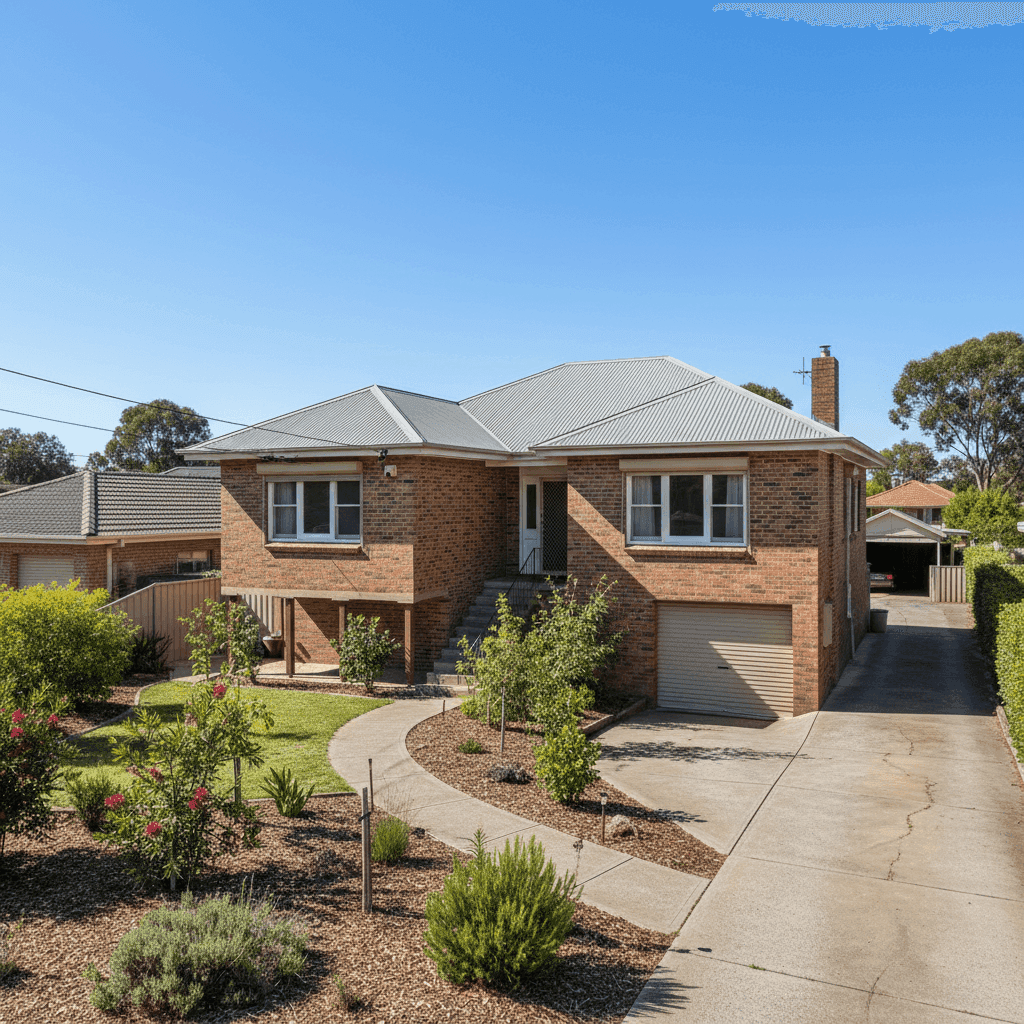
If you own a free standing home in Main Lead, VIC 3373, you're probably wondering whether you're paying a fair price for your building insurance. This article breaks down a real quote for a four-bedroom, three-bathroom brick veneer home in the area, compares it against Victorian and national benchmarks, and offers practical tips to help you get better value on your cover.
---
Is This Quote Fair?
The annual premium on this quote comes in at $3,029 per year (or $314 per month), with a building sum insured of $500,000 and a building excess of $4,000. Our price rating for this quote is FAIR — Around Average.
That assessment holds up when you look at the numbers in context. At $3,029, this premium sits just slightly above the Victorian state average of $3,000 per year and meaningfully above the state median of $2,718 per year. It's also very close to the Ararat LGA average of $2,988 per year, suggesting this property is being priced consistently with similar homes in the broader region.
Importantly, the quote is well below the national average of $5,347 per year, which is heavily influenced by high-risk areas in Queensland and Western Australia. Against the national median of $2,764 per year, this quote does sit a little higher — but given the property's size, age, and construction type, that's not unexpected.
In short: this isn't a bargain-basement premium, but it's not an outlier either. Homeowners in Main Lead receiving a quote in this range can feel reasonably confident they're being assessed fairly by the market.
---
How Main Lead Compares
Understanding where your suburb sits in the broader insurance landscape can help you make sense of your premium. You can explore detailed pricing data for this postcode at the Main Lead insurance stats page, or zoom out to the Victoria state overview and national insurance statistics.
Here's a quick snapshot of how this quote stacks up:
| Benchmark | Annual Premium |
|---|---|
| This Quote | $3,029 |
| Ararat LGA Average | $2,988 |
| VIC State Average | $3,000 |
| VIC State Median | $2,718 |
| National Average | $5,347 |
| National Median | $2,764 |
The proximity of this quote to both the LGA and state averages suggests that insurers are treating Main Lead as a broadly typical Victorian regional property — no significant loading for extreme weather events or catastrophic flood zones, but also no notable discounts compared to metro areas.
It's worth noting that suburb-level comparison data isn't yet available for Main Lead specifically, which makes the LGA and state figures the most relevant benchmarks. As more data becomes available, localised comparisons will become possible.
---
Property Features That Affect Your Premium
Every home is different, and insurers weigh up a range of property characteristics when calculating your premium. Here's how the features of this particular home factor in:
Brick Veneer Walls Brick veneer is one of the most common external wall materials in Australian suburban homes, and insurers generally view it favourably. It offers solid fire resistance and structural durability, which can help moderate your premium compared to more vulnerable materials like weatherboard or fibre cement.
Steel / Colorbond Roof A Colorbond steel roof is considered a low-maintenance, durable roofing option. It performs well in high winds and is resistant to ember attack — a meaningful consideration in regional Victoria, where bushfire risk can be a factor. This roof type is typically viewed positively by underwriters.
Stump Foundation This home sits on stumps, elevated by less than one metre. Stump foundations are common in older regional Victorian homes and can be a double-edged sword for insurers. On the upside, elevation can reduce exposure to ground-level flooding. On the downside, stumps require periodic inspection and maintenance, and some insurers may factor in the added complexity of underfloor access and potential structural movement over time.
Timber / Laminate Flooring The combination of timber and laminate flooring is standard for a home of this era and construction type. While these materials can be more susceptible to water damage than tiles, they're generally accounted for in standard building policies.
Construction Year: 1988 At around 37 years old, this home sits in a mid-range age bracket. It's old enough that some components — roofing, plumbing, electrical — may be approaching the end of their serviceable life, which can nudge premiums upward. However, it's not so old as to attract the significant loadings sometimes applied to pre-1970s homes.
Building Size: 205 sqm At 205 square metres, this is a comfortably sized family home. The $500,000 sum insured works out to roughly $2,439 per square metre, which is broadly in line with current rebuild cost estimates for brick veneer homes in regional Victoria.
No Pool, Solar, or Ducted Climate Control The absence of a pool, solar panels, and ducted heating/cooling simplifies the risk profile and removes several potential sources of additional premium loading. These are meaningful omissions — pools in particular can add noticeably to both liability risk and premium costs.
---
Tips for Homeowners in Main Lead
Whether you're reviewing an existing policy or shopping around for the first time, here are four practical steps to make sure you're getting the right cover at the right price.
- Review your sum insured regularly. Building costs in regional Victoria have risen significantly over the past few years. If your sum insured hasn't been updated to reflect current rebuild costs, you could be underinsured — meaning you'd face a shortfall if you needed to make a major claim. Use an online building cost calculator or speak with a local builder to get a realistic estimate.
- Check your stump foundations annually. Homes on stumps benefit from periodic inspection to identify any movement, rot, or pest activity. Addressing issues early not only protects your home's structural integrity but can also support your claim if something goes wrong — insurers may scrutinise maintenance history.
- Consider your excess carefully. This quote carries a $4,000 building excess, which is on the higher side. A higher excess typically lowers your premium, but it also means more out-of-pocket costs if you need to claim. Make sure the excess level genuinely reflects what you could comfortably afford to pay in the event of a loss.
- Compare quotes before renewing. Insurance markets shift, and loyalty doesn't always pay. Even if your current premium seems reasonable, it's worth comparing quotes annually. Use CoverClub to get a fresh quote and see whether another insurer offers better value for your specific property.
---
Get a Better Deal on Your Home Insurance
Whether this quote is the right one for you depends on your individual circumstances, risk tolerance, and budget. What's clear is that Main Lead homeowners are operating in a broadly average-priced market — which means there's genuine opportunity to find competitive cover without compromising on protection.
Compare home insurance quotes at CoverClub and see how your current premium stacks up. It only takes a few minutes, and you might be surprised by what's available.