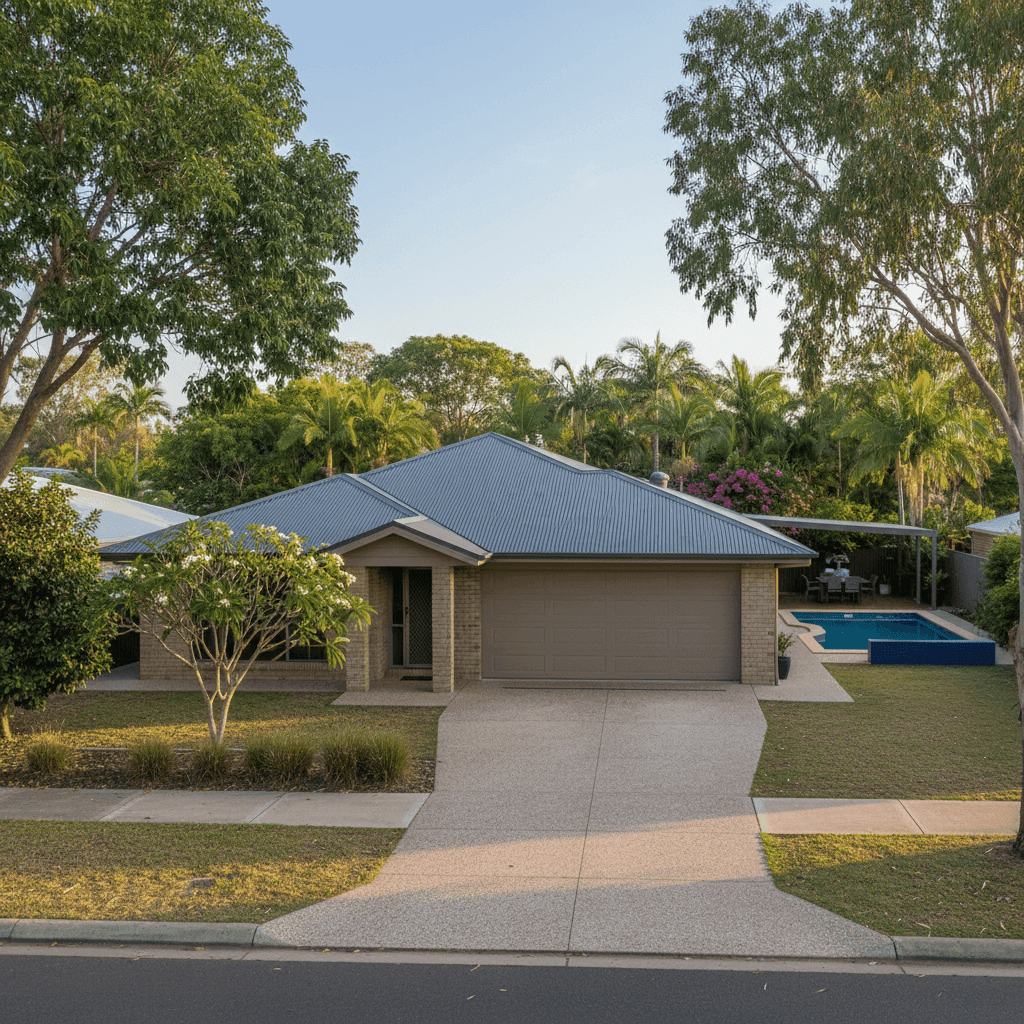
Malak is a well-established residential suburb in Darwin's northern corridor, known for its leafy streets, family-friendly character, and the kind of solid, practical housing stock that defined Territory living in the early 1980s. If you own a free-standing home here, you already know that insuring it in the Northern Territory is a different proposition to most other parts of Australia — cyclone risk, tropical humidity, and the sheer cost of building materials in a remote capital all play a role. This article breaks down a recent building-only insurance quote for a 4-bedroom, 2-bathroom home in Malak and puts it in context so you can judge whether you're getting a fair deal.
---
Is This Quote Fair?
The quote in question comes in at $5,253 per year (or $505 per month) for building-only cover on a home insured for $753,000. Our pricing model rates this as CHEAP — below average for the area.
That's a meaningful finding. Home insurance in the Northern Territory is notoriously expensive, and Darwin in particular sits at the top of the national cost ladder when it comes to premiums. A quote that lands below average benchmarks in this market is genuinely worth paying attention to.
The building excess is set at $1,000, which is a standard and reasonable figure. It's worth noting that many NT policies — particularly those with cyclone cover — carry separate, higher cyclone excesses that can run into several thousand dollars. Always read the Product Disclosure Statement (PDS) carefully to understand what applies in a storm or cyclone event.
---
How Malak Compares
To put this quote in perspective, here's how it sits against the available benchmarks:
| Benchmark | Premium |
|---|---|
| This quote | $5,253/yr |
| NT state average | $10,773/yr |
| NT state median | $3,402/yr |
| National average | $5,347/yr |
| National median | $2,764/yr |
| Darwin LGA average | $15,687/yr |
A few things stand out immediately. The Darwin LGA average of $15,687 per year is extraordinarily high — more than three times this quote. That figure is heavily influenced by properties with higher sums insured, elevated risk profiles, and insurers pricing in significant cyclone exposure across the broader Darwin area.
This quote, at $5,253, sits just below the national average of $5,347 and meaningfully above the NT state median of $3,402. That places it in a reasonable middle ground: not the cheapest possible outcome, but well below what many Darwin homeowners are paying.
It's also worth noting there is no suburb-level data available for Malak specifically, which makes direct local comparisons difficult. For the latest aggregated data as it becomes available, you can check the Malak suburb stats page, the NT state overview, or the national home insurance statistics.
---
Property Features That Affect Your Premium
Several characteristics of this property have a direct bearing on what insurers charge — and in this case, some features likely work in the homeowner's favour.
Double Brick Walls
Double brick construction is generally viewed favourably by insurers. It's robust, fire-resistant, and holds up well to wind loading — a significant consideration in a cyclone-prone region. Compared to timber-framed or clad homes, double brick typically attracts lower premiums or at least fewer loading penalties.
Steel / Colorbond Roof
A Colorbond steel roof is one of the most practical choices for the Top End. It's lightweight, resistant to corrosion in tropical humidity, and performs well in high-wind events when properly installed and fastened. Insurers generally regard this positively, particularly in cyclone risk zones.
Slab Foundation
A concrete slab foundation is standard and low-risk from an insurer's perspective. It doesn't carry the elevated risk of subsidence or termite ingress that some other foundation types might, and it's well-suited to Darwin's reactive soils and wet season conditions.
Cyclone Risk Area
This is the big one. Malak falls within a designated cyclone risk area, and this single factor has more influence on NT premiums than almost anything else. Cyclone cover adds significant cost to policies across the Darwin region, and it's a key reason why NT premiums are so much higher than the national median. The fact that this quote still comes in below the national average despite the cyclone loading is notable.
Swimming Pool
The property includes a pool, which adds a modest amount to the insured replacement cost and can introduce some liability considerations depending on the policy. It's a relatively minor factor in the overall premium calculation but worth keeping in mind when reviewing your sum insured.
Building Size and Age
At 130 sqm, this is a modestly sized home for a 4-bedroom property — a common layout in older Darwin suburbs where bedrooms tend to be smaller by contemporary standards. The 1982 construction date means the home is over 40 years old, which can attract age-related loadings from some insurers, though the double brick construction helps offset this.
---
Tips for Homeowners in Malak
1. Review your sum insured annually With $753,000 as the building sum insured, it's important to ensure this reflects current rebuilding costs — not market value. Construction costs in Darwin have risen sharply in recent years due to labour and materials constraints. Underinsurance is a real risk; use a building cost calculator or speak to a local builder to sense-check your figure each year.
2. Understand your cyclone excess Many NT policies have a separate cyclone or storm excess that differs from the standard building excess. This can be a flat dollar amount or a percentage of the sum insured. Make sure you know exactly what you'd be out of pocket in the event of a cyclone claim before you commit to a policy.
3. Shop around — and do it regularly This quote is rated cheap relative to the market, but that doesn't mean it's the best available. The Darwin insurance market can be volatile, and premiums shift significantly between providers and between years. Comparing quotes annually is one of the most effective ways to avoid loyalty tax and keep your costs in check.
4. Check your policy covers pool-related damage Not all building policies automatically cover in-ground pool structures, pool equipment, or damage caused by pool water. If your pool is a significant asset, confirm it's explicitly included in your cover and that the sum insured accounts for its replacement cost.
---
Compare Your Options at CoverClub
Whether you're reviewing an existing policy or shopping for the first time, it pays to see what the broader market looks like before you commit. CoverClub makes it easy to compare home insurance quotes from multiple providers in one place — so you can see whether your current premium is genuinely competitive or whether there's a better deal waiting. Get a quote today and find out where you stand.