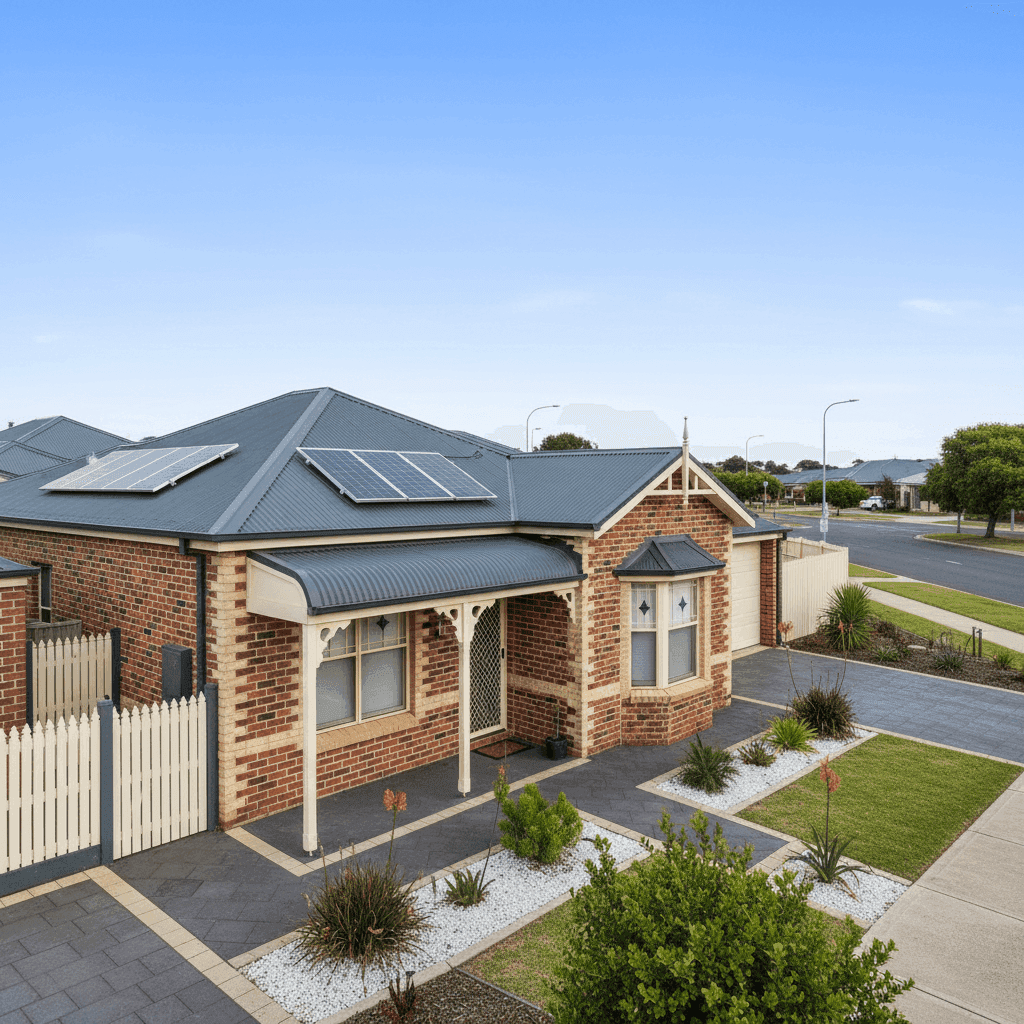
Mandurah is one of Western Australia's most popular coastal cities — a relaxed waterfront community roughly an hour south of Perth that attracts retirees, families, and first-home buyers alike. If you own a semi detached property here, understanding what you should be paying for home and contents insurance is an important part of managing your household budget. This article breaks down a real quote for a 2-bedroom, 1-bathroom semi detached in Mandurah (postcode 6210) and puts the numbers into context.
---
Is This Quote Fair?
The quote in question comes in at $1,553 per year (or $149/month) for combined home and contents cover, with a building sum insured of $401,000 and contents valued at $38,000. Both the building and contents excess are set at $1,000.
Our price rating for this quote is FAIR — Around Average.
That assessment holds up when you dig into the local data. The suburb average premium in Mandurah sits at $1,335/yr, with a median of $1,191/yr. At $1,553, this quote is running about 16% above the suburb average and roughly 30% above the median — not dramatically expensive, but nudging toward the upper half of what locals typically pay.
It's worth noting that the suburb's 75th percentile is $1,979/yr, meaning around a quarter of Mandurah homeowners are paying even more than this quote. So while it isn't the cheapest option on the market, it's far from the top of the range either. For a property with a heritage overlay and solar panels — both of which add complexity to a policy — landing in the "fair" zone is a reasonable outcome.
---
How Mandurah Compares
One of the most telling ways to evaluate any insurance quote is to zoom out and look at the broader picture.
| Benchmark | Premium |
|---|---|
| This quote | $1,553/yr |
| Mandurah suburb average | $1,335/yr |
| Mandurah suburb median | $1,191/yr |
| LGA (Mandurah) average | $1,732/yr |
| WA state average | $2,811/yr |
| WA state median | $2,127/yr |
| National average | $5,347/yr |
| National median | $2,764/yr |
The contrast with state and national figures is striking. At $1,553/yr, this quote is 45% below the WA state average and an extraordinary 71% below the national average. Australia's home insurance market has been under significant pressure in recent years — driven by extreme weather events, rising construction costs, and reinsurance pressures — and those national figures reflect that stress acutely.
Mandurah benefits from a relatively benign risk profile compared to many parts of Australia. It sits outside designated cyclone risk zones, doesn't face the bushfire exposure of inland WA communities, and isn't subject to the severe flood or hail events that push premiums sky-high in parts of Queensland, NSW, and Victoria. You can explore WA state insurance data or national benchmarks to see just how significant the geographic premium gap can be across the country.
Based on a sample of 75 quotes in the 6210 postcode, the local data is reasonably robust — giving us good confidence in these suburb-level comparisons.
---
Property Features That Affect Your Premium
Several characteristics of this property play a meaningful role in how insurers price the risk.
Heritage Overlay
This is one of the more significant factors. Properties under a heritage overlay can be more expensive to repair or rebuild because materials and construction methods must often meet specific heritage requirements. Insurers account for this when calculating premiums, which partly explains why this quote sits above the suburb median despite being a modest 2-bedroom home.
Construction: Brick Veneer Walls and Colorbond Roof
Brick veneer is generally viewed favourably by insurers — it's durable, fire-resistant, and widely understood by builders. Combined with a steel Colorbond roof, this property has a construction profile that is low-maintenance and resilient. Colorbond roofing in particular holds up well in coastal environments like Mandurah, where salt air can accelerate corrosion on lesser materials.
Slab Foundation and Timber/Laminate Flooring
A concrete slab foundation is considered a stable, low-risk base by most insurers. The timber and laminate flooring, however, is worth keeping in mind — these materials can be more susceptible to water damage than tiles, and any leak or flooding event could lead to a significant contents or building claim.
Solar Panels
Solar panels are an increasingly common feature on Australian homes, but they do add to the insured value of a property and introduce some complexity around coverage. It's important to confirm with your insurer that your solar system is explicitly covered under your building policy — not all standard policies include it automatically.
Building Size and Age
At 105 sqm and built in 1985, this is a compact, older-style home. Properties from this era can carry higher rebuild costs relative to their size due to outdated wiring, plumbing, or materials that no longer meet current building codes. Ensuring your sum insured of $401,000 accurately reflects current rebuild costs — not just market value — is essential.
---
Tips for Homeowners in Mandurah
1. Review Your Sum Insured Annually
Construction costs in WA have risen sharply over the past few years. A sum insured that was adequate in 2022 may fall short today. Use a building replacement cost calculator or speak to a quantity surveyor to make sure $401,000 genuinely covers a full rebuild of your property, including heritage-compliant materials if applicable.
2. Confirm Solar Panel Coverage
Check your policy documents carefully to verify that your solar panels and inverter are included under building cover. If they're not explicitly listed, ask your insurer to add them — or factor this into your comparison when shopping around.
3. Shop Around at Renewal Time
A "fair" rating means there's likely a better price available if you take the time to compare. Insurers reprice risk differently, and a quote that's competitive today may not be next year. Use a comparison tool like CoverClub to benchmark your renewal quote before you accept it.
4. Consider Your Excess Strategy
Both the building and contents excess on this policy are set at $1,000. Opting for a higher excess — say $2,500 — can meaningfully reduce your annual premium. If you have a solid emergency fund and are unlikely to make small claims, this trade-off can save you money over time.
---
Compare Your Home Insurance Quote Today
Whether you're renewing an existing policy or insuring a new purchase, it pays to know where your premium sits relative to the market. CoverClub makes it easy to see how your quote stacks up against real data from your suburb and beyond. Get a quote today at CoverClub and make sure you're getting value for your cover — not just convenience.