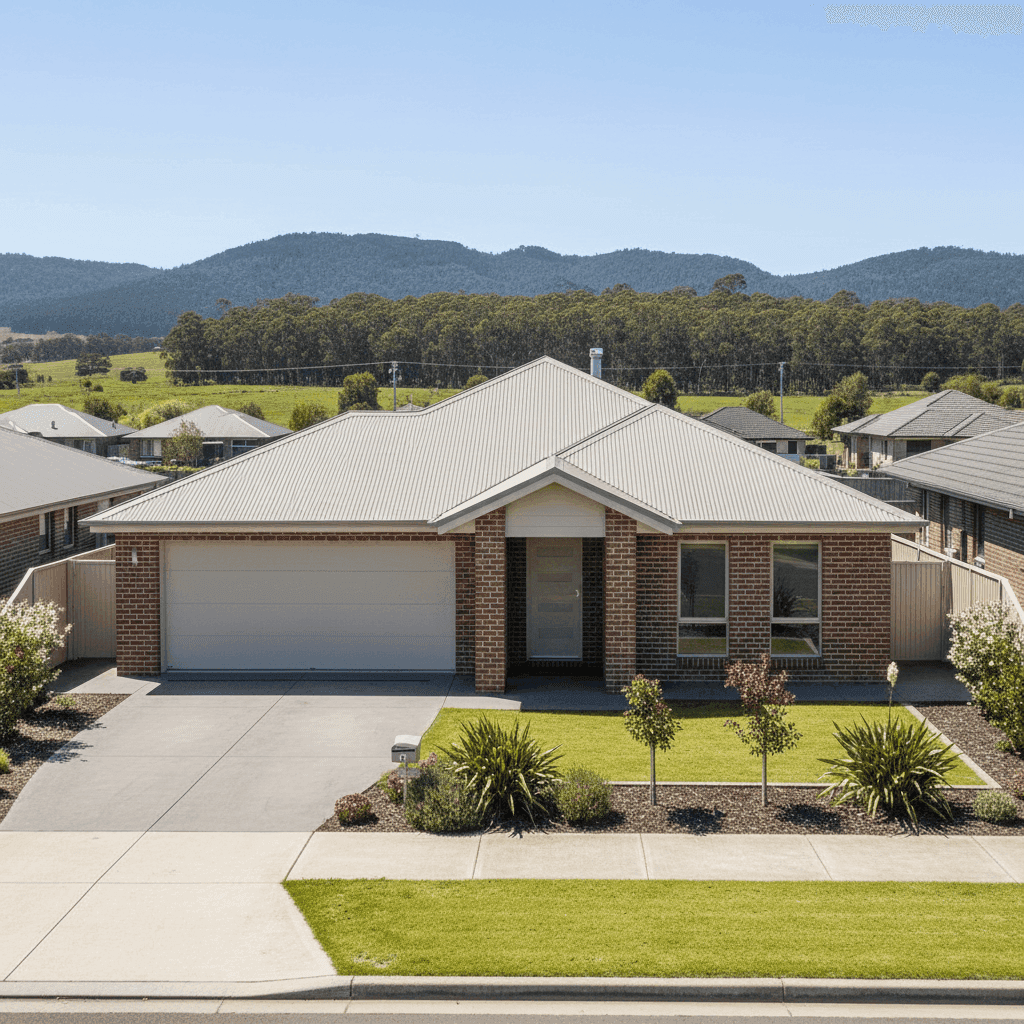
Nestled along the eastern shore of the Huon River estuary, Margate is one of Tasmania's quieter residential gems — a suburb that blends semi-rural charm with easy access to Hobart. For owners of a free standing home in this postcode, understanding what you should be paying for home insurance is just as important as finding the right policy. This article breaks down a recent home and contents insurance quote for a five-bedroom property in Margate (TAS 7054) and puts it in context against local, state, and national benchmarks.
---
Is This Quote Fair?
The annual premium in question comes in at $1,066 per year (or roughly $104 per month), covering both building and contents for a property with a building sum insured of $600,000 and contents valued at $30,000. Both the building and contents excess are set at $500 — a fairly standard arrangement.
Our pricing analysis rates this quote as CHEAP — Below Average, and the numbers back that up convincingly. The suburb average for Margate sits at $3,129 per year, meaning this quote is roughly 66% below what most comparable properties in the area are paying. Even against the suburb's 25th percentile — the point at which only one in four quotes are cheaper — the figure of $2,105 per year is nearly double this premium.
For a homeowner, that's a genuinely strong result. Whether it reflects favourable property characteristics, a competitive insurer, or a combination of both, a premium this far below the local norm is worth noting — and worth protecting by reviewing regularly to ensure coverage remains adequate as rebuild costs rise.
---
How Margate Compares
To appreciate just how competitive this quote is, it helps to zoom out and look at the broader pricing landscape. You can explore the full data on the Margate suburb stats page, the Tasmania state overview, and national home insurance statistics.
| Benchmark | Annual Premium |
|---|---|
| This Quote | $1,066 |
| Margate Suburb Average | $3,129 |
| Margate Suburb Median | $3,248 |
| Margate 25th Percentile | $2,105 |
| Margate 75th Percentile | $4,223 |
| Tasmania State Average | $2,814 |
| Tasmania State Median | $2,326 |
| Derwent Valley LGA Average | $2,913 |
| National Average | $5,347 |
| National Median | $2,764 |
(Based on 41 quotes sampled in the Margate suburb area.)
A few things stand out here. First, Margate's suburb average of $3,129 is actually higher than the Tasmanian state average of $2,814 — suggesting that local risk factors or property characteristics push premiums up in this postcode relative to the rest of the state. Second, the national average of $5,347 reflects the significant premium loading that affects high-risk areas across Australia — particularly in cyclone-prone Queensland and flood-affected parts of New South Wales. Tasmania, generally speaking, benefits from a lower natural disaster risk profile, which tends to keep premiums more moderate.
Against all of these benchmarks, the $1,066 quote stands well apart — sitting below even the most competitive end of the local market.
---
Property Features That Affect Your Premium
Several characteristics of this property are likely contributing to its favourable pricing. Here's how each feature typically influences what insurers charge:
Brick Veneer Walls
Brick veneer construction is generally viewed positively by insurers. It offers solid fire resistance and structural durability, which can reduce the likelihood of major claims. Compared to timber-clad or weatherboard homes — more common in older Tasmanian stock — brick veneer tends to attract more competitive premiums.
Steel / Colorbond Roof
Colorbond steel roofing is a strong performer from an insurance perspective. It's highly resistant to ember attack (an important consideration even in lower-risk fire zones), handles heavy rainfall well, and has a long service life. Insurers typically regard it more favourably than older tile or corrugated iron roofing.
Slab Foundation
A concrete slab foundation provides excellent stability and removes the underfloor space that can be vulnerable to moisture, pests, or flooding in some areas. It's a low-risk foundation type from an insurer's standpoint.
Construction Year (2006)
A home built in 2006 sits in a sweet spot for insurers — modern enough to comply with contemporary building codes (including improved bushfire and structural standards introduced in the early 2000s), but not so new that replacement costs are at a premium. This can work in a homeowner's favour when premiums are being calculated.
No Pool, No Solar, No Ducted Climate Control
Each of these features, when present, adds complexity and cost to a policy. The absence of a pool removes liability and equipment cover considerations; no solar panels means no specialist electrical system to insure; and no ducted climate control eliminates a costly mechanical system that can be expensive to repair or replace. Collectively, these absences keep the risk profile — and the premium — lean.
Timber / Laminate Flooring
Timber and laminate floors are relatively straightforward to repair or replace, and their inclusion under contents or building cover doesn't typically drive premiums up significantly. Standard fittings throughout the home reinforce this modest risk profile.
---
Tips for Homeowners in Margate
Even with a competitive premium already in hand, there are practical steps Margate homeowners can take to protect their coverage and their finances over the long term.
- Review your sum insured annually. With construction costs rising across Australia, a building sum insured of $600,000 for a 214 sqm home should be reviewed each year. Use a building cost calculator to confirm your coverage keeps pace with what it would actually cost to rebuild — underinsurance is one of the most common and costly mistakes homeowners make.
- Check your contents value. $30,000 in contents cover is relatively modest for a five-bedroom home. Take stock of furniture, appliances, clothing, electronics, and valuables — many households find their actual contents value is significantly higher than initially estimated.
- Understand your bushfire and flood exposure. While Margate is not classified as a cyclone risk area, parts of southern Tasmania can be affected by bushfire risk and localised flooding. Check whether your policy provides adequate cover for these events, and review any exclusions carefully.
- Compare at renewal time. A great premium today doesn't guarantee a great premium next year. Insurers adjust their pricing models regularly, and loyalty doesn't always pay. Make a habit of comparing quotes at renewal — even if you ultimately stick with your current provider.
---
Find Your Best Rate with CoverClub
Whether you're a long-time Margate local or new to the area, it pays to know what the market looks like before you commit to a policy. CoverClub makes it easy to compare home and contents insurance quotes side by side, so you can see exactly how your premium stacks up against the suburb average — and find a better deal if one exists. Get a quote today at CoverClub and take the guesswork out of home insurance.