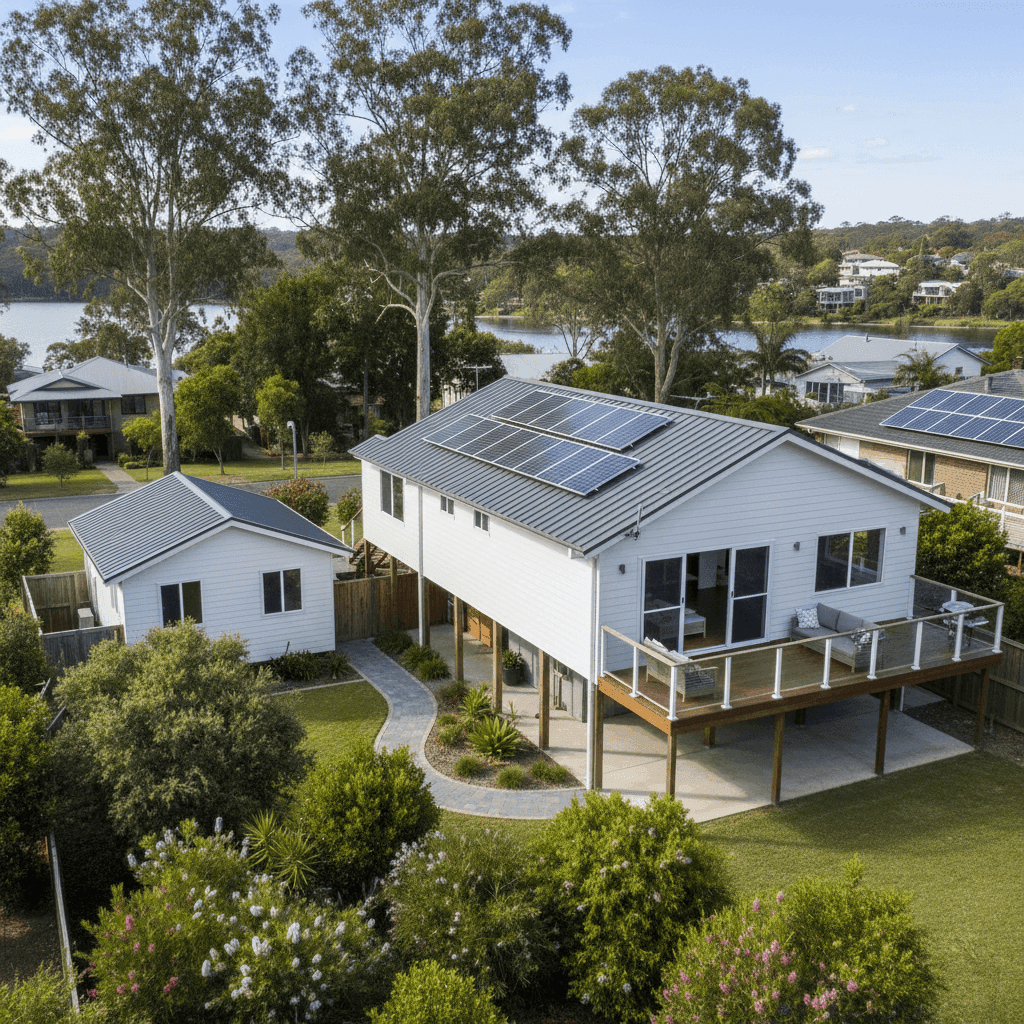
Marks Point is a quiet lakeside suburb on the western shores of Lake Macquarie in the Hunter Region of New South Wales. Known for its relaxed lifestyle, waterfront streets, and established homes, it's a popular choice for families and sea-changers alike. But owning a home here — particularly a larger, well-appointed free standing property — comes with insurance costs that are worth understanding in detail.
This article breaks down a real home and contents insurance quote for a 4-bedroom, 3-bathroom free standing home in Marks Point (postcode 2280), helping you understand what's driving the price and whether it represents fair value.
---
Is This Quote Fair?
The annual premium for this property came in at $6,276 per year (or $595/month), covering both building (sum insured: $805,000) and contents ($123,000). Our analysis rates this quote as Expensive — Above Average.
To put that in context: the suburb average for Marks Point sits at just $2,325/year, with a median of $2,205/year. That means this quote is roughly 2.7 times the local suburb average — a significant gap that warrants a closer look.
Even against the NSW state average of $3,801/year, this premium is notably higher, and it dwarfs the national average of $2,965/year. The elevated cost isn't necessarily a red flag — several property-specific features (discussed below) can legitimately push premiums upward — but it does suggest there may be room to shop around.
---
How Marks Point Compares
Here's a snapshot of how this quote stacks up against broader benchmarks:
| Benchmark | Premium |
|---|---|
| This Quote | $6,276/yr |
| Marks Point Suburb Average | $2,325/yr |
| Marks Point Suburb Median | $2,205/yr |
| Marks Point 25th Percentile | $1,949/yr |
| Marks Point 75th Percentile | $2,498/yr |
| NSW State Average | $3,801/yr |
| NSW State Median | $3,410/yr |
| National Average | $2,965/yr |
| National Median | $2,716/yr |
| Lake Macquarie LGA Average | $11,064/yr |
A few things stand out here. First, the Lake Macquarie LGA average of $11,064/year is extraordinarily high — suggesting that some properties within this local government area attract very significant premiums, likely due to flood risk, waterfront exposure, or high-value homes. Compared to that LGA average, this quote actually looks more moderate.
Second, the suburb sample size is relatively small (6 quotes), so the Marks Point averages should be interpreted with some caution. As more data is collected, these figures will become more representative.
You can explore the latest suburb-level data on the Marks Point insurance stats page.
---
Property Features That Affect Your Premium
Several characteristics of this property are likely contributing to a higher-than-average premium. Here's what insurers are probably factoring in:
High Building Sum Insured
At $805,000, the building sum insured is substantial. This reflects the cost to rebuild a large, well-fitted home — not its market value. With above-average fittings quality and 186 sqm of floor space, the rebuild cost is legitimately high, and insurers price accordingly.
Elevated Construction on Stumps
The home sits on stumps and is elevated by at least one metre. While this can actually reduce flood risk in some scenarios (water passes beneath the floor rather than entering the home), elevated homes on stumps can be more expensive to repair after storm or wind events, and some insurers price this style of construction at a premium.
Hardiplank/Hardiflex Walls with Colorbond Roof
Fibre cement cladding (Hardiplank/Hardiflex) is generally considered a durable and fire-resistant material, which can work in your favour. Combined with a steel Colorbond roof, this is a reasonably modern and resilient construction combination — though the age of the home (built 1970) means the underlying structure is over 50 years old, which some insurers treat as a higher risk.
Granny Flat
The presence of a granny flat on the property adds to the total insured value and complexity of the policy. Whether occupied by family or rented out, this additional dwelling increases the insurer's exposure, and it's important to ensure it's explicitly covered under the policy.
Solar Panels
Solar panels are increasingly common but can add to rebuild costs (replacement and reinstallation is expensive) and introduce additional liability considerations. Most insurers include them under building cover, but it's worth confirming.
Ducted Climate Control
Ducted air conditioning is a costly system to repair or replace, and its inclusion in the building's fittings contributes to the above-average fittings rating — and by extension, the higher sum insured.
Timber and Laminate Flooring
Timber flooring is particularly susceptible to water damage and can be expensive to restore or replace. This is a factor insurers weigh when assessing contents and building risk.
---
Tips for Homeowners in Marks Point
If you're looking to get better value on your home insurance, here are some practical steps worth considering:
1. Compare multiple quotes — don't auto-renew Insurance premiums can vary dramatically between providers for the same property. Given this quote is well above the suburb average, it's worth running a fresh comparison. You can get a new quote at CoverClub to see what other insurers are offering for your specific property profile.
2. Review your sum insured carefully An $805,000 building sum insured is significant. Make sure it reflects the actual cost to rebuild — not the market value of the property. Overinsuring drives up your premium unnecessarily, while underinsuring leaves you exposed. Tools like the Cordell Sum Sure calculator (often embedded in insurer quote flows) can help you arrive at an accurate figure.
3. Ask about your granny flat coverage Not all standard home insurance policies automatically cover a granny flat to the same extent as the main dwelling. Clarify with your insurer exactly what's included — particularly if the flat is rented out, which may require landlord-specific cover or an endorsement.
4. Consider a higher excess to reduce your premium With a building excess of $1,000 and a contents excess of $2,000, there may be scope to increase these voluntarily in exchange for a lower annual premium. This strategy works well if you have sufficient savings to cover a larger out-of-pocket cost in the event of a claim.
---
Compare Your Options with CoverClub
Whether this quote is the right one for you depends on your full circumstances — but paying nearly three times the suburb average is worth questioning. CoverClub makes it easy to compare home and contents insurance quotes from multiple Australian insurers in one place, so you can be confident you're getting competitive cover for your Marks Point home.