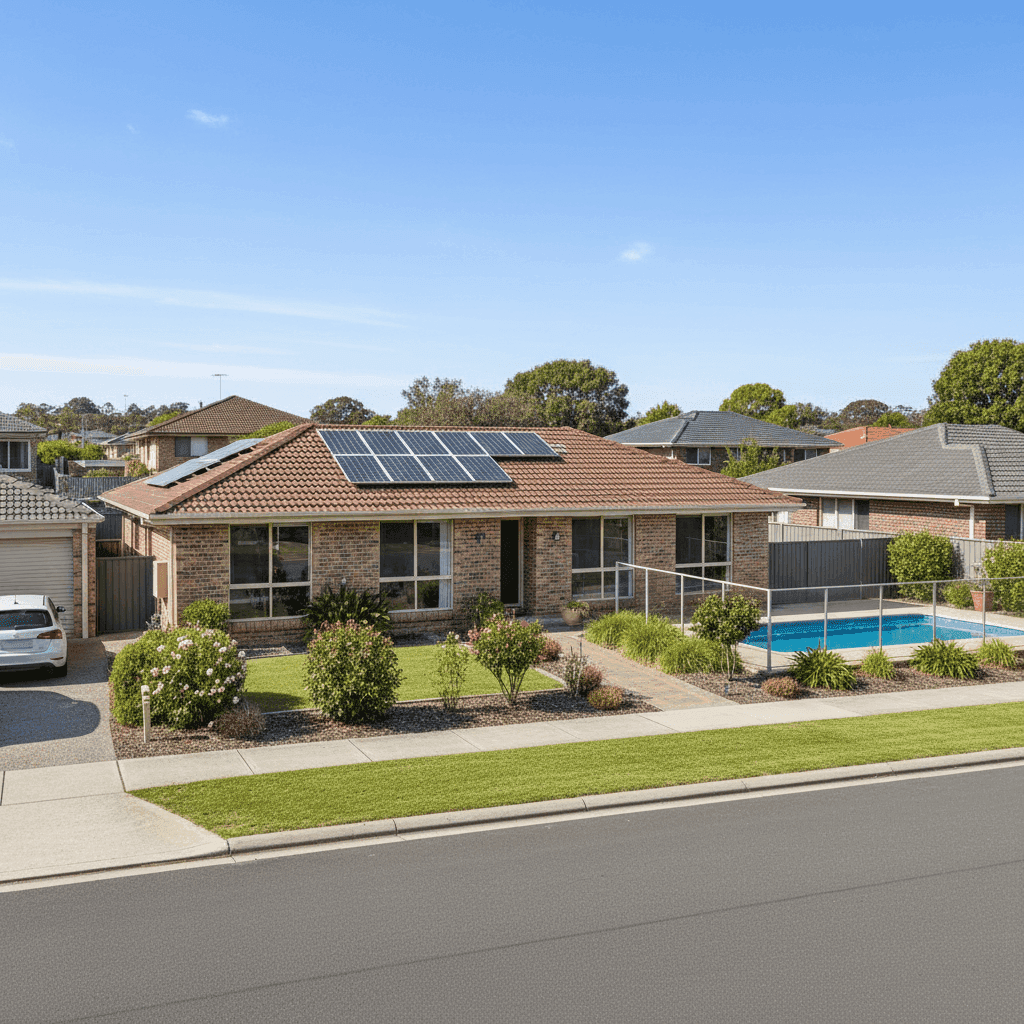
Marmong Point is a quiet, leafy peninsula suburb nestled on the shores of Lake Macquarie in New South Wales — and like many desirable waterside locations, it comes with its own set of insurance considerations. This article takes a close look at a real home and contents insurance quote for a four-bedroom, free-standing home in the area, breaking down what's driving the price and what local homeowners can do to make sure they're getting value for money.
---
Is This Quote Fair?
The quote in question comes in at $4,033 per year (or $387 per month) for combined home and contents cover, with a building sum insured of $714,000 and contents valued at $200,000. Both the building and contents excesses are set at $1,000 each.
Based on our pricing data, this quote is rated Expensive — above the suburb average. The local average premium for Marmong Point sits at around $3,339 per year, with a median of $3,382. That means this quote is approximately $694 above the suburb average — a meaningful difference worth investigating before simply accepting the renewal or first-time offer.
That said, context matters. The sum insured here is substantial at $714,000 for the building alone, and the contents cover of $200,000 is on the higher end. The combination of a pool, solar panels, and ducted climate control also adds to the insurer's assessed risk and replacement cost. So while the price is above average for the suburb, it's not without justification — the question is whether it's the most competitive price available for this level of cover.
---
How Marmong Point Compares
Understanding where your premium sits relative to broader benchmarks is one of the most useful tools a homeowner has. Here's how this quote stacks up:
| Benchmark | Premium |
|---|---|
| This Quote | $4,033/yr |
| Marmong Point Suburb Average | $3,339/yr |
| Marmong Point Suburb Median | $3,382/yr |
| Marmong Point 25th Percentile | $3,024/yr |
| Marmong Point 75th Percentile | $3,617/yr |
| NSW State Median | $3,770/yr |
| NSW State Average | $9,528/yr |
| National Median | $2,764/yr |
| National Average | $5,347/yr |
| Lake Macquarie LGA Average | $11,064/yr |
A few things stand out here. First, the NSW state average of $9,528 and the Lake Macquarie LGA average of $11,064 are dramatically higher than what's being quoted — largely because those averages are skewed by high-risk properties, flood-prone areas, and premium coastal locations across the region. The national average of $5,347 tells a similar story.
The more meaningful comparison for this property is the Marmong Point suburb data, which is based on 16 quotes in the area. This quote sits above the 75th percentile ($3,617), meaning it's more expensive than at least three-quarters of comparable quotes in the suburb. That's a signal worth taking seriously.
---
Property Features That Affect Your Premium
Every insurer assesses risk differently, but certain property characteristics consistently influence what you'll pay. Here's how the features of this home come into play:
Brick Veneer Walls & Tiled Roof Brick veneer construction with a tiled roof is generally well-regarded by insurers. It offers solid fire resistance and durability compared to timber or fibro construction. This combination typically attracts more competitive premiums than, say, a weatherboard home with a metal roof.
Slab Foundation A concrete slab foundation is considered lower risk for subsidence and pest-related damage compared to raised or suspended timber floors. This is a positive factor for insurers.
Timber & Laminate Flooring While aesthetically popular, timber and laminate flooring can be more expensive to replace than carpet, which may contribute slightly to a higher contents or building sum insured.
Swimming Pool Pools add to the replacement cost of the property and introduce liability considerations. Most insurers factor pool ownership into their risk calculations, which can nudge premiums upward.
Solar Panels Solar panel systems — particularly larger modern installations — are increasingly common in Australian homes, but they do add to the building's replacement value. If the panels aren't adequately reflected in the sum insured, underinsurance becomes a risk. Conversely, a higher sum insured to account for them will push the premium up.
Ducted Climate Control Ducted air conditioning systems are expensive to repair or replace and are typically included in the building sum insured. Their presence is another factor that supports a higher building valuation.
1998 Construction At around 26 years old, this home is well past its initial build phase but not yet in the age bracket that triggers significant concerns about ageing infrastructure. Most insurers view homes of this era as standard risk.
---
Tips for Homeowners in Marmong Point
If you're paying above the suburb average, here are some practical steps to explore:
1. Shop Around — Seriously The single most effective thing you can do is compare quotes from multiple insurers. Premiums for the same property can vary by hundreds — sometimes thousands — of dollars depending on the provider. Use a comparison tool like CoverClub to get a clearer picture of what's available in your area.
2. Review Your Sum Insured Carefully It's worth checking whether your building sum insured of $714,000 accurately reflects current rebuilding costs — not the market value of the property. Overinsuring pushes premiums up unnecessarily, while underinsuring leaves you exposed. A quantity surveyor or online building calculator can help you land on the right figure.
3. Consider Your Excess Level Both excesses on this policy are set at $1,000. Opting for a higher excess (say, $1,500 or $2,000) can meaningfully reduce your annual premium — provided you're comfortable covering that amount out of pocket in the event of a claim.
4. Ask About Discounts Many insurers offer discounts for bundling home and contents cover (which this policy already does), paying annually rather than monthly, having security features like deadbolts and alarm systems, or being a long-term customer. It's always worth asking what discounts apply — they're not always automatically applied.
---
Compare Your Home Insurance Today
Whether you're reviewing an existing policy or shopping for the first time, understanding how your premium compares to others in Marmong Point and across NSW is a powerful starting point. CoverClub makes it easy to see real quote data and find cover that suits your home and budget.
👉 Get a home insurance quote for your Marmong Point property and see how much you could save.