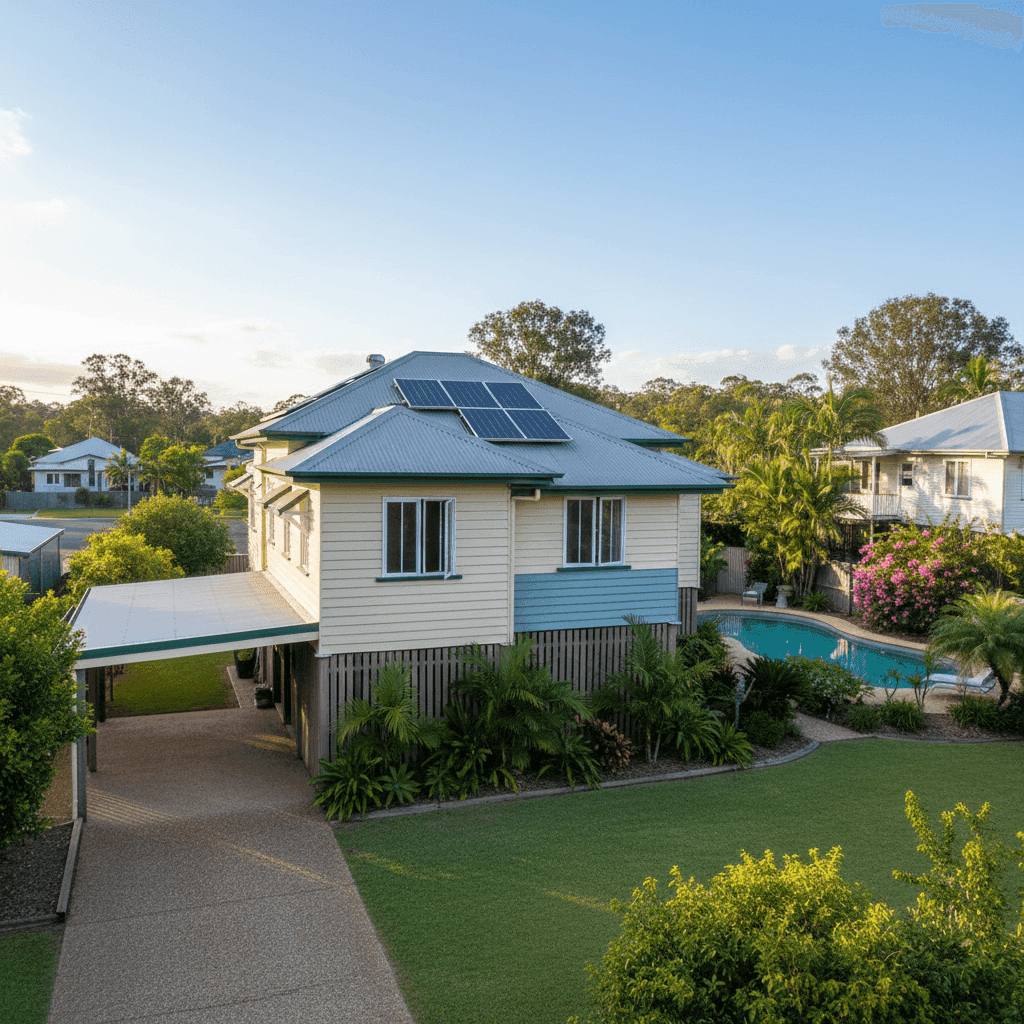
Nestled along the Sunshine Coast hinterland fringe, Maroochy River is a peaceful Queensland community that blends rural character with coastal proximity. For owners of free standing homes in this postcode, securing the right home and contents insurance is an important financial decision — and the premium you pay can vary enormously depending on your property's features and how insurers assess local risk. In this article, we analyse a recent quote for a four-bedroom, three-bathroom home in Maroochy River (QLD 4561) and put it into context against suburb, state, and national benchmarks.
---
Is This Quote Fair?
The quote in question comes in at $3,610 per year (or $354 per month) for combined home and contents cover, with a building sum insured of $1,210,000 and contents valued at $193,000. The building excess is $3,000 and the contents excess is $2,000.
Our analysis rates this quote as CHEAP — below average for the area. That's a meaningful finding, because Maroochy River is not a cheap suburb to insure. The wide spread of premiums across the postcode means some homeowners are paying dramatically more for comparable cover, so landing a quote at this level represents genuine value.
To put it plainly: at $3,610 per year, this homeowner is paying well below what many of their neighbours are quoted. For a property of this size and value, that's a result worth noting.
---
How Maroochy River Compares
The numbers tell an interesting story when you look at home insurance data for Maroochy River (QLD 4561). Based on 45 quotes collected for this suburb:
| Benchmark | Annual Premium |
|---|---|
| This quote | $3,610 |
| Suburb 25th percentile | $4,110 |
| Suburb median | $5,245 |
| Suburb average | $9,821 |
| Suburb 75th percentile | $17,383 |
| LGA (Sunshine Coast) average | $7,249 |
| QLD state average | $4,547 |
| QLD state median | $3,931 |
| National average | $2,965 |
| National median | $2,716 |
A few things stand out here. First, the suburb average of $9,821 is dramatically higher than the median of $5,245 — a classic sign that a small number of very high premiums are pulling the average upward. This is common in flood- and weather-exposed areas where certain properties attract extreme loading from insurers.
Second, the Queensland state average of $4,547 sits above the national average of $2,965, reflecting the elevated risk profile of insuring homes in Queensland more broadly — think storm damage, flooding, and the general severity of Queensland weather events. You can explore national home insurance benchmarks here.
This particular quote, at $3,610, sits below the suburb median, below the QLD state average, and only slightly above the national median — impressive given the property's size and the sum insured.
---
Property Features That Affect Your Premium
Several characteristics of this property influence how insurers price the risk. Understanding these can help you make sense of your own quote.
Weatherboard Timber Construction
External walls of weatherboard wood are common in Queensland homes of this era, but they carry a higher fire risk rating than brick or rendered block construction. Insurers factor this in when calculating replacement costs and risk exposure. Timber homes can also be more susceptible to moisture damage and termite activity over time.
Steel/Colorbond Roof
On the positive side, a Colorbond steel roof is generally viewed favourably by insurers. It's durable, fire-resistant, and performs well in high-wind events — all relevant considerations for Queensland properties. Compared to terracotta or concrete tiles, Colorbond tends to be less expensive to repair or replace after a storm.
Pole Foundation
This home is built on poles — a very common construction method in Queensland, particularly in flood-prone or sloped areas. Elevated homes can fare better in flood events, as water may pass beneath the structure rather than through it. However, the underfloor space and exposed poles require maintenance, and some insurers apply specific conditions to pole-home policies.
Timber and Laminate Flooring
Internal flooring of timber and laminate is attractive but can be costly to replace if water damage occurs. Given the proximity to the Maroochy River, this is worth keeping in mind when setting your contents and building sum insured.
Swimming Pool
Pools add value to a property but also add liability exposure. Most home and contents policies include public liability cover, which would extend to incidents involving the pool. Ensure your policy limits are adequate.
Solar Panels
Solar panels are now a standard feature on many Queensland homes, but they're not always automatically covered under a basic building policy. It's worth confirming with your insurer that your panels — including inverters and mounting systems — are explicitly included in your building sum insured.
Building Size and Sum Insured
At 268 sqm and a building sum insured of $1,210,000, this is a substantial property. Getting the sum insured right is critical — underinsurance is one of the most common and costly mistakes homeowners make. Make sure your figure reflects current construction costs in your area, not the market value of the land.
---
Tips for Homeowners in Maroochy River
1. Don't Anchor to the Market Value
The building sum insured should reflect what it would cost to rebuild your home from scratch — including demolition, materials, labour, and professional fees. In a high-cost construction environment, this figure can be significantly higher than you'd expect. Use a building cost calculator or speak to a quantity surveyor if you're unsure.
2. Confirm Solar Panel and Pool Coverage
Given that this property has both solar panels and a swimming pool, take a few minutes to read the product disclosure statement (PDS) carefully. Some policies have specific exclusions or sub-limits for solar systems, and pool-related liability claims can be complex. Ask your insurer directly what's included.
3. Review Your Excess Strategy
This quote carries a $3,000 building excess and a $2,000 contents excess. Higher excesses generally reduce your premium, but make sure you can comfortably cover those amounts out of pocket if you need to make a claim. If the excess feels too high, it's worth getting comparison quotes with different excess levels.
4. Shop Around — Seriously
The spread of premiums in Maroochy River is extraordinary, with the 75th percentile sitting at $17,383 versus a median of $5,245. That's not a small difference — it's the kind of gap that makes comparing quotes genuinely worthwhile. Even if you're happy with your current insurer, getting a comparison quote annually is one of the simplest ways to avoid paying more than you need to.
---
Compare Your Home Insurance Quote Today
Whether you're a long-time Maroochy River local or new to the area, comparing home insurance quotes is one of the smartest things you can do before renewal time. CoverClub makes it easy to see how your current premium stacks up — and to find cover that suits your property and budget. Get a home insurance quote at CoverClub and see where you land on the spectrum.