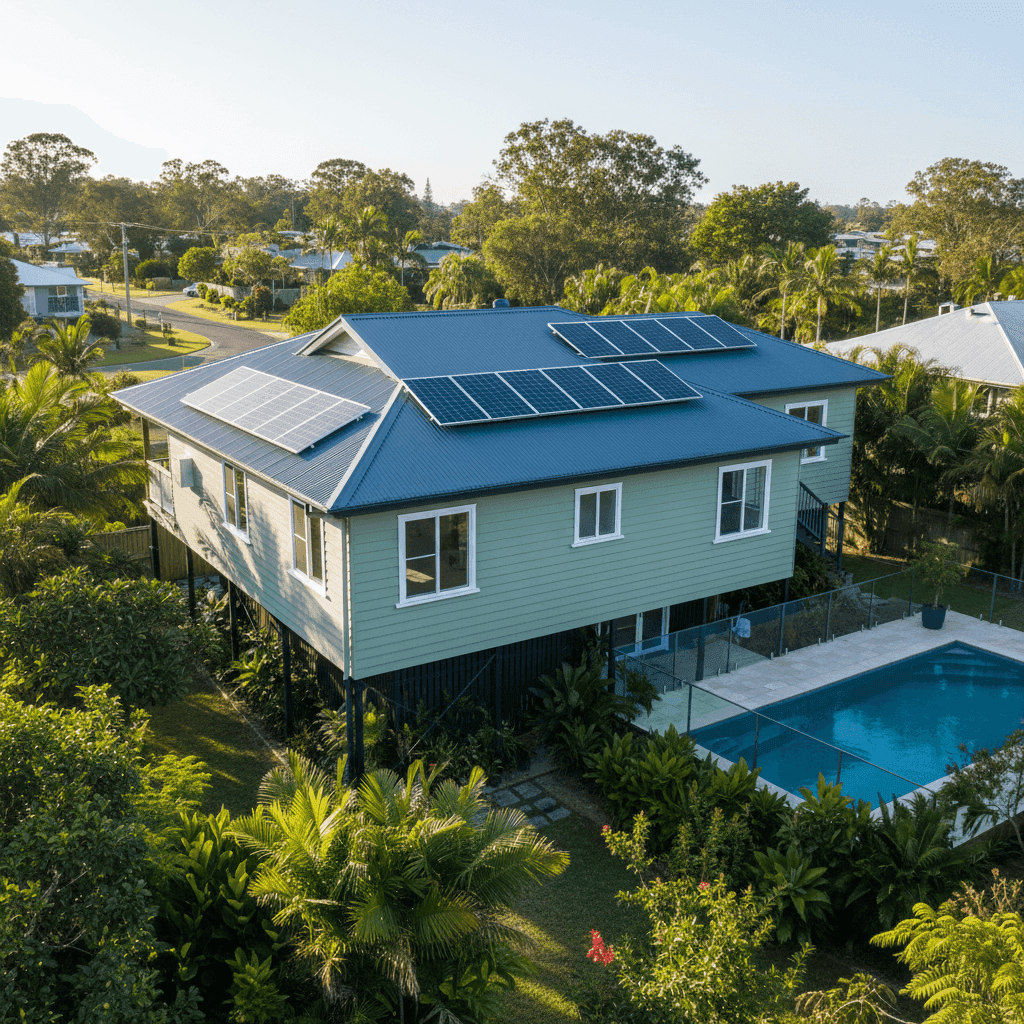
Maroochy River is a quiet, leafy pocket of the Sunshine Coast — the kind of place where elevated pole homes sit among the trees and the occasional flood plain reminds you that Queensland's natural beauty comes with a few strings attached. For owners of a four-bedroom, three-bathroom free standing home in this postcode, understanding what you're paying for home and contents insurance — and whether it's reasonable — is well worth the effort.
This article breaks down a recent home and contents insurance quote for a property in Maroochy River (QLD 4561), compares it against local, state and national benchmarks, and offers practical tips to help you get the best value cover.
---
Is This Quote Fair?
The quote in question sits at $5,065 per year (or $485 per month) for combined home and contents insurance, with a building sum insured of $1,053,000 and contents valued at $197,000. Both the building and contents excess are set at $1,000.
Our price rating for this quote is FAIR — Around Average.
That assessment holds up well when you look at the numbers. The suburb average for Maroochy River is $4,955 per year, meaning this quote is only about $110 above the local average — a marginal difference that could easily be explained by the property's specific features. It sits comfortably within the interquartile range for the suburb (between the 25th percentile of $3,109 and the 75th percentile of $5,654), which tells us this is a typical outcome rather than an outlier.
In short: you're not being gouged, but there may still be room to improve.
---
How Maroochy River Compares
To put this quote in proper context, it helps to look beyond the suburb and zoom out to the broader market. You can explore the full data on the Maroochy River insurance stats page, the Queensland stats page, and national insurance statistics.
| Benchmark | Average Premium | Median Premium |
|---|---|---|
| Maroochy River (suburb) | $4,955/yr | $4,233/yr |
| Sunshine Coast LGA | $7,249/yr | — |
| Queensland (state) | $9,129/yr | $3,903/yr |
| National | $5,347/yr | $2,764/yr |
A few things stand out here. The Queensland state average of $9,129 is extraordinarily high — but this is heavily skewed by cyclone-prone and flood-exposed regions in Far North Queensland and other high-risk coastal areas. The state median of $3,903 is a far more representative figure for typical Queensland homeowners.
Maroochy River's suburb average of $4,955 is notably lower than the broader Sunshine Coast LGA average of $7,249, suggesting that this particular suburb carries a more moderate risk profile than some of its coastal neighbours.
Nationally, this quote of $5,065 sits just below the national average of $5,347 — again reinforcing the "around average" rating. It is, however, significantly above the national median of $2,764, which reflects the reality that Queensland properties — particularly those with elevated flood or storm exposure — tend to attract higher premiums than the national median would suggest.
---
Property Features That Affect Your Premium
Several characteristics of this property will be influencing the premium, some pushing it higher and others keeping it in check.
Weatherboard timber walls and a pole foundation are key factors. Pole homes are common in Queensland's flood-prone and hilly areas, and while they can reduce inundation risk, insurers often view timber-framed and weatherboard construction as more vulnerable to storm, fire and pest damage compared to brick or rendered masonry. This typically results in a higher premium.
Timber and laminate flooring adds to the replacement cost calculation, particularly given the elevated building sum insured of $1,053,000 — a figure that reflects both the size of the home (268 sqm) and the cost of quality finishes.
The steel/Colorbond roof is generally viewed favourably by insurers. Colorbond is durable, fire-resistant and performs well in high-wind events, which can help moderate the premium compared to older roofing materials.
The swimming pool, solar panels and ducted climate control all add to the insured value of the property and can incrementally increase premiums. Solar panels in particular introduce specific risks (fire, storm damage) that insurers factor into their pricing. It's worth confirming that your policy explicitly covers solar panel systems — not all standard policies do.
No cyclone risk designation is a meaningful saving for this property. Homes in cyclone-rated zones across Queensland can face dramatically higher premiums, so the absence of this flag keeps costs more manageable.
The 1997 construction year places the home in a mature but not ancient bracket. Properties from this era may have older electrical or plumbing systems that could attract scrutiny at claim time, so it's worth ensuring your coverage reflects the actual cost of bringing systems up to current standards if repairs are needed.
---
Tips for Homeowners in Maroochy River
1. Review your building sum insured regularly At $1,053,000, the building sum insured is substantial. Construction costs have risen sharply in recent years, and being underinsured can leave you significantly out of pocket after a major claim. Use a current building cost calculator or speak with a quantity surveyor to validate this figure annually.
2. Confirm your solar panels and pool are explicitly covered Not all home insurance policies automatically extend to solar panel systems or pool equipment. Check your Product Disclosure Statement (PDS) carefully and ask your insurer directly. If these items aren't covered — or have sublimits — it may be worth seeking a policy that includes them as standard.
3. Ask about flood cover Maroochy River's name is a hint — properties near waterways on the Sunshine Coast can carry flood exposure. Confirm whether your policy includes flood cover (distinct from storm surge or rainwater run-off), and understand the specific definition your insurer uses. Flood cover is sometimes excluded or offered as an optional add-on.
4. Compare quotes before renewal A "fair" rating means you're not overpaying dramatically — but it doesn't mean you can't do better. Insurers adjust their pricing models frequently, and loyalty doesn't always pay. Shopping around at renewal time, even just to benchmark your current premium, is one of the simplest ways to save.
---
Ready to Compare?
Whether you're reviewing an existing policy or shopping for the first time, comparing multiple quotes is the most effective way to ensure you're getting genuine value. Get a home insurance quote at CoverClub and see how your premium stacks up against the market in seconds — no obligation, no jargon.