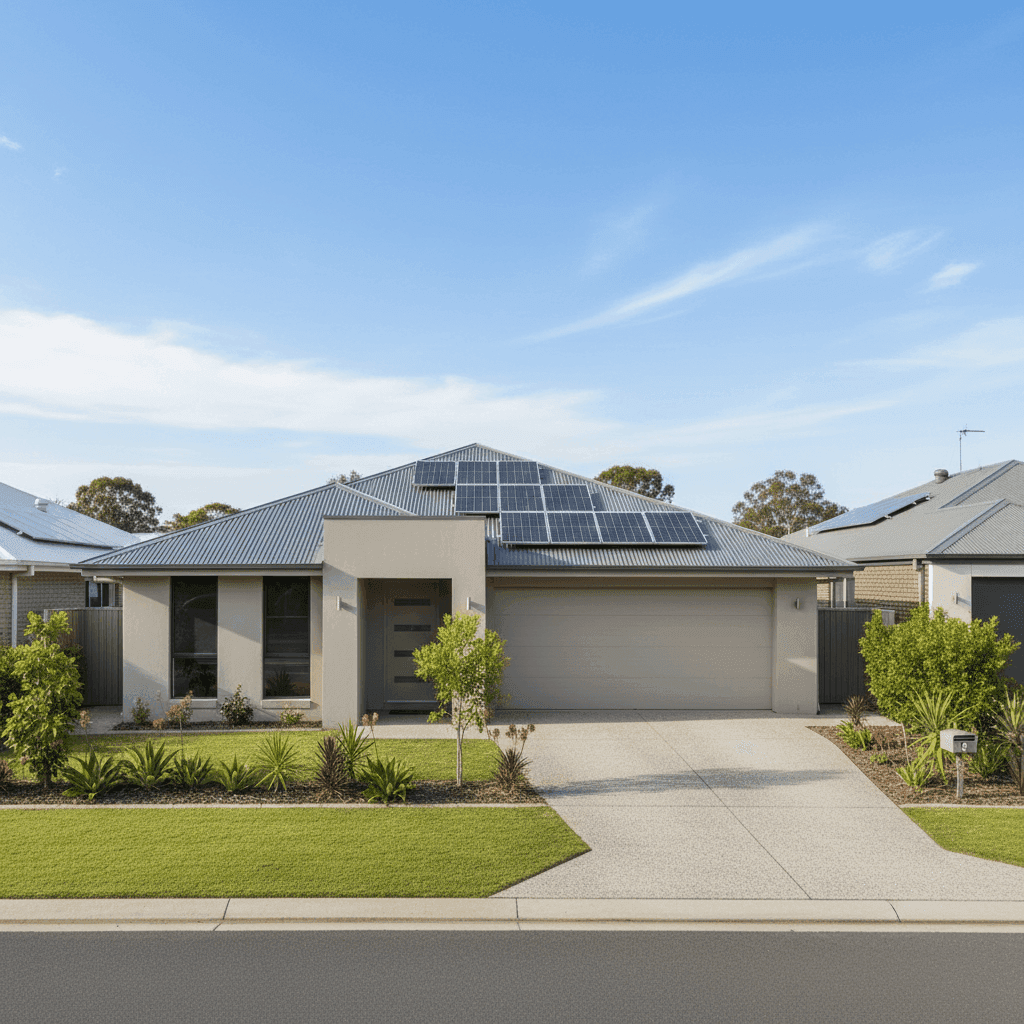
If you own a free standing home in Maroochydore, QLD 4558, you're living in one of the Sunshine Coast's most sought-after suburbs — and your home insurance premium reflects the unique mix of factors that come with it. This article breaks down a recent building-only insurance quote for a four-bedroom, three-bathroom home in the area, compares it against local, state, and national benchmarks, and offers practical tips to help you make the most of your cover.
---
Is This Quote Fair?
The quote in question comes in at $8,540 per year (or $818/month) for building-only cover on a 235 sqm free standing home built in 2018, with a sum insured of $900,000 and a building excess of $5,000.
Our pricing analysis rates this quote as FAIR — around average. That's a meaningful finding. It suggests the premium isn't a bargain, but it's also not out of line with what insurers are charging for comparable properties in the region. Given that Queensland premiums have been under significant upward pressure in recent years — driven by extreme weather events, rising construction costs, and reinsurance pressures — landing near the average is a reasonably solid outcome.
The $5,000 building excess is on the higher side and is worth noting. A higher excess typically reduces your annual premium, so if this quote were paired with a lower excess, the annual cost could be noticeably higher. Before accepting any policy, it's worth modelling a few excess scenarios to find the right balance between upfront risk and ongoing cost.
---
How Maroochydore Compares
To put this quote in proper context, let's look at how it stacks up across different geographic benchmarks. You can explore the full data on the Maroochydore suburb stats page, the Queensland state overview, and the national insurance statistics.
| Benchmark | Average Premium | Median Premium |
|---|---|---|
| Maroochydore (suburb) | $48,776/yr | $4,607/yr |
| Queensland (state) | $9,129/yr | $3,903/yr |
| National | $5,347/yr | $2,764/yr |
| Sunshine Coast (LGA) | $7,249/yr | — |
A few things stand out here. First, the suburb average of $48,776 is dramatically higher than the median of $4,607 — a clear sign that a small number of very high-value or high-risk properties are pulling the mean upward. This is why the median is often a more reliable benchmark for typical homeowners. Against the suburb median of $4,607, the $8,540 quote sits above the midpoint — but that's consistent with this property's above-average size (235 sqm), high sum insured ($900,000), and premium features like solar panels and ducted climate control.
Compared to the Queensland state average of $9,129, this quote is actually slightly below — a positive sign. Against the Sunshine Coast LGA average of $7,249, it sits higher, though again the property's specifications justify some of that gap. Nationally, the average sits at $5,347, but direct comparisons with national figures can be misleading given Queensland's elevated risk profile and higher construction costs relative to southern states.
The suburb's 25th–75th percentile range of $3,399 to $15,269 tells you that premiums in Maroochydore vary enormously. At $8,540, this quote sits comfortably within that interquartile range, reinforcing the "fair" rating.
---
Property Features That Affect Your Premium
Several characteristics of this property have a direct bearing on the premium calculated:
Modern construction (2018): Newer homes generally attract more favourable premiums. A 2018 build means the property is likely compliant with updated building codes, features contemporary materials, and carries a lower risk of structural issues compared to older dwellings.
Steel/Colorbond roof: Colorbond roofing is widely regarded by insurers as a durable, low-maintenance option that performs well in Queensland's harsh climate. It's resistant to corrosion, handles heavy rainfall effectively, and is less susceptible to storm damage than some tile alternatives — all factors that can positively influence your risk profile.
Slab foundation: A concrete slab is a stable, well-understood foundation type that insurers are comfortable with. It doesn't carry the same subsidence or termite-related risks as some other foundation types, which can help keep premiums in check.
Solar panels: While solar panels are a great investment for energy savings, they do add to your building's replacement value and introduce some additional risk (e.g. storm damage, electrical faults). Ensuring your sum insured adequately accounts for the cost of replacing your solar system is important.
Ducted climate control: Ducted air conditioning systems are a significant fixed asset and add to the overall replacement cost of the building. Like solar panels, they should be factored into your sum insured calculation.
No pool, no cyclone risk zone: The absence of a pool removes a common liability and maintenance risk from the equation. Importantly, Maroochydore falls outside designated cyclone risk areas, which meaningfully reduces the premium loading that applies to properties further north in Queensland.
Tile flooring and standard fittings: These are cost-effective to replace compared to premium alternatives, which helps keep the assessed rebuild cost — and therefore the premium — more manageable.
---
Tips for Homeowners in Maroochydore
1. Review your sum insured regularly With $900,000 in building cover, it's essential to ensure this figure reflects the true cost of rebuilding your home from scratch — not its market value. Construction costs in South East Queensland have risen sharply in recent years. An underinsured property can leave you significantly out of pocket after a major claim, so revisit this figure at each renewal.
2. Consider your excess carefully The $5,000 building excess on this policy is substantial. While a higher excess reduces your premium, it also means you'll absorb more of the cost in the event of a claim. If a $5,000 out-of-pocket expense would be a financial strain, it may be worth requesting quotes with a lower excess to compare the trade-off.
3. Protect your solar investment Make sure your policy explicitly covers your solar panel system under the building definition. Some policies have specific exclusions or sub-limits for solar, so read the Product Disclosure Statement (PDS) carefully and confirm coverage with your insurer.
4. Shop around at renewal Loyalty doesn't always pay in insurance. Insurers frequently offer their best rates to new customers, and premiums can vary significantly between providers for the same property. Use a comparison platform like CoverClub to benchmark your renewal quote before you commit.
---
Ready to Compare?
Whether you're renewing your existing policy or shopping for cover on a new property, it pays to see what the market is offering. At CoverClub, you can get a home insurance quote in minutes and compare it against real data from properties in your suburb and across Queensland. Don't just accept the first number your insurer sends — make sure you're getting fair value for your cover.