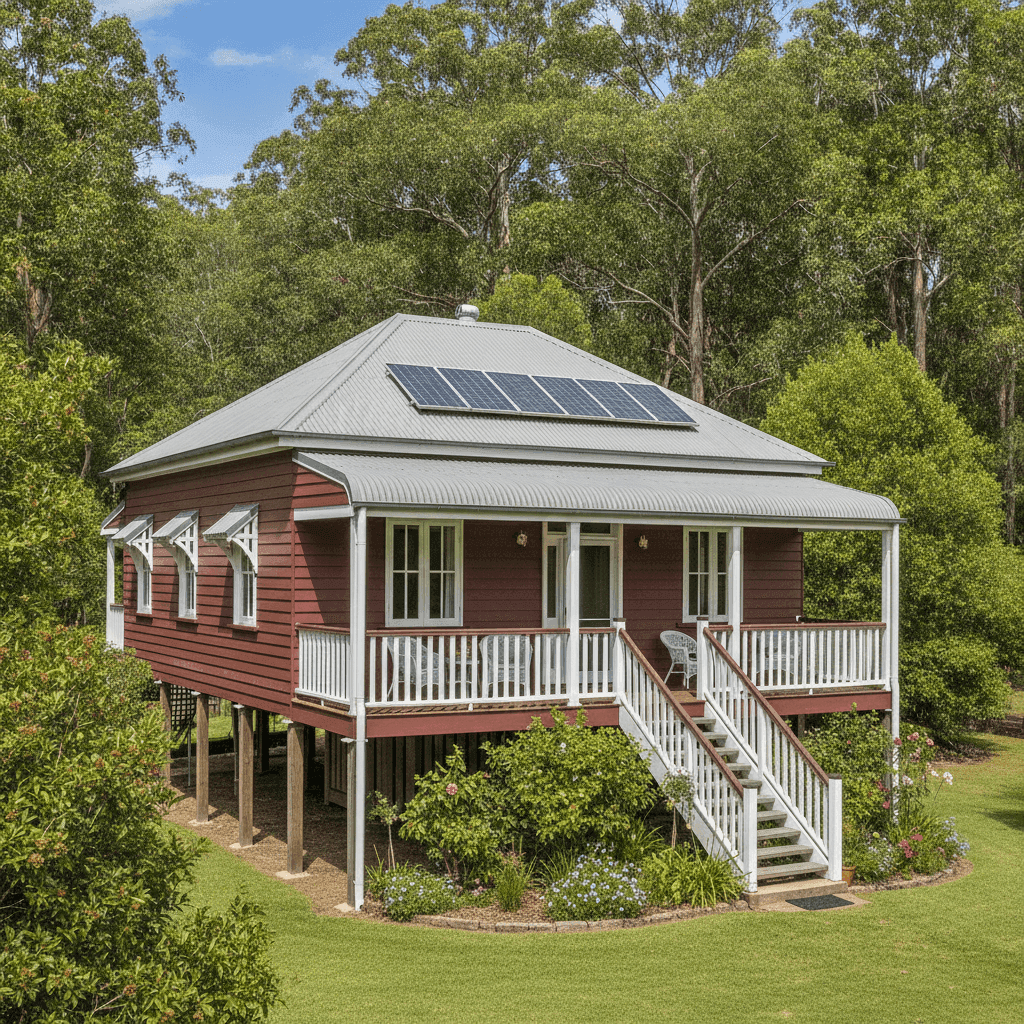
If you own a free standing home in Maroon, QLD 4310, you already know the appeal — rolling hills, a tight-knit community, and that quintessential South East Queensland rural lifestyle. But nestled in the Scenic Rim region, properties here come with a unique set of characteristics that insurers pay close attention to. From older timber construction to elevated stumped foundations, the details of your home matter enormously when it comes to what you pay for cover.
This article breaks down a real home and contents insurance quote for a 3-bedroom, 1-bathroom free standing home in Maroon, helping you understand whether the price is fair, how it compares to broader benchmarks, and what you can do to keep your premiums manageable.
---
Is This Quote Fair?
The quote in question comes in at $3,994 per year (or $383/month) for combined home and contents cover, with a building sum insured of $550,000 and contents valued at $50,000. Both the building and contents excess are set at $1,000.
Our pricing analysis rates this quote as CHEAP — below average for the area. That's genuinely good news for the homeowner. Given the property's age (built in 1952), its weatherboard timber construction, and its location in the Scenic Rim LGA — a region where insurers have historically priced risk conservatively — landing a quote below the local average is a solid outcome.
To put it in perspective: the QLD state average premium sits at $9,129 per year, more than double this quote. Even the state median — a more representative figure that strips out extreme outliers — is $3,903/year, meaning this quote is tracking just slightly above the Queensland median while offering $550,000 in building cover. At the national level, the average is $5,347/year and the median is $2,764/year.
So while the quote is slightly above the national median, it's well below both the QLD and Scenic Rim LGA averages, and the property's features largely justify the pricing.
---
How Maroon Compares
Suburb-level data for Maroon isn't available in sufficient volume to produce a statistically reliable local benchmark — which isn't unusual for smaller rural communities. However, the LGA-level data tells an important story.
| Benchmark | Annual Premium |
|---|---|
| This Quote | $3,994 |
| QLD State Median | $3,903 |
| QLD State Average | $9,129 |
| National Median | $2,764 |
| National Average | $5,347 |
| Scenic Rim LGA Average | $8,744 |
The Scenic Rim LGA average of $8,744/year is particularly striking. This elevated figure reflects the region's exposure to severe weather events, bushfire risk, and the prevalence of older rural properties — all of which push premiums higher across the board. Against that backdrop, a quote of $3,994 represents meaningful savings.
You can explore more localised data for the postcode at the Maroon suburb stats page as more data becomes available.
---
Property Features That Affect Your Premium
Several characteristics of this property have a direct bearing on what insurers charge. Understanding them helps you have more informed conversations with your insurer — and potentially identify levers to reduce your costs.
Age and Construction (1952, Weatherboard Timber)
Homes built in the early 1950s were constructed to different standards than modern builds. Weatherboard timber walls, while charming and well-suited to the Queensland climate, are considered higher risk by insurers due to their susceptibility to fire, rot, and pest damage. Rebuilding or repairing older timber homes can also be more expensive, as tradespeople skilled in heritage techniques may be required.
Roof Type: Steel / Colorbond
On the positive side, a Colorbond steel roof is viewed favourably by most insurers. It's durable, low-maintenance, and performs well in high-wind and hail events compared to older roofing materials like fibrous cement or terracotta tiles. This likely helps moderate the premium.
Foundation: Stumps (Elevated Less Than 1m)
Stumped foundations are common in Queensland, particularly in older homes, and they serve an important purpose — elevating the structure above ground moisture and improving airflow. However, insurers factor in the additional complexity of repairing or relevelling a stumped home. Being elevated by less than 1 metre means the home doesn't qualify for the deeper flood-protection benefits of a fully elevated Queenslander, but it does still offer some resilience.
Solar Panels
The presence of solar panels adds to the replacement value of the property. Insurers need to account for the cost of reinstating panels after storm, hail, or fire damage. It's worth confirming with your insurer that your solar system is explicitly covered under your building policy and that the sum insured of $550,000 adequately accounts for it.
Ducted Climate Control
Ducted air conditioning systems are expensive to replace and are typically covered under building insurance. Like solar, it's important to ensure your sum insured reflects the full cost of reinstating this system.
Flooring: Timber / Laminate
Timber and laminate flooring can be costly to replace, particularly in older homes where matching existing boards may be difficult. This is a contents or building consideration depending on how the flooring is installed — worth clarifying with your insurer.
---
Tips for Homeowners in Maroon
1. Review Your Sum Insured Annually
Construction costs in regional Queensland have risen sharply in recent years. A building sum insured of $550,000 may be appropriate today, but it's worth reassessing each year — particularly for a 1952 home where heritage materials and skilled labour can push rebuild costs higher than you might expect. Underinsurance is one of the most common and costly mistakes homeowners make.
2. Confirm Solar and Climate Control Are Fully Covered
Solar panels and ducted air conditioning are significant assets. Check your policy documents carefully to confirm these are included in your building cover and that the sum insured accounts for their full replacement value. Some policies have sub-limits or exclusions for these items.
3. Maintain Your Stumps and Subfloor
Insurers may reduce or deny claims related to gradual deterioration of stumps, as this is typically considered a maintenance issue rather than a sudden event. Regular inspections by a licensed builder or pest inspector can help you catch problems early — and demonstrate to your insurer that you're a responsible property owner.
4. Shop Around at Renewal
Even if you're happy with your current quote, it pays to compare. The Scenic Rim LGA average of $8,744/year shows that many homeowners in the region are paying significantly more than necessary. Use a comparison platform like CoverClub to benchmark your renewal quote against the market each year.
---
Compare Your Home Insurance Today
Whether you're a long-time Maroon local or you've recently made the move to the Scenic Rim, making sure you have the right cover at the right price is one of the smartest financial decisions you can make as a homeowner. CoverClub makes it easy to compare home and contents insurance quotes from a range of Australian insurers — so you can see exactly where your premium sits and whether there's a better deal waiting for you.