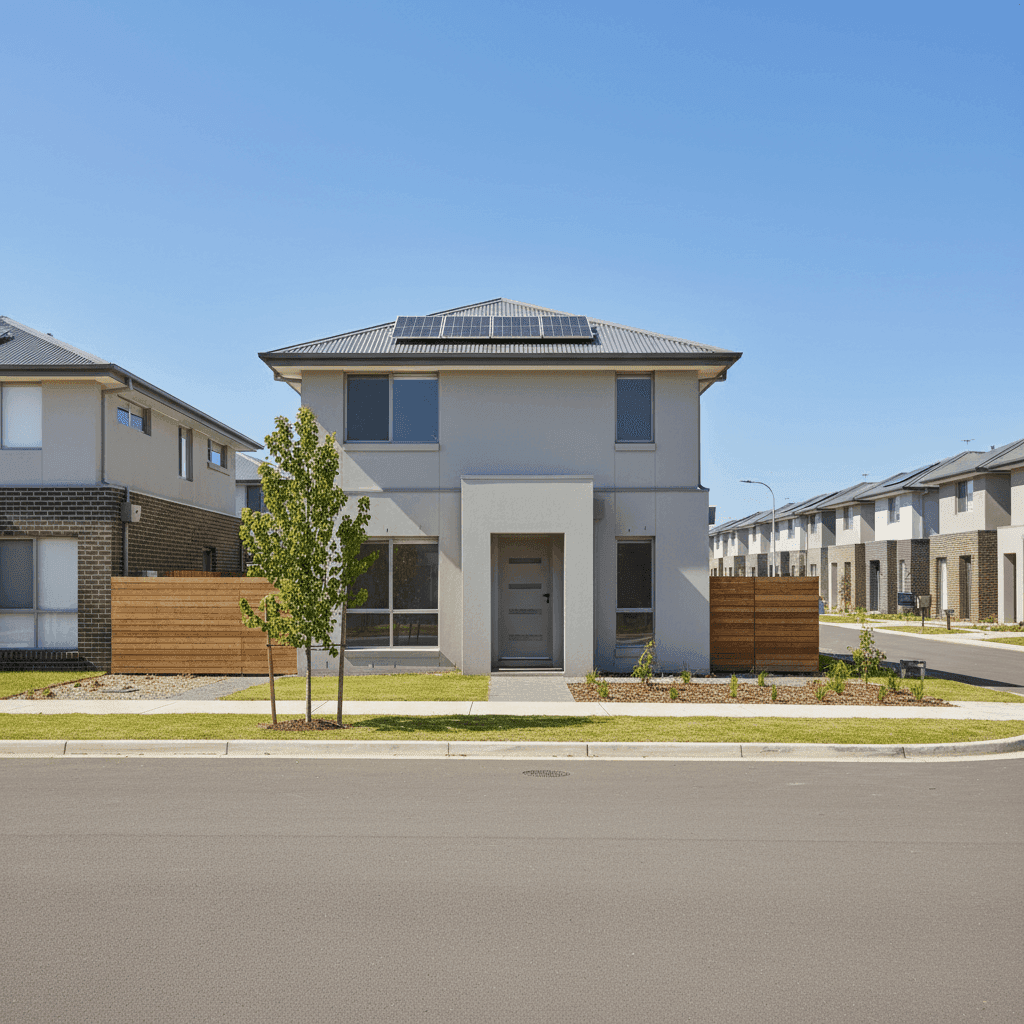
If you own a terrace in Marsden Park, NSW 2765, you're living in one of Western Sydney's fastest-growing corridors — a suburb that has transformed dramatically over the past decade with modern residential developments, strong infrastructure investment, and a growing community. With that growth comes the important question every homeowner eventually faces: am I paying the right amount for my home insurance?
This article breaks down a real home and contents insurance quote for a 2-bedroom, 3-bathroom terrace in Marsden Park, comparing it against local, state, and national benchmarks so you can make a more informed decision about your own cover.
---
Is This Quote Fair?
The annual premium on this quote comes in at $1,789 per year (or $163/month), covering both building (sum insured: $683,000) and contents ($50,000), each with a $1,000 excess. Our analysis rates this quote as FAIR — Around Average.
Here's what that means in practice. Based on 30 quotes collected for Marsden Park (postcode 2765):
- The suburb average premium is $1,873/yr
- The suburb median is $1,740/yr
- The 25th percentile sits at $1,391/yr — meaning a quarter of comparable properties are paying less than this
- The 75th percentile is $2,263/yr — so a quarter are paying more
At $1,789/yr, this quote lands between the median and the average — solidly in the middle of the pack for the suburb. It's not the cheapest available, but it's well clear of the more expensive end of the market. For a relatively new, well-constructed terrace with above-average fittings, this positioning makes sense.
---
How Marsden Park Compares to NSW and Australia
One of the most striking findings when you zoom out is just how much more expensive home insurance is across the broader NSW market. The state average premium is $9,528/yr, though the median tells a more representative story at $3,770/yr — still more than double the Marsden Park median.
At the national level, the average premium is $5,347/yr with a median of $2,764/yr. Again, Marsden Park sits comfortably below both figures.
Why the difference? NSW's state average is heavily skewed by high-risk areas — coastal properties exposed to storm surge, flood-prone regions in the Northern Rivers and Hunter Valley, and bushfire-affected zones in the Blue Mountains and beyond. Marsden Park, by contrast, is not classified as a cyclone risk area and benefits from its position as a modern, planned urban development with relatively low exposure to extreme weather events.
The LGA average for Penrith (the local government area that encompasses Marsden Park) is $2,220/yr — still higher than this quote, which further reinforces the "fair" rating.
In short: Marsden Park is a relatively affordable suburb to insure, and this quote reflects that.
---
Property Features That Affect Your Premium
Several characteristics of this property influence how insurers price the risk — and in this case, most of them work in the homeowner's favour.
Construction year (2020): A property built in 2020 benefits from modern building codes, which mandate higher standards for structural integrity, fire resistance, and weatherproofing. Newer homes are statistically less likely to suffer certain types of damage, which can translate to lower premiums.
Hebel external walls: Hebel (autoclaved aerated concrete) panels are lightweight, thermally efficient, and — critically for insurers — highly fire resistant. This is a meaningful positive factor in premium calculations, particularly in a state where bushfire risk is always a consideration.
Steel/Colorbond roof: Colorbond steel roofing is durable, low-maintenance, and performs well in high-wind and hail events. It's one of the more insurer-friendly roofing materials available in Australia, and its prevalence in newer builds is one reason modern homes often attract more competitive premiums.
Slab foundation and tile flooring: Concrete slab foundations are structurally sound and resistant to subsidence and termite ingress. Combined with tile flooring, this reduces the risk of water damage claims — a common driver of home insurance costs.
Solar panels: The property has solar panels installed, which adds a modest replacement cost consideration for insurers. It's worth confirming with your insurer that your solar system is explicitly included in your building sum insured, as some policies treat it separately.
Above-average fittings quality: Higher-quality fittings — think stone benchtops, premium tapware, quality cabinetry — increase the rebuild cost of the home, which is reflected in the $683,000 building sum insured. This is appropriate; underinsuring a well-appointed home is a risk that catches many homeowners out at claim time.
No pool: The absence of a pool removes a liability and maintenance risk factor that can nudge premiums upward.
---
Tips for Homeowners in Marsden Park
1. Check that your building sum insured reflects current construction costs Construction costs have risen sharply across Australia in recent years. A sum insured of $683,000 for a 105 sqm terrace with above-average fittings appears reasonable, but it's worth running a building cost calculator annually to ensure you're not underinsured. Many insurers offer free tools for this.
2. Confirm your solar panels are covered As noted above, solar panel systems can sometimes fall into a grey area within policy wording. Ask your insurer directly whether your panels, inverter, and associated wiring are covered under the building section — and for how much.
3. Shop around at renewal time Even a "fair" quote can become uncompetitive over time as insurers adjust their pricing models. The gap between the 25th percentile ($1,391/yr) and this quote ($1,789/yr) is nearly $400 per year — a meaningful saving if you qualify. Comparing quotes annually takes minutes and can deliver real results.
4. Consider your excess level carefully Both the building and contents excess on this policy sit at $1,000. A higher excess typically reduces your premium, while a lower excess means less out-of-pocket cost at claim time. Think about what you could comfortably afford to pay in the event of a claim, and adjust accordingly.
---
Ready to Compare?
Whether you're reviewing your current policy or shopping for cover for the first time, CoverClub makes it easy to see how your quote stacks up. Get a home insurance quote today and compare options side by side — so you can be confident you're getting the right cover at the right price for your Marsden Park home.