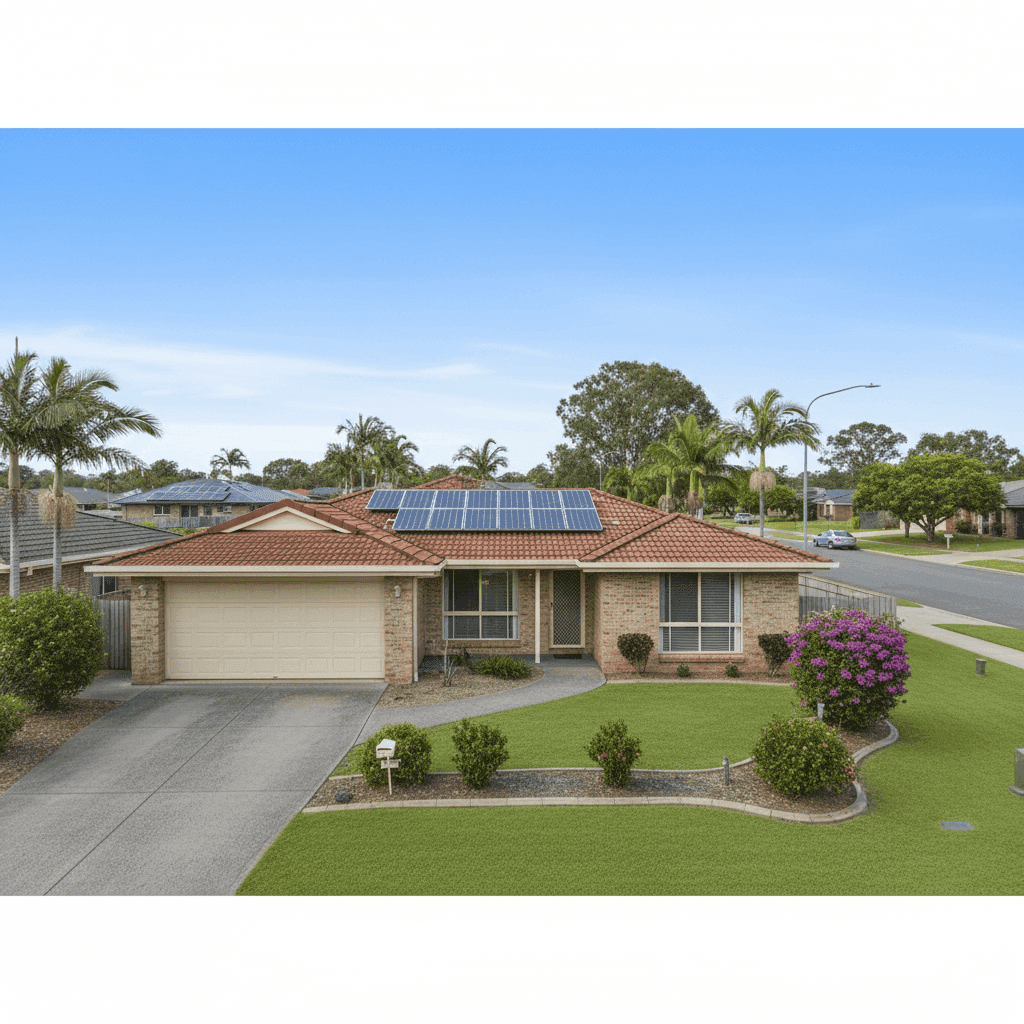
If you own a free standing home in Marsden, QLD 4132, you already know the suburb sits in one of Logan City's most established residential pockets — a mix of family homes, good schools, and convenient access to both Brisbane and the Gold Coast. But when it comes to home insurance, how much should you actually be paying? This article breaks down a real quote for a four-bedroom, two-bathroom brick veneer home in Marsden, compares it against local, state, and national benchmarks, and offers practical tips to help you get the best value on your cover.
---
Is This Quote Fair?
The quote in question comes in at $1,336 per year (or $129/month) for combined Home and Contents insurance, covering a building sum insured of $630,000 and contents valued at $76,000. Both the building and contents excess are set at $2,000.
Our price rating for this quote? Cheap — below average. That's genuinely good news for the homeowner.
To put it in perspective: the suburb average premium for Marsden sits at a striking $9,356 per year, with a median of $7,979. This quote comes in at roughly 86% below the suburb average — a remarkable saving by any measure. Even compared to the suburb's 25th percentile (the cheapest quarter of quotes sampled), which is $5,829/yr, this premium is still dramatically lower.
It's worth noting that the suburb sample size is 14 quotes, which is a relatively small dataset. That said, the consistency between the average and median figures suggests the high premiums in Marsden are a genuine trend rather than a statistical outlier. Insurers clearly price this area with a degree of caution.
Against the Queensland state average of $4,547/yr and the national average of $2,965/yr, this quote still holds up extremely well. At $1,336, it's more than 70% below the QLD average and well under half the national average. By any yardstick, this is a competitively priced policy.
---
How Marsden Compares
The pricing landscape for home insurance in Marsden is notably elevated compared to broader benchmarks. Here's a quick snapshot:
| Benchmark | Annual Premium |
|---|---|
| This Quote | $1,336 |
| Marsden Suburb Average | $9,356 |
| Marsden Suburb Median | $7,979 |
| Marsden 25th Percentile | $5,829 |
| Logan LGA Average | $3,411 |
| QLD State Average | $4,547 |
| National Average | $2,965 |
| National Median | $2,716 |
What stands out immediately is how far Marsden's suburb-level premiums exceed both the Logan LGA average ($3,411) and the Queensland state average. This suggests that insurers are applying a localised risk loading to properties in the 4132 postcode — likely driven by flood and storm risk factors historically associated with parts of the Logan area.
Interestingly, the Logan LGA average of $3,411 is considerably lower than the Marsden suburb average, which could indicate that risk is concentrated in specific pockets of the postcode rather than spread evenly across the broader council area. If you're shopping for insurance in this suburb, it pays to compare multiple insurers rather than accepting the first quote you receive. You can explore the full breakdown of Marsden insurance statistics here.
---
Property Features That Affect Your Premium
Several characteristics of this particular property work in the homeowner's favour from an underwriting perspective:
Brick Veneer Construction Brick veneer is generally viewed favourably by insurers. It offers solid fire resistance and structural durability compared to lightweight cladding or weatherboard. This can translate to lower building premiums, as the rebuild risk is considered more predictable.
Tiled Roof Concrete or terracotta tiles are a standard and well-regarded roofing material in Australia. They perform reasonably well in storms and have a long lifespan, which insurers tend to price more favourably than, say, older corrugated iron or asbestos-containing materials.
Slab Foundation A concrete slab is a common and structurally sound foundation type in Queensland. It generally presents fewer concerns for insurers compared to older pier-and-beam foundations, which can be more susceptible to movement or moisture-related issues.
Construction Year: 1997 A home built in 1997 is relatively modern in terms of building codes, which were progressively strengthened through the 1990s. It's old enough to have some wear, but young enough to have been built to reasonable cyclone and structural standards — even though Marsden is not classified as a cyclone risk area.
Solar Panels The property has solar panels installed. While solar panels add to the replacement value of the home, they're typically covered under building insurance. It's important to ensure the sum insured ($630,000 in this case) accounts for the cost of replacing the panels as part of the overall structure.
No Pool, No Ducted Climate Control The absence of a pool removes a notable liability and maintenance risk factor. Similarly, no ducted air conditioning system means one less complex mechanical system that could contribute to a claim.
Standard Fittings Standard-quality fittings and fixtures keep the rebuild cost estimate more predictable and generally support a more moderate premium compared to high-end or custom finishes.
---
Tips for Homeowners in Marsden
Given the elevated insurance pricing typical of this suburb, here are four practical steps worth considering:
- Shop around every year — seriously. The gap between the cheapest and most expensive quotes in Marsden is enormous (the 75th percentile sits at $13,685/yr). Loyalty to a single insurer rarely pays off. Use a comparison service like CoverClub to benchmark your renewal quote against the market each year.
- Review your sum insured carefully. A $630,000 building sum insured for a 139 sqm home is on the higher end per square metre. Make sure your figure reflects actual rebuild costs (not market value), including demolition, site preparation, and professional fees. Overinsuring pushes your premium up unnecessarily, while underinsuring can leave you exposed at claim time.
- Ask about flood cover specifically. Parts of the Logan area have a documented flood history. When comparing policies, confirm whether flood is included as standard or available as an optional add-on — and check the policy definitions carefully, as "flood," "storm surge," and "rainwater runoff" can be treated differently depending on the insurer.
- Consider your excess strategically. Both excesses on this policy are set at $2,000. Opting for a higher excess is one of the most effective levers for reducing your annual premium. If you have a solid emergency fund and are unlikely to make small claims, increasing your excess further could yield meaningful savings.
---
Ready to Compare?
Whether you're renewing your existing policy or buying insurance for the first time, it's always worth seeing what else is out there. CoverClub makes it easy to compare home and contents insurance quotes tailored to your property and location. Get a quote today at CoverClub and find out if you could be paying less — just like the homeowner featured in this analysis.