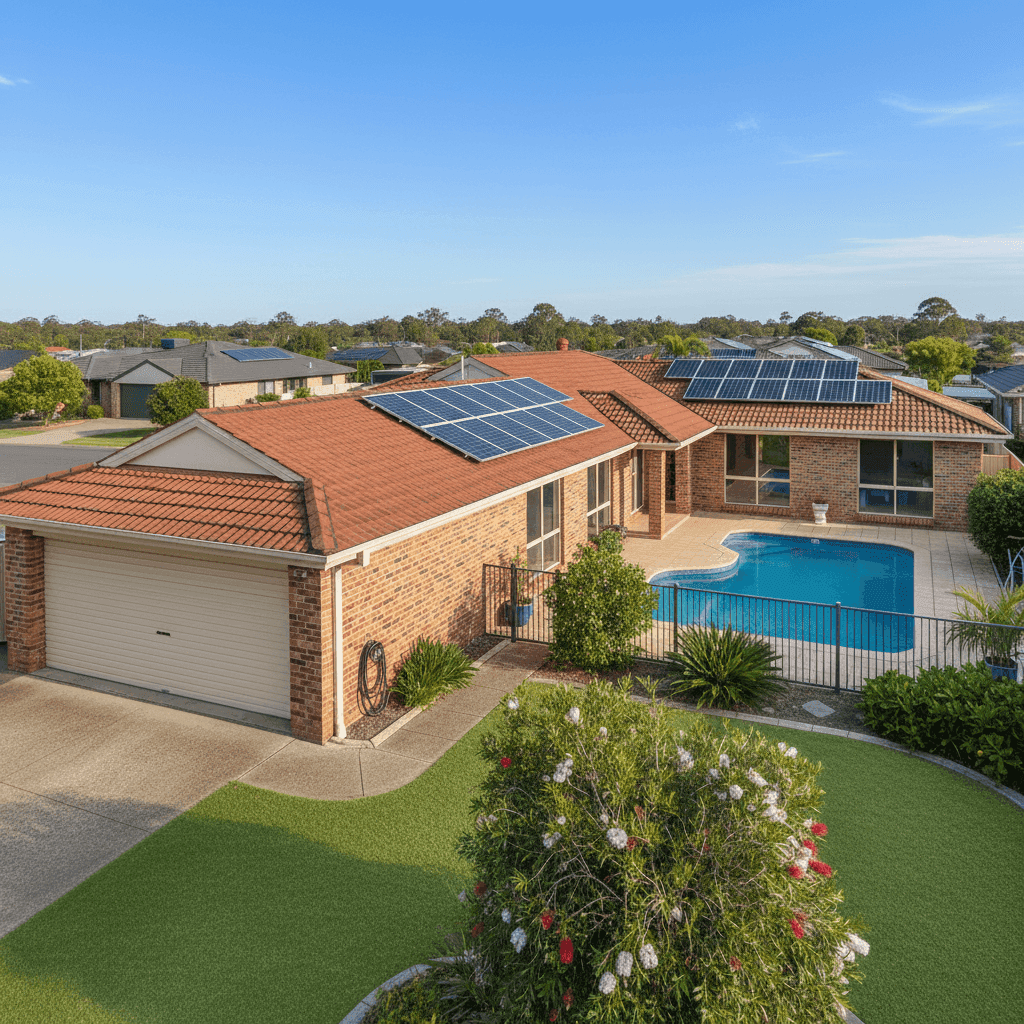
Marsden is a well-established suburb in Logan City, sitting about 25 kilometres south of Brisbane's CBD. With its mix of family homes, leafy streets, and proximity to major transport corridors, it's a popular choice for owner-occupiers seeking space without the inner-city price tag. This article takes a close look at a real home and contents insurance quote for a five-bedroom free standing home in Marsden (postcode 4132) — breaking down whether the price stacks up, how it compares to broader benchmarks, and what property features are likely driving the cost.
---
Is This Quote Fair?
The quote in question comes in at $2,986 per year (or $286/month) for combined home and contents cover, with a building sum insured of $1,001,000 and contents valued at $50,000. Both the building and contents excess are set at $1,000.
Our price rating for this quote is Expensive (Above Average) — and the data backs that up.
When compared against other quotes collected for Marsden (QLD 4132), this premium sits above the suburb median of $2,057/yr and just below the suburb average of $3,028/yr. It also falls above the 75th percentile threshold of $2,688/yr, meaning it's pricier than roughly three-quarters of quotes collected in the area.
That said, "expensive" is relative. Compared to the broader Queensland insurance market — where the state average premium is a staggering $9,129/yr and the median sits at $3,903/yr — this Marsden quote is actually quite reasonable. Queensland homeowners in cyclone-prone coastal and northern regions face dramatically higher premiums, which pulls the state figures up considerably. Marsden's position in south-east Queensland, outside designated cyclone risk zones, offers a meaningful cost advantage.
---
How Marsden Compares
Here's a snapshot of how this $2,986/yr quote sits against key benchmarks:
| Benchmark | Premium |
|---|---|
| This quote | $2,986/yr |
| Marsden suburb median | $2,057/yr |
| Marsden suburb average | $3,028/yr |
| Logan LGA average | $4,617/yr |
| QLD state median | $3,903/yr |
| QLD state average | $9,129/yr |
| National median | $2,764/yr |
| National average | $5,347/yr |
(Based on 51 quotes collected for the Marsden area.)
A few things stand out here. First, the gap between Marsden's average ($3,028) and its median ($2,057) is significant — a spread of nearly $1,000 — which suggests a handful of higher-value or higher-risk properties are pulling the average upward. This quote, at $2,986, is clearly on the upper end of the local range.
Second, when measured against national benchmarks, this premium is above the national median of $2,764/yr but well below the national average of $5,347/yr. Nationally, averages are heavily influenced by high-risk postcodes in northern Queensland, Western Australia, and flood-affected inland regions.
The Logan LGA average of $4,617/yr is notably higher than what this property is quoted — suggesting that properties elsewhere in the Logan council area (which spans a large and varied geography) may carry greater risk profiles.
---
Property Features That Affect Your Premium
Several characteristics of this property are likely influencing the premium — some pushing it higher, others keeping it in check.
Building sum insured of $1,001,000 This is the single biggest driver of premium cost. At just over a million dollars, this is a substantial sum insured for a 214 sqm home, reflecting the above-average fittings quality and the cost of rebuilding a well-appointed five-bedroom property. Higher rebuild values mean higher premiums — it's a straightforward relationship.
Brick veneer construction with a tiled roof These are generally considered lower-risk building materials by insurers. Brick veneer offers solid fire resistance and durability, while tiled roofs are viewed favourably compared to materials like Colorbond or fibrous cement in some risk assessments. This combination likely helps moderate the premium.
Slab foundation A concrete slab is a standard and stable foundation type in Queensland. Unlike homes on stumps or piers, slab foundations carry less risk of subsidence-related claims, which can work in the homeowner's favour.
Swimming pool Pools add to the insured value of the property and can introduce liability considerations, which may contribute a modest uplift to the overall premium.
Solar panels Rooftop solar systems are now a standard feature in many Queensland homes, but they do add to the replacement cost of the property. Insurers factor in the value of installed solar when calculating building cover, and a full ducted climate control system similarly adds to the rebuild cost.
Ducted climate control A whole-home ducted air conditioning system is a significant fixed asset. Its inclusion in the building sum insured is appropriate, but it does contribute to a higher insured value — and therefore a higher premium.
Above-average fittings quality This is an important factor. Homes with premium finishes — think stone benchtops, quality cabinetry, high-end fixtures — cost more to repair or replace to the same standard. Insurers price this in, and it's one reason this quote sits above the suburb median.
No cyclone risk Marsden is not classified as a cyclone risk area, which is a meaningful premium advantage for Queensland homeowners. Properties in cyclone zones — particularly north of Rockhampton — can face premiums many times higher for equivalent cover.
---
Tips for Homeowners in Marsden
1. Shop around — the spread is wide With a suburb median of $2,057 and an average of $3,028, there's clearly a significant range of quotes available in Marsden. A premium of $2,986 is achievable, but so is something considerably lower. Comparing multiple insurers is the most reliable way to find better value without sacrificing cover quality.
2. Review your sum insured carefully A building sum insured of $1,001,000 is meaningful and should reflect the actual cost to rebuild — not the market value of the property. It's worth periodically reviewing this figure with a quantity surveyor or using an online building calculator to ensure you're neither underinsured nor paying to over-insure.
3. Consider your excess strategy Both the building and contents excesses on this policy are set at $1,000. Opting for a higher voluntary excess (say, $2,000 or $2,500) can reduce your annual premium, provided you're comfortable covering that amount out of pocket in the event of a claim. For a home with no history of frequent small claims, this trade-off can make good financial sense.
4. Bundle and ask about discounts Many insurers offer discounts for bundling home and contents cover (as is the case here), for long-term customers, or for homes with security systems and smoke alarms. It's always worth asking your insurer what discounts apply — and whether switching providers might unlock a better rate.
---
Compare Your Options with CoverClub
Whether you're renewing your policy or shopping for the first time, it pays to know where your quote sits relative to the market. CoverClub collects real premium data from across Australia, so you can see exactly how your suburb stacks up. Get a quote today at CoverClub and find out if you could be paying less for the same level of protection.