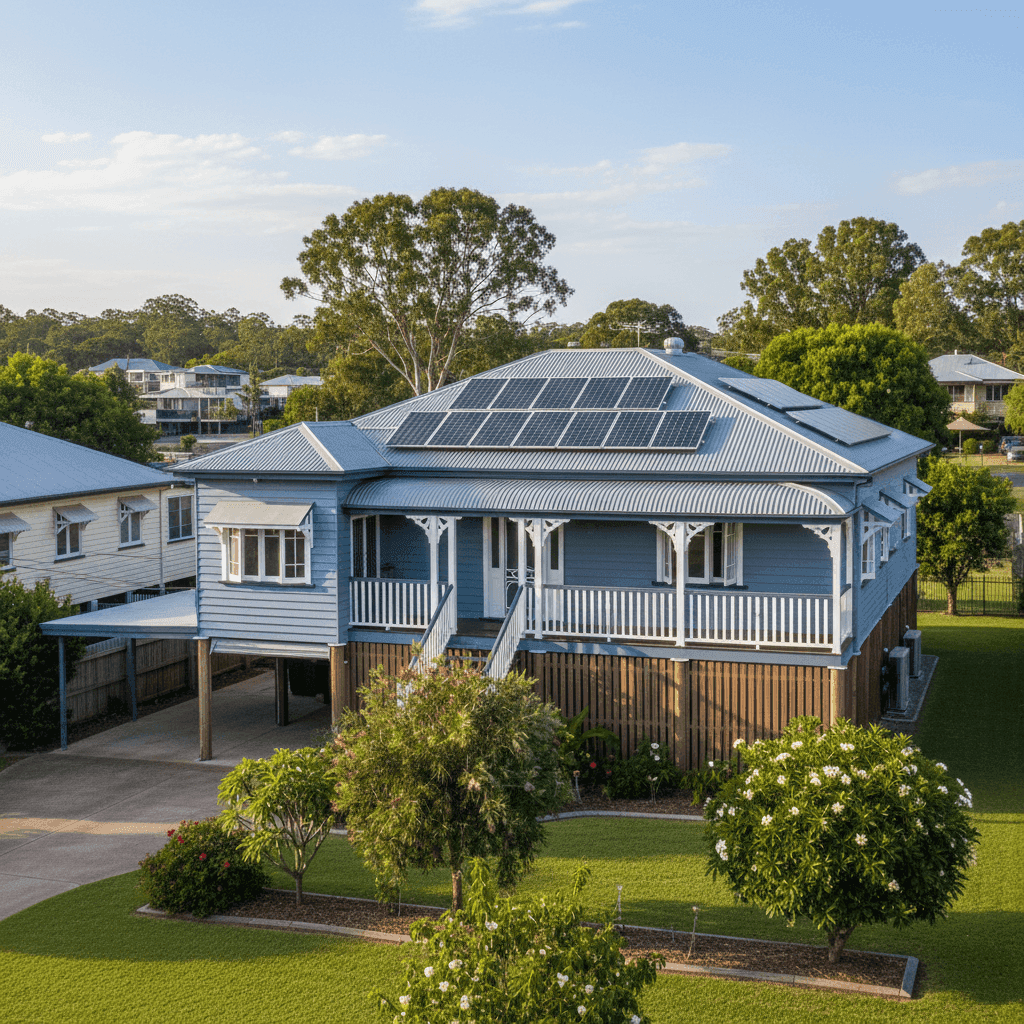
Maryborough, nestled in Queensland's Fraser Coast region, is home to some of the state's most characterful older housing stock — and this quote is a great example. A four-bedroom, single-bathroom free-standing home built in 1968, sitting elevated on stumps with weatherboard timber walls and a Colorbond steel roof, is a quintessential Queenslander. With a building sum insured of $600,000 and $100,000 in contents cover, this policy comes in at $2,944 per year (or $282/month). But is that a good deal? Let's dig into the numbers.
---
Is This Quote Fair?
The short answer: yes, broadly speaking — but there's room to do better.
This quote has been rated Fair (Around Average), which means it's sitting in the middle of the market rather than at the competitive end. For context, the suburb's 25th percentile premium sits at $2,360 per year — meaning roughly a quarter of comparable quotes in Maryborough (QLD 4650) come in below that figure. At $2,944, this quote is above that lower benchmark but still well under the suburb's 75th percentile of $6,579/yr, which is a positive sign.
A "Fair" rating isn't a red flag — it simply means you're not overpaying dramatically, but you're also not getting the sharpest deal on the market. Given the property's age, construction type, and elevated foundation, insurers are pricing in a range of risk factors, which we'll explore further below.
---
How Maryborough Compares
The pricing data paints a revealing picture of just how variable home insurance can be — even within a single suburb.
| Benchmark | Premium |
|---|---|
| This quote | $2,944/yr |
| Maryborough suburb median | $3,515/yr |
| Maryborough suburb average | $13,564/yr |
| QLD state median | $3,903/yr |
| QLD state average | $9,129/yr |
| National median | $2,764/yr |
| National average | $5,347/yr |
| Gympie LGA average | $5,581/yr |
A few things stand out here. First, the enormous gap between Maryborough's median ($3,515) and average ($13,564) tells us the suburb has a long tail of very expensive quotes pulling the average up significantly — likely driven by high-risk properties or higher sum insured values. This quote sits comfortably below both the suburb and Queensland state medians, which is encouraging.
Interestingly, this quote is also slightly above the national median of $2,764/yr, which reflects the well-documented reality that Queensland homeowners typically pay more for insurance than their southern counterparts — a consequence of the state's exposure to tropical weather events, flooding, and storm damage.
The Gympie LGA average of $5,581/yr provides useful regional context. At $2,944, this quote is nearly half the LGA average, suggesting the property's specific risk profile (no pool, no cyclone zone designation, elevated foundation) is working in the owner's favour.
---
Property Features That Affect Your Premium
Several characteristics of this property have a meaningful influence on how insurers price the risk.
Age and construction (1968, weatherboard walls) Homes built in the 1960s introduce a degree of uncertainty for insurers. Older wiring, plumbing, and structural elements can increase the likelihood of claims. Weatherboard timber walls, while charming and common in Queensland, are considered a higher fire and general damage risk compared to brick or rendered masonry — this typically pushes premiums upward.
Elevated on stumps This is a double-edged sword. On one hand, being elevated by at least one metre can significantly reduce flood inundation risk, which is a major pricing factor in many parts of Queensland. On the other hand, stumped homes can be more vulnerable to storm and wind damage. On balance, the elevation likely helps keep this premium competitive, particularly in a region with flood history.
Colorbond steel roof Steel roofing is generally viewed favourably by insurers. It's durable, fire-resistant, and performs well in storm conditions compared to older materials like terracotta tiles or corrugated iron. This is a plus for the premium.
Solar panels The presence of solar panels adds a modest layer of complexity to the policy. Panels represent an additional asset that needs to be covered, and their replacement cost can be significant. Homeowners should confirm whether their solar system is explicitly covered under the building sum insured or requires a separate endorsement.
Timber and laminate flooring Timber floors in a stumped home can be susceptible to moisture-related damage, particularly if there's water ingress from below. This is worth noting when reviewing the policy's fine print around storm and flood cover.
No pool, no ducted climate control, not in a cyclone risk zone These absences all work in the policyholder's favour. Pools and ducted systems add complexity and cost to claims, while cyclone-zone designation can dramatically increase premiums in northern Queensland. Being outside a designated cyclone risk area is a meaningful pricing advantage for Maryborough.
---
Tips for Homeowners in Maryborough
1. Shop around — even if this quote seems reasonable A "Fair" rating means you're around average, not at the best available price. With the suburb's 25th percentile at $2,360/yr, there may be policies offering equivalent cover for several hundred dollars less annually. Use a comparison tool like CoverClub to benchmark multiple insurers side by side.
2. Review your building sum insured carefully At $600,000 for a 139 sqm home, the sum insured is on the higher end for this property size. While it's always better to be adequately covered than underinsured, it's worth getting an independent building replacement cost estimate to ensure the figure is accurate — over-insuring can unnecessarily inflate your premium.
3. Confirm solar panel coverage Many standard home insurance policies cover rooftop solar as part of the building, but some have exclusions or sub-limits. Ask your insurer directly whether your system is covered for storm damage, hail, and accidental breakage — and what the claim process looks like.
4. Ask about flood cover specifics Maryborough has experienced significant flood events historically, and the Mary River catchment remains a consideration for many properties in the area. Even if your home is elevated, it's worth confirming exactly what flood scenarios are covered under your policy, and whether the definition of "flood" aligns with your actual risk exposure.
---
Compare Your Home Insurance Options
Whether you're renewing an existing policy or shopping for the first time, it pays to compare. Premiums for the same property can vary by thousands of dollars between insurers — and the cheapest option isn't always the best value once you look at the fine print. Head to CoverClub to get a personalised quote and see how your premium stacks up against real data from homes just like yours in Maryborough and across Queensland.