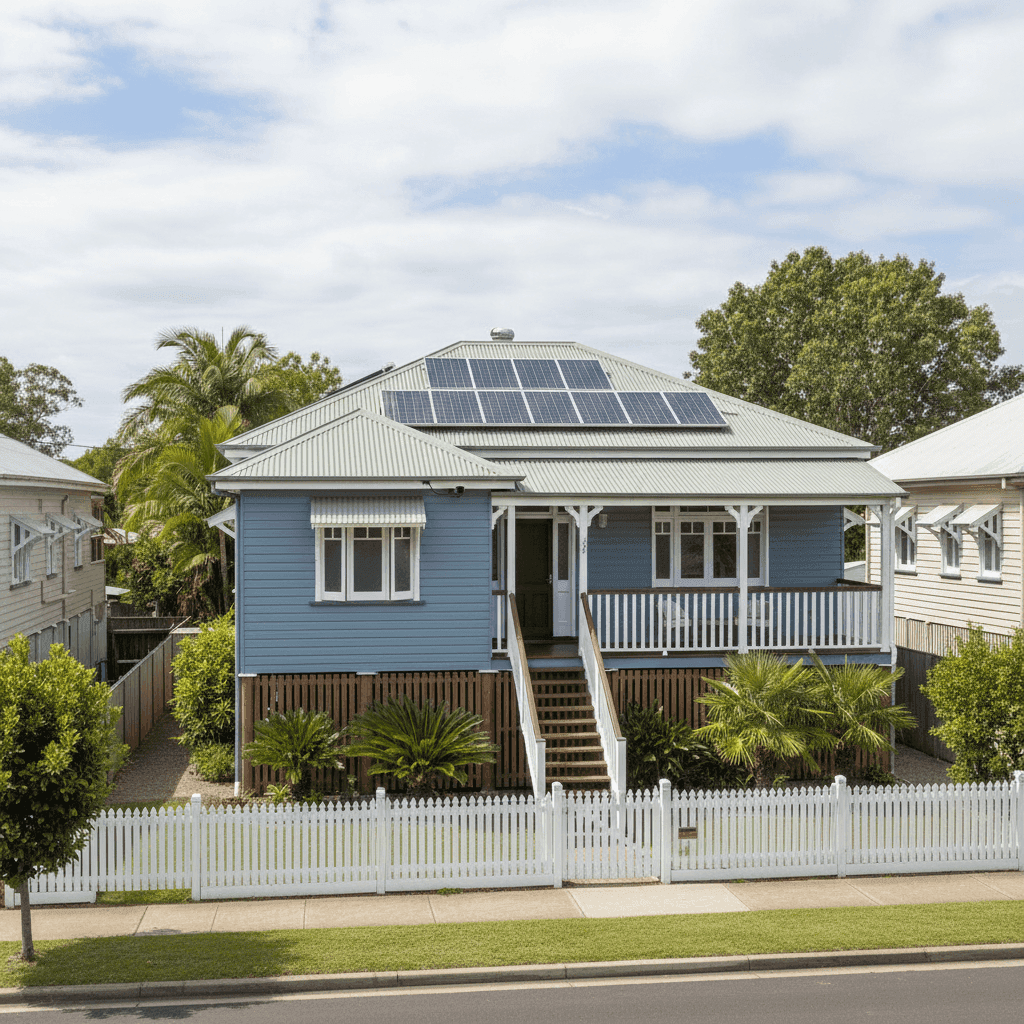
If you own a free standing home in Maryborough, QLD 4650, you've probably noticed that home insurance can feel like a moving target. Premiums vary enormously depending on your property's age, construction, location, and the level of cover you choose. This article breaks down a real home and contents insurance quote for a 3-bedroom, 1-bathroom weatherboard home in Maryborough — and puts it in context against suburb, state, and national benchmarks — so you can judge whether your own premium stacks up.
---
Is This Quote Fair?
The quote in question comes in at $3,175 per year (or $311/month) for combined home and contents cover, with a building sum insured of $551,000 and contents valued at $146,000. Both the building and contents excess are set at $1,000.
Our price rating for this quote is FAIR — Around Average, and the data backs that up. Based on 147 quotes collected for Maryborough (4650), the suburb's median premium sits at $3,515 per year. This quote comes in roughly $340 below that median, which is a reasonable result — not a bargain, but certainly not overpriced either.
To put it another way: half of all comparable quotes in this suburb cost more than $3,515, and a quarter cost more than $6,579. At $3,175, this homeowner is sitting comfortably in the lower half of the market for their area.
---
How Maryborough Compares
Maryborough's insurance market has some notable quirks worth understanding. The suburb average premium is a striking $13,564 per year — dramatically higher than the median of $3,515. This wide gap between average and median is a classic sign that a small number of very high-priced quotes are pulling the average upward, while most homeowners are paying something closer to the median figure. It's a good reminder not to be alarmed by average figures alone.
Here's how the numbers stack up across different geographic levels:
| Benchmark | Average | Median |
|---|---|---|
| Maryborough (4650) | $13,564 | $3,515 |
| Gympie LGA | $5,581 | — |
| Queensland | $9,129 | $3,903 |
| National | $5,347 | $2,764 |
Compared to the Queensland state median of $3,903, this quote is slightly below — a positive sign. However, it does sit above the national median of $2,764, which reflects the elevated risk profile that comes with insuring older Queensland homes. Queensland consistently records some of the highest home insurance premiums in the country, driven by storm, flood, and cyclone exposure across much of the state.
The 25th percentile for Maryborough is $2,360/yr, meaning roughly one in four quotes comes in below that figure. If your current premium is well above $3,515, it may be worth shopping around.
---
Property Features That Affect Your Premium
Several characteristics of this particular property have a meaningful influence on what insurers charge. Understanding these factors can help you make sense of your own quote.
Weatherboard Timber Construction
This home features weatherboard wood external walls — a construction type that is extremely common in regional Queensland, particularly in homes built before the 1980s. While weatherboard homes have a certain charm and are structurally sound when well-maintained, insurers generally view timber-framed homes as higher risk than brick or brick-veneer equivalents. Timber is more susceptible to fire, termite damage, and general wear over time, which can push premiums up compared to masonry construction.
Built in 1970
At over 50 years old, this home sits in an age bracket that insurers scrutinise carefully. Older homes may have outdated plumbing, electrical wiring, or roofing materials that increase the likelihood of a claim. The steel/Colorbond roof is a positive here — it's a durable, modern roofing material that performs well in Queensland's harsh weather conditions and is generally viewed favourably by insurers compared to older tile or fibrous cement roofing.
Stump Foundation
The home sits on stumps, which is typical of Queensland's older housing stock and well-suited to the region's climate. Stumped homes allow airflow beneath the floor and can be more resilient to minor flooding. However, they can also present risks around subsidence and structural movement, which some insurers factor into their pricing.
Timber and Laminate Flooring
Timber and laminate flooring throughout the home contributes to the overall contents and building replacement cost. Timber floors, particularly original hardwood, can be expensive to replace or restore after water or fire damage, which is worth keeping in mind when setting your sum insured.
Solar Panels
This property has solar panels, which are now a standard feature on many Australian homes. Most home insurance policies cover solar panels as part of the building sum insured, but it's worth confirming this with your insurer. Panels add replacement value to the building, so ensuring your sum insured accounts for their cost is important.
No Pool, No Ducted Climate Control, No Cyclone Risk
The absence of a swimming pool removes a common liability risk factor. Maryborough falls outside designated cyclone risk zones, which is a meaningful premium advantage compared to coastal north Queensland properties. The lack of ducted air conditioning also simplifies the building's mechanical systems, reducing potential claim complexity.
---
Tips for Homeowners in Maryborough
1. Review your sum insured regularly Building costs have risen significantly in recent years. A sum insured of $551,000 for a 130 sqm home is within a reasonable range, but construction costs in regional Queensland can fluctuate. Use a building cost calculator annually to ensure you're not underinsured — being caught short at claim time can be financially devastating.
2. Consider your excess strategically Both the building and contents excess on this policy are set at $1,000. Opting for a higher excess (say, $2,000 or $2,500) can meaningfully reduce your annual premium. If you have a solid emergency fund and rarely make small claims, a higher excess can be a smart trade-off.
3. Ask about timber home discounts Some insurers offer discounts for homes with updated electrical systems, modern roofing, or recent pest inspections — all relevant for a 1970s weatherboard home. If you've made improvements, make sure your insurer knows about them.
4. Don't rely on the suburb average As the data shows, Maryborough's average premium of $13,564 is heavily skewed by outlier quotes. Always compare your premium against the median figure, and use tools like CoverClub's Maryborough stats page to benchmark your quote accurately before renewing.
---
Ready to Compare?
Whether you're renewing your policy or shopping for the first time, comparing quotes is the single most effective way to make sure you're not overpaying. Get a home insurance quote at CoverClub and see how your premium measures up against real data from homeowners in your area. It takes just a few minutes and could save you hundreds.