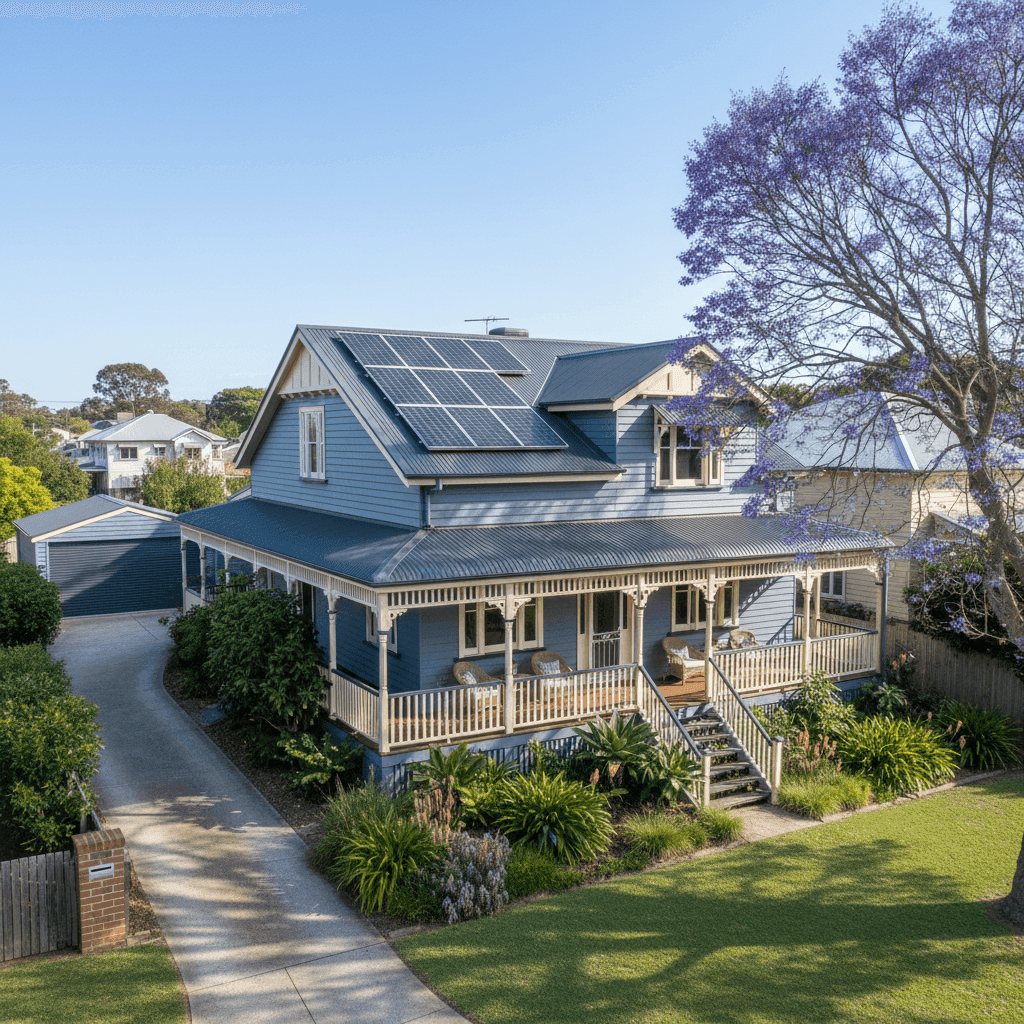
Maryborough is one of Queensland's most storied regional cities — a heritage-listed town on the Mary River known for its grand 19th-century architecture and tight-knit community. It's also a place where home insurance costs can be surprisingly unpredictable. If you own a free standing home in the 4650 postcode, understanding what drives your premium — and whether you're paying a fair price — can make a real difference to your household budget.
This article breaks down a recent home and contents insurance quote for a 3-bedroom, 2-bathroom free standing home in Maryborough, comparing it against local, state, and national benchmarks to help you make a more informed decision.
---
Is This Quote Fair?
The quote in question comes in at $1,590 per year (or around $157 per month) for combined home and contents cover, with a building sum insured of $410,000 and contents valued at $100,000. The building excess is $3,000 and the contents excess sits at $1,000.
Our pricing analysis rates this quote as CHEAP — below average for the area. That's a strong result for the homeowner, and it's worth understanding just how significant the difference is.
The suburb average premium in Maryborough (4650) sits at $7,129 per year, and the median — which filters out extreme outliers — is still a substantial $4,008 per year. Even the 25th percentile (the cheapest quarter of quotes in the area) comes in at $2,695 per year. This quote, at $1,590, sits well below that threshold, making it genuinely competitive by any local measure.
Put simply: if you're paying this premium, you're doing considerably better than most of your neighbours.
---
How Maryborough Compares
To put this in broader context, it helps to look at Maryborough's insurance statistics alongside Queensland-wide data and national figures.
| Benchmark | Average Premium | Median Premium |
|---|---|---|
| Maryborough (4650) | $7,129/yr | $4,008/yr |
| LGA (Gympie) | $5,581/yr | — |
| Queensland | $4,547/yr | $3,931/yr |
| National | $2,965/yr | $2,716/yr |
A few things stand out here. First, Maryborough's average premium is dramatically higher than both the Queensland and national averages — nearly 57% above the state average and more than double the national average. This reflects the elevated risk profile of the region, which is prone to flooding and storm events along the Mary River corridor.
Second, there's enormous spread in the local market. The gap between the 25th percentile ($2,695) and the 75th percentile ($13,043) is staggering — a difference of over $10,000 per year for what could be similar properties. This kind of variance underscores just how important it is to shop around and compare multiple quotes rather than simply renewing with your existing insurer.
The Gympie LGA average of $5,581 per year further confirms that this entire region carries elevated insurance costs compared to Queensland and national norms.
---
Property Features That Affect Your Premium
Several characteristics of this particular property are worth examining, as they each play a role in how insurers assess risk and calculate premiums.
Age and construction (built 1920, weatherboard walls): This is a home with genuine heritage character — over 100 years old with timber weatherboard external walls. Older weatherboard homes are typically viewed as higher risk by insurers due to the potential for rot, termite damage, and the higher cost of like-for-like repairs using period-appropriate materials. However, this can vary significantly between insurers, with some specialising in older homes.
Roof: The steel/Colorbond roof is actually a positive from an insurance perspective. Colorbond is durable, fire-resistant, and performs well in severe weather. Compared to older corrugated iron or terracotta tiles, it's generally viewed favourably by underwriters.
Foundation — Slab: A concrete slab foundation is generally considered stable and low-risk, particularly compared to older stumped or timber-framed subfloor foundations common in heritage Queensland homes. This is a plus for insurability.
Flooring — Timber/Laminate: Timber floors are a feature in many older Queensland homes and can be costly to repair or replace if damaged by water or fire. This is factored into both the building sum insured and the overall risk profile.
Solar panels: The presence of solar panels adds some replacement value to the building sum insured and can introduce minor risk factors (e.g., storm or hail damage), but many insurers cover rooftop solar as part of standard building cover. It's worth confirming this with your insurer.
No pool, no ducted climate control, not in a cyclone risk zone: These absences work in the homeowner's favour. Pools and ducted systems add complexity and cost to claims, while cyclone-rated areas in Queensland can attract significant premium loadings.
---
Tips for Homeowners in Maryborough
1. Understand your flood risk before you renew Maryborough has a well-documented history of flooding, particularly near the Mary River. Flood cover is not automatically included in all home insurance policies — it's often an optional add-on or excluded entirely. Check your Product Disclosure Statement (PDS) carefully and confirm whether your policy includes flood, storm surge, and riverine flooding. Given the local claims history, this is non-negotiable for many properties in the area.
2. Review your building sum insured annually Construction costs have risen sharply across Australia in recent years. A sum insured of $410,000 for a 153 sqm weatherboard home may be appropriate today, but it's worth recalculating your rebuild cost each year using a building cost estimator. Being underinsured — even by 10–15% — can have serious consequences at claim time.
3. Shop the market — the spread is enormous As the data shows, premiums in Maryborough range from under $2,700 to over $13,000 per year for broadly similar properties. Loyalty doesn't pay in insurance. Use a comparison service like CoverClub to benchmark your renewal quote against the broader market every year.
4. Consider your excess strategically This policy carries a $3,000 building excess — higher than the standard $500–$1,000 excess on many policies. A higher excess typically reduces your premium, but it also means you'll need to cover more out of pocket in the event of a claim. Make sure the excess level is genuinely affordable for your household, and weigh the premium saving against the financial risk.
---
Compare Your Own Quote
Whether you're renewing your existing policy or shopping for cover on a new purchase, it pays to see what else is available in the market. Maryborough's wide premium range means there's real money to be saved by comparing options.
Get a home insurance quote at CoverClub and see how your premium stacks up against suburb, state, and national averages — in minutes, for free.