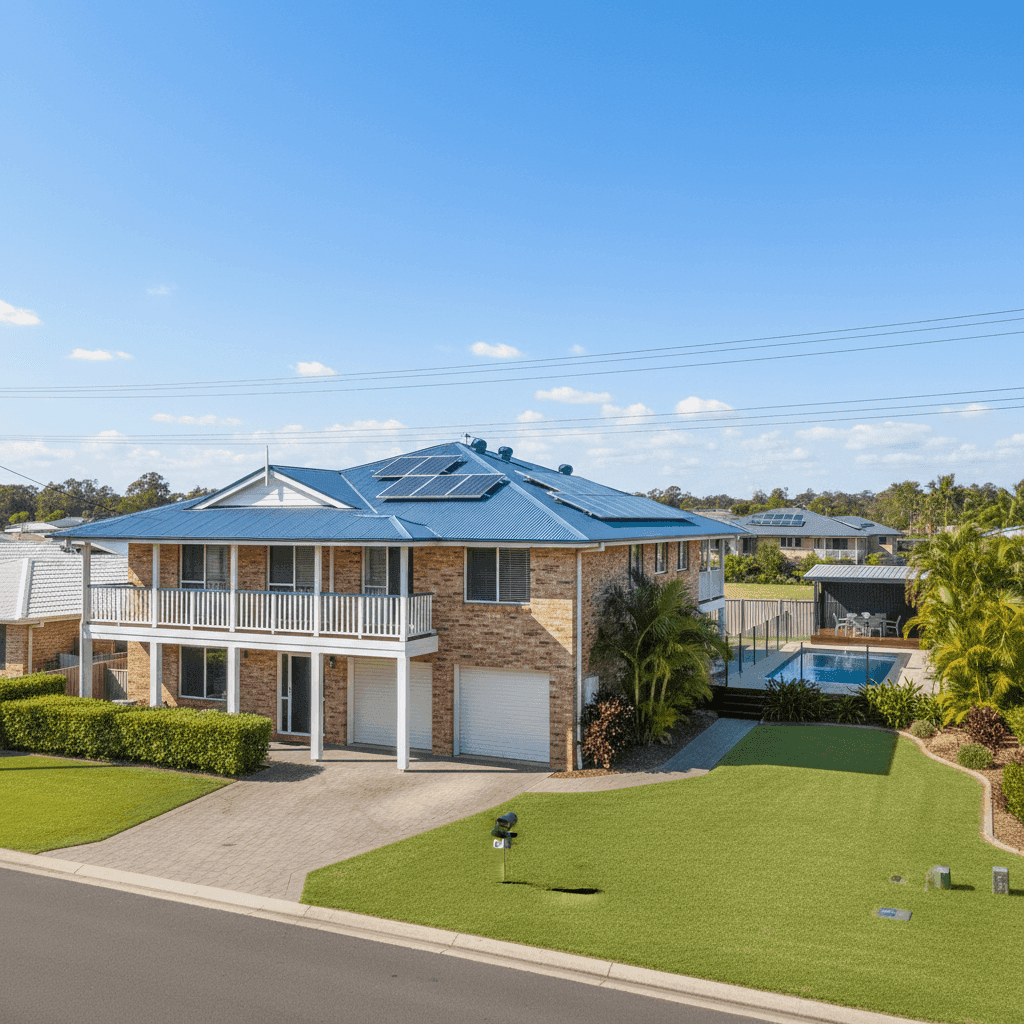
Home insurance costs in regional Queensland can vary enormously — and if you own a property in Maryborough West (QLD 4650), you may already be feeling the pinch at renewal time. This article takes a close look at a real home and contents insurance quote for a three-bedroom, free standing home in the suburb, unpacking what's driving the cost and how it stacks up against local, state, and national benchmarks.
---
Is This Quote Fair?
The quote in question comes in at $41,898 per year (or $4,015/month) for combined home and contents cover, with a building sum insured of $643,000 and contents valued at $50,000. The building excess is $2,000 and the contents excess is $1,000.
Our price rating for this quote is EXPENSIVE — above average.
To put that in perspective: the suburb average premium in Maryborough West sits at $11,734 per year, with a median of $5,548. This quote is more than 3.5 times the suburb average and nearly 7.5 times the suburb median. Even accounting for the higher-than-average building sum insured, that's a significant gap worth investigating before simply accepting the renewal.
It's worth noting that our suburb sample includes 9 quotes, so while the data is directionally useful, a larger sample would give an even clearer picture. That said, the disparity here is large enough to warrant serious scrutiny.
---
How Maryborough West Compares
Zooming out to a broader view helps contextualise just how elevated this premium is.
| Benchmark | Average Premium | Median Premium |
|---|---|---|
| Maryborough West (suburb) | $11,734/yr | $5,548/yr |
| Gympie LGA | $5,581/yr | — |
| Queensland | $9,129/yr | $3,903/yr |
| National | $5,347/yr | $2,764/yr |
You can explore the full Queensland insurance stats and national home insurance benchmarks on CoverClub.
Even against Queensland's above-average state figures — the Sunshine State consistently ranks among the most expensive for home insurance due to weather risk — this quote stands out. The national average of $5,347 per year is less than one-eighth of this premium. While no two properties are identical, a gap of this magnitude signals that shopping around is not just advisable — it's essential.
The suburb's 25th percentile sits at $4,944/yr and the 75th percentile at $13,548/yr, meaning this quote falls well above the upper quartile of what others in the area are paying.
---
Property Features That Affect Your Premium
Several characteristics of this property are likely contributing to a higher-than-average premium. Understanding these factors can help you have a more informed conversation with insurers.
Elevated Foundation
The home is elevated by at least one metre. While elevation can be a flood-mitigation feature — and is sometimes encouraged in flood-prone Queensland regions — some insurers treat elevated homes differently in their risk modelling, particularly if the underfloor space is enclosed or the property sits in an area with historical inundation events.
Brick Veneer Walls and Colorbond Roof
Brick veneer construction is generally well-regarded by insurers for its durability and fire resistance. A steel Colorbond roof is similarly robust and low-maintenance. These features typically work in a homeowner's favour, so they're unlikely to be the primary driver of cost here.
Timber and Laminate Flooring
Flooring type can influence contents and building replacement costs. Timber and laminate flooring tends to be more expensive to replace than carpet, which may push the building sum insured higher — and in turn, the premium.
Swimming Pool
A pool adds to the insured value of the property and can introduce additional liability considerations. Pools are a common feature in Queensland homes, but they do add a layer of complexity to the policy.
Solar Panels
Solar panels are increasingly standard in Australian homes, but they represent a meaningful replacement cost. Panels, inverters, and associated wiring can cost tens of thousands of dollars to replace, and not all policies cover them comprehensively under the building sum insured.
Building Size and Sum Insured
At 139 sqm and a building sum insured of $643,000, the per-square-metre replacement cost implied here is around $4,600/sqm — on the higher end. It's worth verifying whether this figure accurately reflects current construction costs in the region, as both over-insurance and under-insurance carry their own risks.
---
Tips for Homeowners in Maryborough West
If you're facing a premium in this range, here are four practical steps to take before renewing.
1. Compare Multiple Quotes
This is the single most impactful thing you can do. Insurers use different risk models, and premiums for the same property can vary by thousands of dollars. Use CoverClub to compare quotes side by side and see what the market is actually offering for your specific property.
2. Review Your Sum Insured
Make sure your building sum insured reflects the actual cost to rebuild — not the market value of the property. Over-insuring is a common mistake that directly inflates your premium. Consider getting a professional building replacement cost assessment, especially given the elevated construction costs in regional Queensland post-pandemic.
3. Adjust Your Excess
Opting for a higher excess can meaningfully reduce your annual premium. If you have the financial buffer to cover a larger out-of-pocket amount in the event of a claim, increasing your excess from $2,000 to $3,000 or more could bring noticeable savings.
4. Ask About Discounts for Safety Features
Solar panels, elevated construction, and quality roofing materials can all be levers for negotiating a better rate. Some insurers offer discounts for homes with security systems, smoke alarms, or flood-resilient features. It's always worth asking — the worst they can say is no.
---
Ready to Find a Better Deal?
If your current quote doesn't feel right, you're not obligated to accept it. CoverClub makes it easy to compare home and contents insurance options for properties across Queensland and beyond. Enter your address at coverclub.com.au to see how your quote stacks up and find cover that suits both your property and your budget.