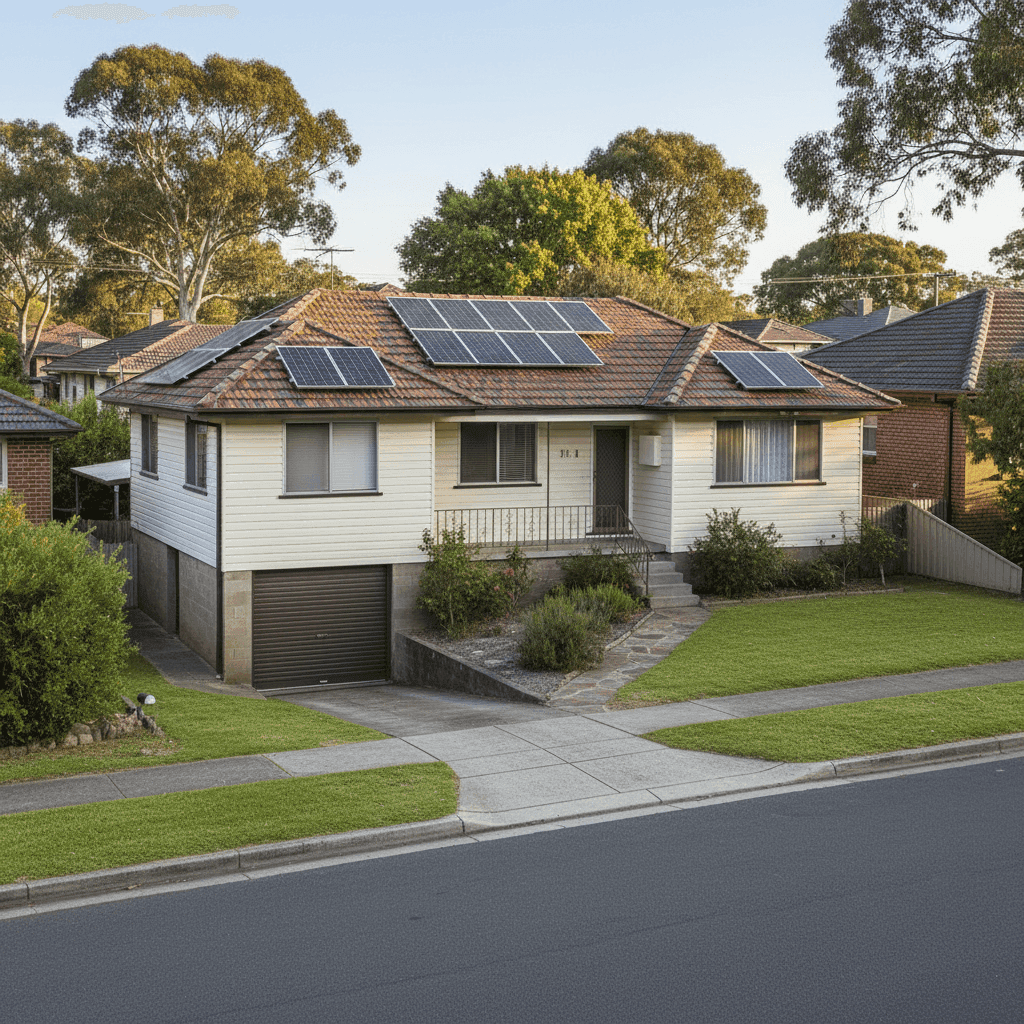
Maryland is a quiet, established suburb sitting within the Lake Macquarie local government area, just south-west of Newcastle in New South Wales. It's a popular choice for families drawn to its leafy streets, affordable housing, and easy access to both the lake and the city. For owners of free standing homes in the area, understanding what drives home insurance costs — and whether a quoted premium represents good value — can make a meaningful difference to the household budget.
This article breaks down a real home and contents insurance quote for a 3-bedroom, 1-bathroom free standing home in Maryland (postcode 2287), built in 1980 with a building sum insured of $518,800, contents cover of $131,300, and an annual premium of $1,544 (or $155/month).
---
Is This Quote Fair?
The short answer: yes, broadly speaking. CoverClub's pricing analysis rates this quote as Fair — Around Average, which means it sits within a reasonable range when benchmarked against other quotes in the same suburb.
With a building excess of $3,000 and a contents excess of $1,000, the policyholder is accepting a higher out-of-pocket cost in the event of a claim — which is a common strategy to bring the annual premium down. If the excess levels were lower, the premium would likely be higher.
At $1,544 per year, this quote comes in below the suburb average of $1,962/yr and also below the suburb median of $1,636/yr, which is a positive sign. It sits between the 25th percentile ($1,267/yr) and the median, suggesting it's on the more competitive end of the middle range — not the cheapest available, but meaningfully below what many Maryland homeowners are paying.
---
How Maryland Compares
To put this quote in proper context, it helps to zoom out and look at the broader pricing landscape. You can explore the full data on the Maryland suburb insurance stats page.
| Benchmark | Premium |
|---|---|
| This Quote | $1,544/yr |
| Suburb Average (Maryland) | $1,962/yr |
| Suburb Median (Maryland) | $1,636/yr |
| Suburb 25th Percentile | $1,267/yr |
| Suburb 75th Percentile | $2,614/yr |
| NSW Average | $9,528/yr |
| NSW Median | $3,770/yr |
| National Average | $5,347/yr |
| National Median | $2,764/yr |
| Lake Macquarie LGA Average | $11,064/yr |
The contrast between Maryland's local premiums and the broader NSW state averages is striking. The NSW average of $9,528/yr is heavily skewed by high-risk postcodes — think flood-prone inland areas, bushfire corridors, and cyclone-affected coastal zones. The median of $3,770/yr is a more representative figure, and Maryland still comes in well below that.
Compared to national benchmarks, the story is similar. The national median of $2,764/yr is nearly double what this Maryland homeowner is paying. This reflects the relatively low-risk profile of the suburb — it's not in a declared cyclone zone, and while parts of the Lake Macquarie LGA can be flood-affected, Maryland itself tends to attract more moderate premiums.
The Lake Macquarie LGA average of $11,064/yr looks alarming at first glance, but this figure is almost certainly pulled upward by waterfront and flood-prone properties within the broader LGA. Maryland's suburb-level data (based on 21 quotes) tells a more grounded story.
---
Property Features That Affect Your Premium
Several characteristics of this property have a direct bearing on the premium:
Hardiplank/Hardiflex external walls — Fibre cement cladding like Hardiflex is generally well-regarded by insurers. It's non-combustible, resistant to rot, and holds up reasonably well in storms. This is likely a neutral-to-positive factor for pricing.
Tiled roof — Terracotta or concrete tiles are a standard roofing material in NSW and are generally viewed favourably by insurers compared to older materials like asbestos sheeting or corrugated iron in poor condition. Tiles do carry some hail damage risk, but this is well understood and priced into standard policies.
Stump foundation — Homes on stumps (also called timber piers) are common in older NSW suburbs. They can be a mild pricing factor as they may be more susceptible to subsidence or movement over time, particularly as the home ages past the 40-year mark, as this one has.
Built in 1980 — At over 40 years old, this home is considered established. Older homes can attract slightly higher premiums due to the increased likelihood of ageing infrastructure — wiring, plumbing, roofing components — but this varies significantly by insurer.
Solar panels — The presence of solar panels adds modest value to the building sum insured and may slightly increase the premium, as panels represent an additional asset to cover. However, most standard home insurance policies in Australia do include solar panels as part of the building cover.
No pool, no ducted climate control — Both of these omissions reduce risk and complexity for the insurer, which helps keep the premium competitive.
---
Tips for Homeowners in Maryland
1. Review your building sum insured regularly At $518,800, the building sum insured needs to reflect the full cost of rebuilding — not the market value of the property. Construction costs have risen sharply in recent years, so it's worth getting an updated building replacement estimate every year or two to avoid being underinsured.
2. Consider whether your excess settings suit your situation This policy carries a $3,000 building excess and a $1,000 contents excess. Higher excesses lower your premium, but they mean more out of pocket if you need to claim. If you have solid emergency savings, this trade-off can make sense. If not, it may be worth paying a slightly higher premium for a lower excess.
3. Check what's included for your solar panels Not all policies treat solar panels the same way. Some cover them under building, others require a separate endorsement. Make sure your policy explicitly covers your panels for damage from storms, hail, and electrical faults.
4. Shop the market at renewal time Insurance loyalty rarely pays off in Australia. Premiums can vary significantly between providers for the same property — the spread between the 25th and 75th percentile in Maryland alone is over $1,300/yr. Comparing quotes at renewal is one of the most effective ways to avoid overpaying.
---
Compare Your Own Quote
Whether you're renewing your existing policy or shopping for cover on a new purchase, it pays to see what the market is offering. CoverClub makes it easy to compare home and contents insurance quotes for properties across NSW and Australia. Get a quote for your home today and find out whether you're getting a fair deal — or leaving money on the table.