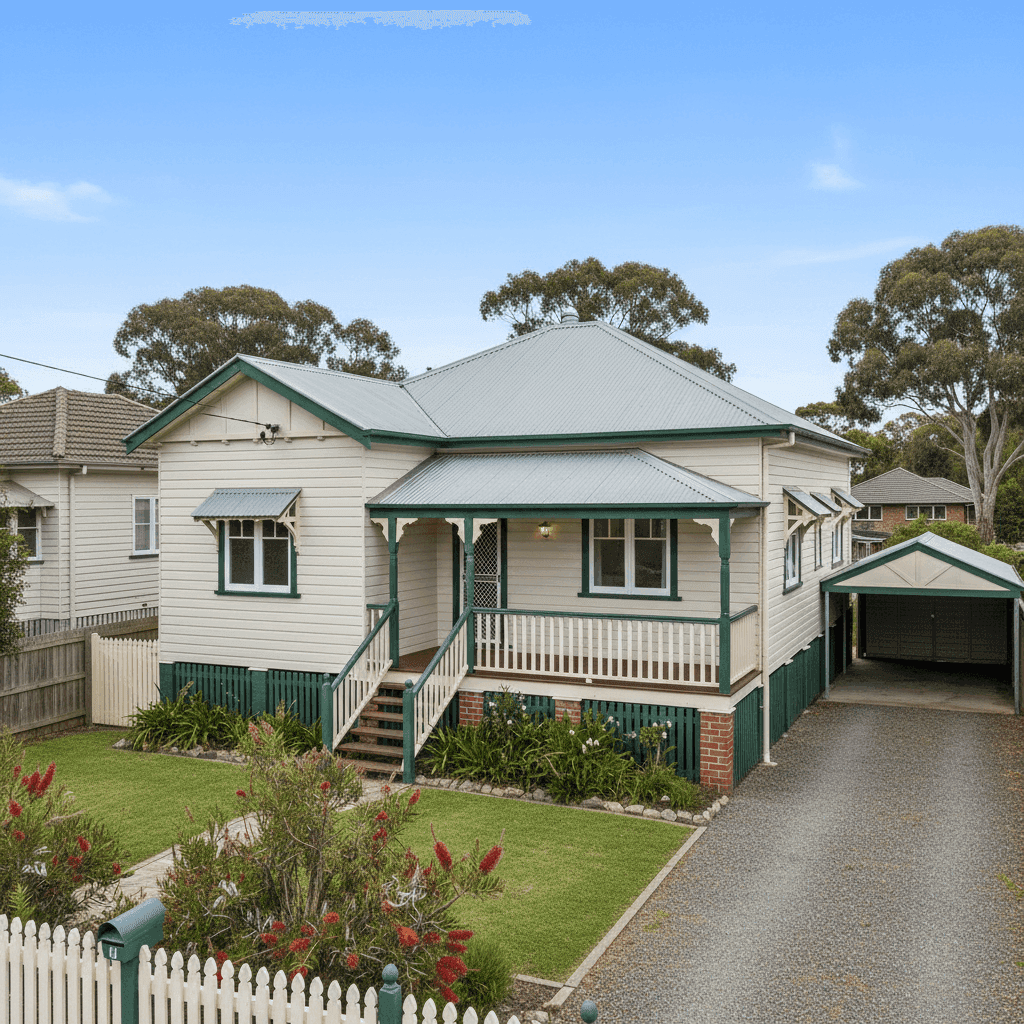
Maryville is a quiet, character-filled suburb tucked into the inner-west of Newcastle — known for its tree-lined streets, heritage homes, and proximity to the Hunter River. It's the kind of neighbourhood where a 1950s weatherboard home fits right in. But charm comes with complexity when it comes to insuring older properties, and a recent home and contents quote for a four-bedroom free standing home here has come in well above both state and national benchmarks. Let's unpack what's driving that figure and whether there's room to do better.
---
Is This Quote Fair?
The annual premium on this quote sits at $34,672 per year (or $3,398 per month), covering a building sum insured of $519,000 and contents valued at $180,000. Our price rating for this quote is EXPENSIVE — Above Average, and the numbers bear that out.
To put it in perspective:
- The NSW state average home insurance premium is $3,801/year, with a median of $3,410
- The national average is $2,965/year, with a median of $2,716
- The Newcastle LGA average sits at $3,560/year
This quote comes in at roughly nine times the NSW state average and more than eleven times the national average. Even accounting for the higher-than-average sum insured and contents value, that's a significant gap — and one worth scrutinising carefully before signing on the dotted line.
It's worth noting that no suburb-level data is currently available for Maryville specifically, so we're working from NSW state-wide statistics and national benchmarks as our reference points. You can check the latest Maryville insurance stats at CoverClub as more data becomes available.
---
How Maryville Compares
Without suburb-level data to draw on directly, the Newcastle LGA average of $3,560/year is our closest local benchmark — and this quote exceeds it by a considerable margin. The LGA figure itself sits just below the NSW state average of $3,801, suggesting that Newcastle as a whole is broadly in line with the rest of the state.
| Benchmark | Annual Premium |
|---|---|
| This Quote | $34,672 |
| Newcastle LGA Average | $3,560 |
| NSW State Average | $3,801 |
| NSW State Median | $3,410 |
| National Average | $2,965 |
| National Median | $2,716 |
The disparity here is striking. While the building sum insured of $519,000 and $180,000 in contents do push the coverage well above a typical policy, they alone don't explain a premium that is nearly ten times the local average. This strongly suggests that the property's specific characteristics are being heavily weighted by the insurer — which brings us to the key risk factors at play.
---
Property Features That Affect Your Premium
Several features of this property are likely contributing to the elevated premium. Understanding these factors can help you have a more informed conversation with insurers.
Age of Construction (1953)
Homes built in the early 1950s carry inherent risks that newer builds don't. Ageing electrical wiring, older plumbing systems, and materials that no longer meet current building codes all factor into an insurer's risk assessment. A 70-year-old home requires more scrutiny — and often commands a higher premium as a result.
Weatherboard Timber Walls
Weatherboard construction is beloved for its aesthetic, but timber is more susceptible to fire, rot, and pest damage than brick or rendered masonry. Insurers typically price timber-clad homes at a higher rate, particularly when the building is older and the timber may not have been recently treated or replaced.
Stump Foundation
Homes on stumps (also known as pier foundations) are common in older Australian suburbs and present unique risks. They can be vulnerable to subsidence, movement, and pest ingress — particularly white ants (termites), which are a genuine concern in the Newcastle region. Foundation issues can lead to significant structural claims, which insurers factor into their pricing.
Timber and Laminate Flooring
While generally a desirable feature, timber flooring in an older home on stumps can be at risk from moisture, movement, and pest damage. Replacement costs for quality timber flooring are also non-trivial, which can push up the contents or building replacement estimate.
Ducted Climate Control
The presence of ducted climate control adds to the replacement value of the home. These systems are expensive to reinstall and can be a meaningful contributor to the overall sum insured — and by extension, the premium.
High Sum Insured
At $519,000 for the building and $180,000 for contents, the total coverage of $699,000 is substantial. Accurately estimating your sum insured is critical — over-insuring can cost you unnecessarily, while under-insuring leaves you exposed. It's worth using a building cost calculator to verify whether $519,000 accurately reflects the rebuild cost for a 130 sqm weatherboard home in this area.
---
Tips for Homeowners in Maryville
If you're insuring a property like this one in Maryville, here are four practical steps to help you get better value without compromising your cover.
1. Shop Around — Seriously
This cannot be overstated. A premium of $34,672 for a property in a non-cyclone, non-flood-designated area is exceptionally high. Different insurers weight risk factors very differently, and the spread between the cheapest and most expensive quotes for older homes can be enormous. Compare quotes at CoverClub to see what competing insurers are offering for the same property.
2. Review Your Sum Insured
Make sure your building sum insured reflects the actual cost to rebuild — not the market value of the property. For a 130 sqm weatherboard home, $519,000 may be accurate, but it's worth verifying with a quantity surveyor or using an online rebuild cost estimator. Reducing an inflated sum insured could meaningfully lower your premium.
3. Investigate Pest and Maintenance History
Given the stump foundation and weatherboard construction, insurers will be particularly alert to termite and structural risks. Keeping up-to-date pest inspection reports and evidence of maintenance (re-stumping, re-wiring, plumbing upgrades) can strengthen your case when negotiating with insurers and may open doors to better pricing.
4. Consider Your Excess Structure
This quote carries a $3,000 building excess and $1,000 contents excess. Opting for a higher excess is one of the most straightforward ways to reduce your annual premium. If you have the financial buffer to absorb a larger out-of-pocket cost in the event of a claim, increasing your excess could deliver meaningful savings.
---
Ready to Find a Better Deal?
A premium this far above average is a clear signal to explore your options. At CoverClub, you can compare home and contents insurance quotes for your Maryville property side by side — so you can see exactly what you're getting for your money and make a confident, informed decision. It takes just a few minutes and could save you thousands.