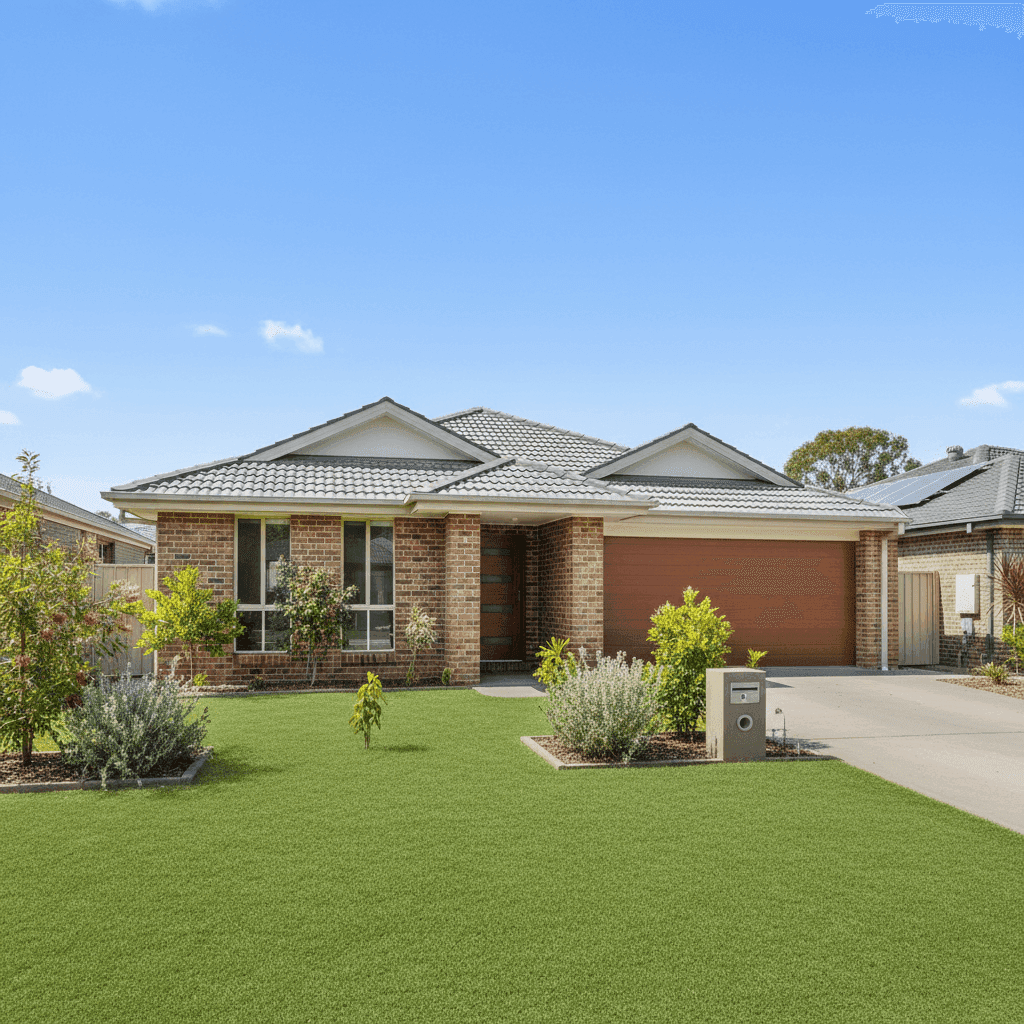
Maudsland is a leafy, semi-rural suburb nestled in the Gold Coast hinterland — a popular choice for families seeking space and quiet without straying too far from the coast's amenities. If you own a free-standing home here, understanding what you should expect to pay for building insurance is an important part of managing your household budget. This article breaks down a real building-only insurance quote for a 4-bedroom, 2-bathroom brick veneer home in Maudsland (postcode 4210), and puts the numbers into context against local, state, and national benchmarks.
---
Is This Quote Fair?
The quote in question comes in at $1,162 per year (or roughly $113 per month) for building-only cover on a home insured for $658,000. Our pricing analysis rates this as CHEAP — below average compared to similar properties in the area.
To put that in perspective: the suburb average premium in Maudsland sits at $5,304 per year, and the median is even higher at $6,076 per year. This quote is priced at roughly 78% below the suburb average — a remarkable result for a homeowner in this postcode.
Even measured against broader benchmarks, the figure holds up well. The Queensland state average is $4,547 per year, and nationally, Australians pay an average of $2,965 per year for home building insurance. This quote sits well below all of those reference points, making it an exceptionally competitive outcome.
Of course, premiums vary based on a wide range of factors — insurer appetite, the specific policy features, excess levels, and the individual property's risk profile all play a role. A $2,000 building excess has been applied here, which is on the higher side and will contribute to keeping the annual premium down. It's worth factoring that into your thinking: a lower excess typically means a higher premium, and vice versa.
---
How Maudsland Compares
Maudsland (QLD 4210) is a notably expensive suburb for home insurance by most measures. With an average premium of $5,304 and a 75th percentile of $6,977 per year, many homeowners in this postcode are paying significantly more than the national norm.
Here's how the numbers stack up across different benchmarks:
| Benchmark | Average Premium | Median Premium |
|---|---|---|
| Maudsland (4210) | $5,304/yr | $6,076/yr |
| Gold Coast LGA | $8,161/yr | — |
| Queensland | $4,547/yr | $3,931/yr |
| National | $2,965/yr | $2,716/yr |
A few things stand out from this data. First, the Gold Coast LGA average of $8,161 per year is extraordinarily high — one of the most expensive local government areas in the country for home insurance. Maudsland, while sitting within the Gold Coast LGA, comes in well below that LGA average, likely because it's further inland and away from the coastal flood and storm surge zones that push premiums up dramatically closer to the beach.
Second, Queensland as a whole remains one of Australia's priciest states for home insurance, driven by cyclone risk in the north, flooding in river catchments, and severe storm activity across the south-east. Even though Maudsland is not classified as a cyclone risk area, the broader Queensland risk environment still influences insurer pricing models.
For a full picture of national home insurance pricing trends, it's worth noting that the $2,716 national median is roughly less than half of what many Maudsland homeowners are paying — a clear signal that location risk is a significant driver of cost in this part of the world.
---
Property Features That Affect Your Premium
Several characteristics of this property work in the homeowner's favour from a risk and pricing perspective:
Brick veneer construction is generally viewed favourably by insurers. Brick veneer walls offer solid fire resistance and structural durability compared to timber-framed cladding or weatherboard exteriors. This can translate into lower premiums, as the rebuild risk is considered more manageable.
Tiled roof is another positive indicator. Terracotta or concrete tiles are durable, fire-resistant, and perform well in hail events compared to corrugated iron or Colorbond roofing in some scenarios. Insurers typically price tiled roofs competitively.
Concrete slab foundation adds structural stability and reduces the risk of subsidence or pest-related damage, both of which can be costly to remediate. Slab homes are generally considered lower risk than those on stumps or piers.
Built in 2007, the home benefits from construction standards that include modern building codes around cyclone tie-downs, fire ratings, and structural integrity — even though this property is outside a declared cyclone zone.
No pool, no solar panels, and no ducted climate control all simplify the risk profile. Pools add liability exposure, solar panels introduce electrical and roof penetration risks, and ducted systems can be expensive to replace. The absence of these features keeps the insurable risk — and therefore the premium — lower.
At 214 sqm and insured for $658,000, the sum insured reflects a reasonable per-square-metre rebuild cost of approximately $3,075/sqm, which is broadly in line with current construction costs in South-East Queensland.
---
Tips for Homeowners in Maudsland
1. Don't assume your sum insured is still accurate. Construction costs have risen sharply in recent years. If your home was last valued several years ago, it may be underinsured. Use a building cost calculator or ask your insurer to review your sum insured annually — rebuilding at today's rates could cost significantly more than you expect.
2. Compare quotes before renewing. The spread of premiums in Maudsland is enormous — from $3,406 at the 25th percentile to $6,977 at the 75th percentile. That's a difference of over $3,500 per year for similar homes. Shopping around at renewal time is one of the most effective ways to avoid overpaying. Get a quote at CoverClub to see what multiple insurers would charge for your property.
3. Understand your excess before you claim. A $2,000 building excess is higher than the industry standard. While it reduces your premium, it means you'll need to cover the first $2,000 of any claim out of pocket. Make sure that aligns with your financial comfort level — and that you're not paying a low premium in exchange for an excess you couldn't easily absorb.
4. Consider contents cover separately. This quote covers the building only. Your furniture, appliances, clothing, and personal belongings aren't protected under a building-only policy. If you haven't already arranged contents cover, it's worth getting a combined quote to see whether bundling building and contents offers better value.
---
Ready to Compare Home Insurance in Maudsland?
Whether you're a new homeowner in Maudsland or coming up for renewal, it pays to see what the market has to offer. CoverClub makes it easy to compare building and contents insurance quotes from a range of Australian insurers — all in one place. Start your free quote today and find out if you're getting a fair deal on your home insurance.