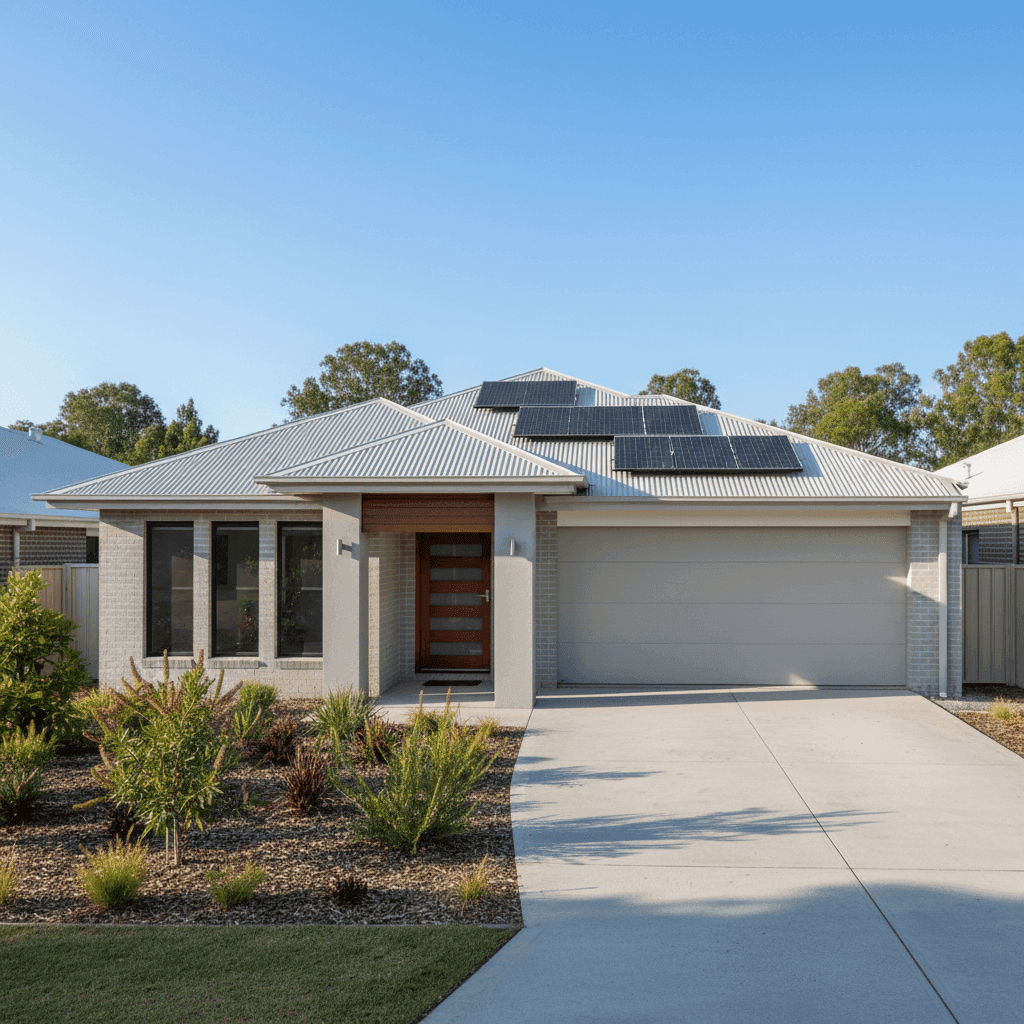
Maudsland is a leafy, family-friendly suburb nestled in the Gold Coast hinterland — and like most of South East Queensland, it comes with its own unique set of considerations when it comes to home insurance. This article breaks down a real home and contents insurance quote for a four-bedroom, free-standing home in Maudsland (postcode 4210), comparing it against local, state, and national benchmarks to help you understand whether you're getting a fair deal.
---
Is This Quote Fair?
The annual premium for this property came in at $2,607 per year (or $250/month), covering both building and contents. The building is insured for $850,000 and contents for $100,000, with a $2,000 excess applying to both.
Our pricing engine rates this quote as Fair — Around Average, which is a reasonable outcome for a well-built modern home in a relatively low-risk suburb. It's not the cheapest on the market, but it's far from the most expensive either. Given the sum insured and the level of cover, this sits comfortably within the expected range for the area.
---
How Maudsland Compares
To put this quote in proper context, it helps to look at what other homeowners in the area — and across the country — are paying.
According to data from Maudsland suburb insurance statistics, based on a sample of 89 quotes:
| Benchmark | Premium |
|---|---|
| Suburb average | $2,918/yr |
| Suburb median | $2,479/yr |
| Suburb 25th percentile | $1,569/yr |
| Suburb 75th percentile | $3,686/yr |
| This quote | $2,607/yr |
At $2,607, this quote sits between the suburb median and average — meaning it's slightly above what half of Maudsland homeowners pay, but still well below the top quarter of premiums in the area. That's a reasonable position for a larger, well-appointed home with a high building sum insured.
The contrast with broader benchmarks is striking. Checking QLD state insurance data, the state average premium is $9,129/yr — more than three times this quote. Even the state median sits at $3,903/yr. Queensland's insurance costs are heavily skewed by high-risk areas like Far North Queensland, where cyclone exposure and flood-prone locations push premiums to extraordinary levels.
Looking at national insurance statistics, the picture is similar: the national average is $5,347/yr, though the national median of $2,764/yr is closer to what Maudsland homeowners are actually paying. The Gold Coast LGA average of $8,161/yr also reflects the diversity of risk across the region — coastal and low-lying properties can be significantly more expensive to insure than hinterland suburbs like Maudsland.
In short, this quote compares very favourably against both state and national figures, largely because Maudsland benefits from its elevated inland position and lower exposure to coastal and extreme weather risks.
---
Property Features That Affect Your Premium
Several characteristics of this property work in the homeowner's favour when it comes to insurance pricing:
Construction year (2016): A relatively modern build, this home was constructed under contemporary Australian building codes, which include improved structural standards for wind and weather resistance. Insurers generally view newer homes as lower risk than older stock.
Brick veneer walls and Colorbond roof: Brick veneer is a well-regarded construction type from an insurance perspective — it's durable, fire-resistant, and widely understood by underwriters. A steel Colorbond roof is similarly favoured: it's lightweight, long-lasting, and performs well in storms compared to terracotta or concrete tiles.
Slab foundation: A concrete slab is a solid, stable foundation type that reduces the risk of subsidence and pest-related structural damage. It's a straightforward risk for insurers to assess.
Solar panels: The property has solar panels installed, which is worth noting. While solar adds value to the home, panels do represent an additional insurable asset and can affect claims if damaged by hail or storm. It's worth confirming with your insurer that your solar system is covered under the building policy and understanding any specific sub-limits that may apply.
Ducted climate control: Ducted air conditioning is a higher-value fitting that contributes to the overall replacement cost of the home. It's important this is factored into your building sum insured to avoid being underinsured.
No pool, no cyclone risk zone: The absence of a pool removes a common source of liability and maintenance-related claims. And importantly, Maudsland falls outside designated cyclone risk areas — a significant factor in keeping premiums lower than many other Queensland postcodes.
Tile flooring and standard fittings: Tiled floors are practical and relatively affordable to replace, which is reflected in contents and building valuations. Standard-quality fittings mean the home is valued at a realistic level without premium loading for high-end finishes.
---
Tips for Homeowners in Maudsland
1. Review your building sum insured regularly At $850,000, the building sum insured needs to reflect the true cost of rebuilding — not the market value of the land. With construction costs rising across Queensland, it's worth getting a professional building valuation every few years to ensure you're not underinsured. Your ducted air conditioning and solar panels should be included in this figure.
2. Check your solar panel coverage Solar systems can be damaged by hail, storms, or electrical faults. Confirm with your insurer whether your panels are covered under the building section, what the sub-limit is, and whether inverter damage is included. Not all policies treat solar the same way.
3. Compare quotes before renewal Even a "fair" quote can be beaten. Insurers don't always reward loyalty — in fact, many offer their best rates to new customers. Using a comparison tool like CoverClub at renewal time takes only a few minutes and could save you hundreds of dollars annually.
4. Consider your excess strategically This policy carries a $2,000 excess on both building and contents. A higher excess typically lowers your premium, but make sure it's an amount you could comfortably pay out of pocket in the event of a claim. If $2,000 feels like a stretch, it may be worth exploring lower-excess options — even if the annual premium is slightly higher.
---
Ready to Compare?
Whether you're renewing an existing policy or insuring a new home, it pays to shop around. CoverClub makes it easy to compare home and contents insurance quotes from multiple insurers in minutes. Get a quote today and see how your current premium stacks up against the market — you might be surprised what's available.