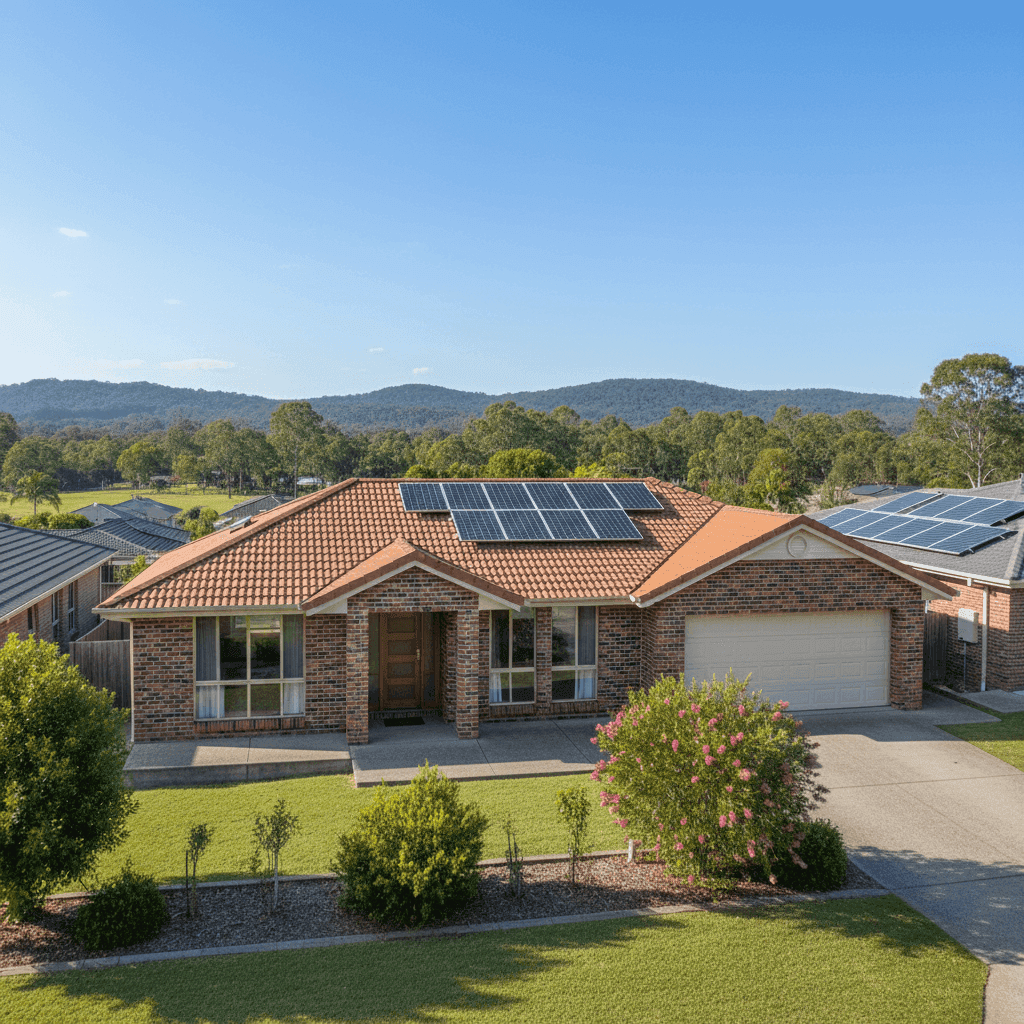
Maudsland is a quiet, semi-rural suburb nestled in the Gold Coast hinterland — popular with families seeking space without straying too far from the coast's conveniences. It's also an area where home insurance premiums can vary significantly depending on your property's characteristics and the insurer you choose. This article breaks down a recent home and contents insurance quote for a four-bedroom free standing home in Maudsland (QLD 4210), assessing whether the price is competitive and what factors are driving the cost.
---
Is This Quote Fair?
The quote in question comes in at $1,206 per year (or roughly $113 per month) for combined home and contents cover — with a building sum insured of $498,000 and contents valued at $50,000. The building excess sits at $5,000 and the contents excess at $2,000.
Our price rating for this quote is CHEAP — below average — and the numbers back that up convincingly.
When you stack this premium against the suburb average for Maudsland of $5,304 per year, this quote is sitting at less than a quarter of what many local homeowners are paying. Even compared to the suburb's 25th percentile (meaning the cheapest quarter of quotes we've seen) of $3,406 per year, this premium is still dramatically lower. That's a remarkable result — and it suggests the policyholder has either found an exceptionally competitive insurer, structured their cover efficiently, or both.
It's worth noting that the excess levels are on the higher side, particularly the $5,000 building excess. Higher excesses are one of the most common levers insurers use to reduce upfront premiums, so some of this pricing advantage is offset by greater out-of-pocket costs in the event of a claim. Still, for homeowners who are financially comfortable absorbing a larger excess and are primarily seeking protection against major losses, this is a genuinely strong result.
---
How Maudsland Compares
To put this quote in full context, here's how Maudsland stacks up against broader benchmarks, based on data from CoverClub's QLD insurance statistics and national averages:
| Benchmark | Average Premium | Median Premium |
|---|---|---|
| Maudsland (QLD 4210) | $5,304/yr | $6,076/yr |
| Gold Coast LGA | $5,494/yr | — |
| Queensland | $4,547/yr | $3,931/yr |
| Australia (National) | $2,965/yr | $2,716/yr |
A few things stand out here. First, Maudsland's average premium is notably higher than the Queensland state average, and more than double the national average. This reflects the Gold Coast region's elevated risk profile — insurers factor in proximity to weather events, historical claims data, and local construction costs when pricing policies.
Second, the Gold Coast LGA average of $5,494 per year aligns closely with the Maudsland suburb average, confirming this isn't just a local anomaly — it's a region-wide pricing pattern. Queensland as a whole also sits well above the national average, largely due to the state's exposure to severe weather including storms, flooding, and hail.
The quote analysed here — at $1,206 per year — sits dramatically below every one of these benchmarks, reinforcing its CHEAP rating.
---
Property Features That Affect Your Premium
Several characteristics of this property work in the homeowner's favour from an insurability standpoint:
Brick Veneer Walls Brick veneer is generally viewed favourably by insurers. It offers solid fire resistance and durability, which can translate to lower rebuild risk compared to timber-framed or clad exteriors.
Tiled Roof Concrete or terracotta tiles are considered a resilient roofing material. They hold up well in storms and are less susceptible to fire than some alternatives, which is a positive signal for underwriters.
Slab Foundation A concrete slab foundation is the standard in Queensland and is well-regarded by insurers for its stability and resistance to subsidence and pest-related damage.
Built in 2000 A home constructed in 2000 benefits from building codes that were significantly more robust than those applied to older homes. It's also young enough that major structural components are unlikely to be near end-of-life, reducing the likelihood of maintenance-related claims.
Solar Panels This property has solar panels installed, which is increasingly common across Queensland. It's worth confirming with your insurer that solar panels are explicitly covered under your building policy — some policies include them automatically, while others may require a separate declaration or endorsement.
No Pool, No Cyclone Risk Zone The absence of a pool removes a common liability and maintenance risk from the equation. Maudsland also falls outside designated cyclone risk areas, which meaningfully reduces the premium loading that applies to properties in North Queensland and other exposed regions.
Standard Fittings Standard-quality fittings (as opposed to high-end or bespoke finishes) keep the cost of reinstatement more predictable, which insurers tend to price more conservatively.
---
Tips for Homeowners in Maudsland
1. Review your sum insured regularly Building costs in South East Queensland have risen sharply in recent years. A sum insured of $498,000 for a 214 sqm brick veneer home is worth validating against current construction costs — underinsurance is a common and costly mistake. Use a building calculator or speak to a local builder to sense-check your figure annually.
2. Confirm your solar panels are covered As mentioned above, solar panel coverage isn't always automatic. Check your Product Disclosure Statement (PDS) to confirm whether panels are included in your building sum insured and whether any specific conditions apply.
3. Consider whether your excess levels suit your situation The $5,000 building excess on this policy is high. While it keeps premiums down, it means you'd need to absorb that cost before your insurer steps in. If your emergency fund is limited, it may be worth comparing quotes with a lower excess — the premium difference might be smaller than you'd expect.
4. Compare quotes at renewal, not just when you first buy Insurance markets shift constantly. A premium that was competitive two years ago may no longer be — and equally, a better deal may now be available. Running a fresh comparison at CoverClub before each renewal is one of the simplest ways to avoid overpaying.
---
Find Your Best Rate with CoverClub
Whether you're a Maudsland local or elsewhere in the Gold Coast region, comparing home insurance quotes is one of the most effective ways to make sure you're not leaving money on the table. The data shows that premiums in this area vary enormously — the difference between the cheapest and most expensive quotes in the suburb spans thousands of dollars per year. Get a quote through CoverClub to see how your current policy stacks up and whether a better deal is within reach.