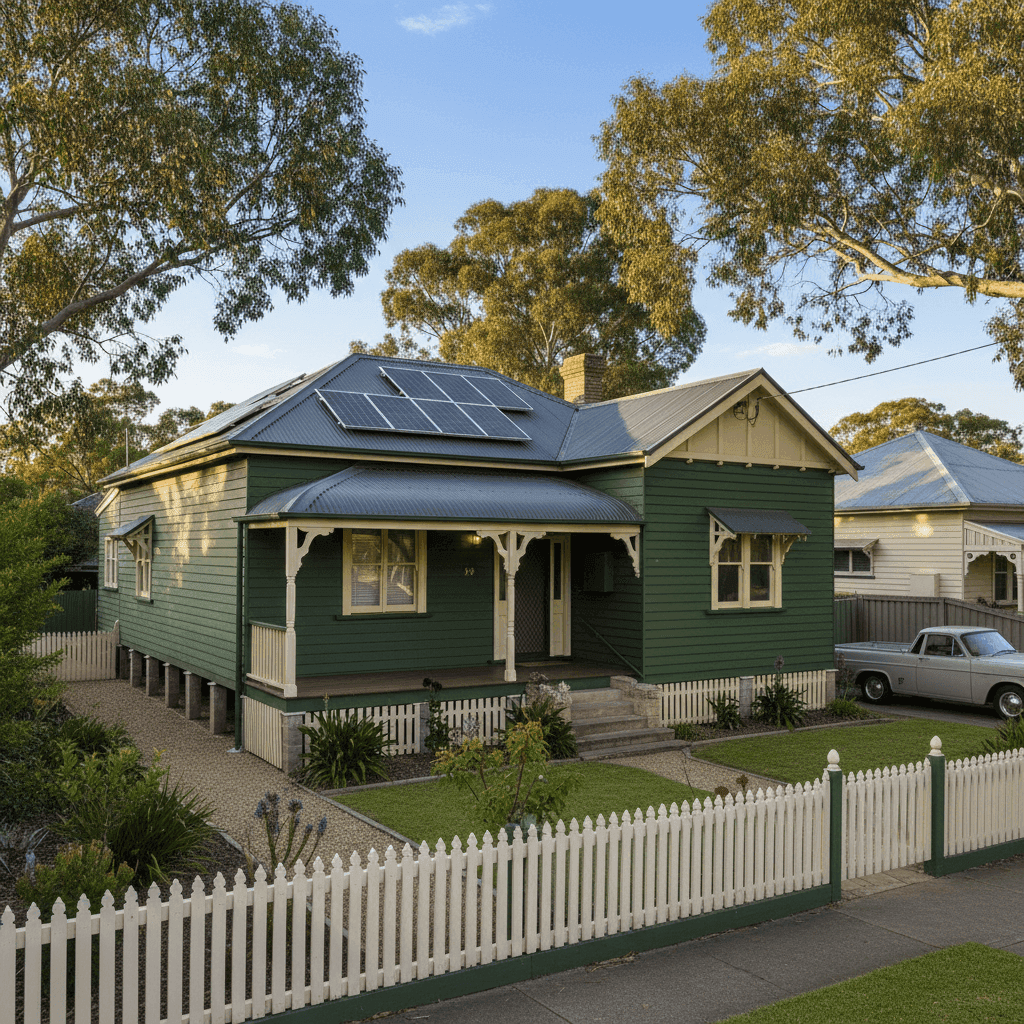
If you own a free standing home in Mayfield, NSW 2304, you're probably well aware that home insurance isn't cheap — but how do you know if the quote you've received is actually fair? This article breaks down a real building insurance quote for a three-bedroom, weatherboard home in Mayfield, comparing it against local, state, and national benchmarks so you can make a more informed decision.
---
Is This Quote Fair?
The quote in question comes in at $4,177 per year (or $408/month) for building-only cover on a 130 sqm free standing home, with a building sum insured of $700,000 and a $2,000 excess.
Our price rating for this quote is EXPENSIVE — Above Average.
To put that in perspective, the average home insurance premium across Mayfield sits at just $2,351 per year, with a median of $2,375. This quote lands well above the suburb's 75th percentile of $2,715 — meaning it's more expensive than at least three-quarters of comparable quotes in the area. That's a meaningful gap, and one worth investigating before you sign on the dotted line.
That said, premium pricing is rarely arbitrary. A number of property-specific factors — which we'll explore below — can push a quote above the local norm. The key is understanding why your premium is where it is, and whether there's room to bring it down.
---
How Mayfield Compares
Zooming out to the broader market gives useful context. Here's how Mayfield stacks up:
| Benchmark | Premium |
|---|---|
| This Quote | $4,177/yr |
| Mayfield Average | $2,351/yr |
| Mayfield Median | $2,375/yr |
| Mayfield 75th Percentile | $2,715/yr |
| Newcastle LGA Average | $3,835/yr |
| NSW Average | $9,528/yr |
| NSW Median | $3,770/yr |
| National Average | $5,347/yr |
| National Median | $2,764/yr |
(Based on 43 quotes sampled for the Mayfield 2304 postcode.)
A few things stand out here. First, while this quote feels steep compared to the Mayfield suburb average, it actually sits below both the NSW average ($9,528) and the national average ($5,347). NSW averages are heavily skewed by high-risk and high-value properties across the state, so the median figures are often more useful comparisons — and against the NSW median of $3,770, this quote is still noticeably higher.
Interestingly, the Newcastle LGA average of $3,835 is the closest benchmark to this quote, suggesting that properties with certain risk or construction characteristics in the broader Newcastle area do attract elevated premiums.
You can explore more local data on the Mayfield insurance stats page, compare it against NSW-wide figures, or browse national home insurance benchmarks.
---
Property Features That Affect Your Premium
Several characteristics of this property are likely influencing the higher-than-average premium. Understanding these can help you have a more productive conversation with insurers.
Weatherboard Timber Construction
Weatherboard wood external walls are one of the most significant premium drivers for older Australian homes. Timber is considerably more susceptible to fire, rot, and termite damage than brick or rendered masonry. Insurers price this risk into their premiums, and it's one of the primary reasons weatherboard homes consistently attract higher quotes than brick equivalents.
Age of the Property (Built 1955)
At nearly 70 years old, this home falls into a category that insurers treat with extra caution. Older homes may have outdated wiring, plumbing, and structural elements that increase the likelihood of a claim. The combination of age and timber construction is a particularly common trigger for above-average premiums.
Stump Foundation
Homes on stumps (also known as pier or post foundations) introduce additional considerations around structural movement, underfloor access, and potential moisture-related damage. While stumps are common in older Newcastle-area homes and are not inherently problematic, they can contribute to a slightly elevated risk profile.
Timber and Laminate Flooring
Timber flooring adds to the overall replacement cost of the home and, in the context of a timber-framed, weatherboard property, reinforces the fire and moisture risk profile that insurers factor into their pricing.
Solar Panels
The presence of solar panels on the roof is generally a positive for sustainability, but it does add to the insured value of the building and may introduce additional risk considerations around roof penetrations, electrical systems, and panel replacement costs. Some insurers include solar panels in building cover automatically; others treat them as an add-on. It's worth confirming exactly what your policy covers.
Sum Insured: $700,000
The building sum insured of $700,000 is on the higher end for a 130 sqm home, even accounting for Mayfield's proximity to Newcastle's growing property market. While it's always better to be adequately insured than underinsured, it's worth checking whether this figure accurately reflects your home's rebuild cost (not its market value). An overestimated sum insured will directly inflate your premium.
---
Tips for Homeowners in Mayfield
If you're looking to get better value on your building insurance, here are four practical steps worth considering:
- Review your sum insured carefully. Use a building cost calculator or speak with a quantity surveyor to confirm your home's rebuild value. If $700,000 is higher than the actual replacement cost, reducing it to an accurate figure could meaningfully lower your premium — without leaving you exposed.
- Compare multiple insurers. Pricing for older, timber-construction homes varies enormously between insurers. Some are more comfortable with weatherboard and stump-foundation properties than others, and their premiums reflect that. Don't assume your first quote is your best option.
- Consider a higher excess. The current building excess on this quote is $2,000. If you have the financial buffer to absorb a higher out-of-pocket cost in the event of a claim, opting for a higher excess (say, $2,500–$5,000) can bring your annual premium down noticeably.
- Ask about discounts for home security and maintenance. Some insurers offer reduced premiums for homes with monitored alarms, deadbolts, or documented maintenance histories. For an older timber home, demonstrating that the property is well-maintained can work in your favour at renewal time.
---
Ready to Find a Better Deal?
Whether this quote is the right fit or you're keen to explore your options, comparing multiple policies is always the smartest move. CoverClub makes it easy to see how your home insurance stacks up — and to find cover that actually matches your property and budget.