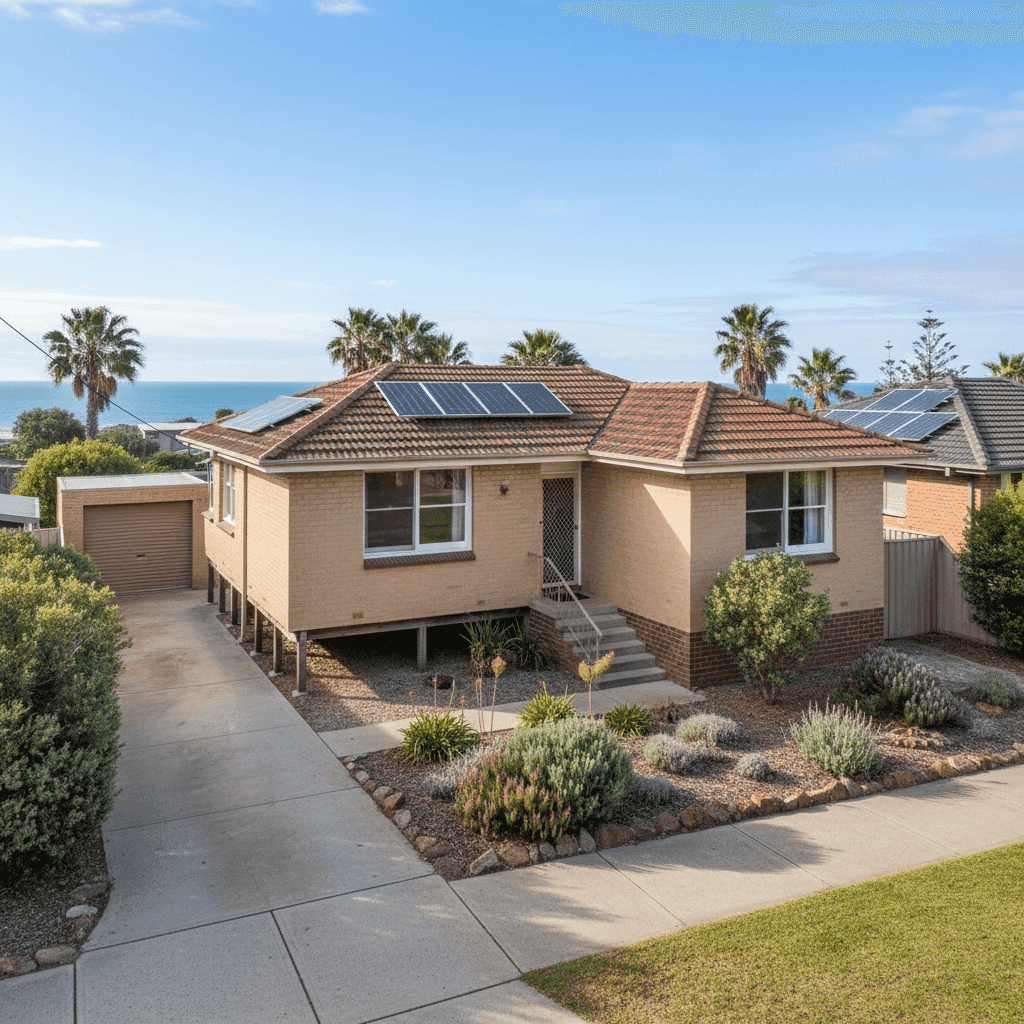
McCracken is a quiet residential suburb on the Fleurieu Peninsula, nestled within the Yankalilla local government area on South Australia's scenic southern coast. It's a popular spot for both permanent residents and sea-changers, and like many regional SA communities, the cost of protecting your home here is worth understanding clearly. This article breaks down a real building-only insurance quote for a three-bedroom, free-standing home in McCracken (SA 5211) — and puts it in context against local, state, and national benchmarks.
---
Is This Quote Fair?
The quote in question comes in at $1,203 per year (or $115/month) for building-only cover on a 130 sqm double brick home, with a $2,000 building excess and a sum insured of $424,000.
Our price rating for this quote is FAIR — Around Average, and the data backs that up. Within McCracken itself, the suburb average sits at $1,390/yr and the median at $1,323/yr. This quote lands comfortably below both figures, placing it in the lower half of the local pricing range. The suburb's 25th percentile is $1,092/yr, meaning roughly a quarter of comparable quotes come in cheaper — but three-quarters are more expensive.
In short, this isn't a bargain-bin price, but it's a reasonable one. Homeowners paying closer to the suburb average of $1,390/yr should be asking whether they can do better.
---
How McCracken Compares
To truly appreciate this quote, it helps to zoom out and look at the broader pricing landscape. You can explore the full breakdown on the McCracken suburb stats page.
| Benchmark | Annual Premium |
|---|---|
| This quote | $1,203 |
| McCracken suburb average | $1,390 |
| McCracken suburb median | $1,323 |
| Yankalilla LGA average | $1,589 |
| SA state average | $2,433 |
| SA state median | $1,679 |
| National average | $5,347 |
| National median | $2,764 |
The contrast with national figures is striking. At $1,203/yr, this McCracken quote is less than a quarter of the national average ($5,347/yr) and well under half the national median ($2,764/yr). Much of that national average is skewed by high-risk areas — particularly cyclone-prone regions in Queensland and Western Australia — where premiums can be extraordinary.
Even against South Australia's state-wide figures, this quote performs well. The SA average of $2,433/yr is roughly double this quote, and even the SA median of $1,679/yr is about 40% higher. McCracken benefits from being a relatively low-risk coastal suburb without the extreme weather exposures that push premiums up elsewhere in the country.
For a broader national perspective, visit the national home insurance stats page.
---
Property Features That Affect Your Premium
Several characteristics of this property influence how insurers price the risk — and in this case, most of them work in the homeowner's favour.
Double Brick Construction Double brick is one of the most favoured wall materials among Australian insurers. It's robust, fire-resistant, and holds up well against the elements. Compared to weatherboard or lightweight cladding, double brick typically attracts lower premiums due to its structural resilience and reduced susceptibility to storm and impact damage.
Tiled Roof Terracotta or concrete tiles are considered a durable, low-maintenance roofing option. They perform well in fire conditions and have a long lifespan, both of which are positives for insurers. That said, tiles can crack under hail impact, so it's worth confirming your policy covers storm and hail damage.
Stump Foundation The property sits on stumps, which is common for older homes built in the 1950s across South Australia. Stumped foundations can be a mild risk factor — they may require periodic inspection and re-stumping over time — but they also allow for good underfloor ventilation and are generally well understood by insurers in this region.
Age of Construction (1952) At over 70 years old, this is a heritage-era home. Older properties can attract slightly higher premiums due to the cost of sourcing period-appropriate materials and the potential for outdated plumbing or electrical systems. However, double brick construction from this era is often considered extremely solid, which can offset some of that concern.
Solar Panels The presence of solar panels adds a small layer of complexity for insurers — panels need to be covered against storm damage, hail, and electrical faults. Most standard building policies include solar panels as part of the building sum insured, but it's worth confirming this with your insurer and ensuring the $424,000 sum insured adequately accounts for replacement costs including the panels.
No Pool, No Ducted Climate Control The absence of a swimming pool removes a meaningful liability and maintenance risk from the insurer's perspective. Similarly, no ducted climate control system means fewer mechanical components that could fail and cause damage. Both factors contribute to keeping the premium lean.
---
Tips for Homeowners in McCracken
1. Check Your Sum Insured Reflects True Rebuild Costs A sum insured of $424,000 for a 130 sqm home works out to roughly $3,260/sqm — which is within a reasonable range for double brick construction in regional SA. However, rebuild costs have risen significantly in recent years due to material and labour inflation. It's worth using a building cost calculator or speaking with a local builder to confirm your coverage is adequate before renewal.
2. Review What's Included for Your Solar Panels Solar panel systems can cost anywhere from $5,000 to $15,000 or more to replace. Confirm with your insurer that your panels are explicitly included under the building sum insured, and check whether accidental damage and electrical fault cover extends to the system.
3. Get the Stumps Inspected Periodically Stump foundations require occasional maintenance, and some insurers may apply conditions or exclusions if stumps are found to be deteriorating. A pest and building inspection every few years is a smart investment — and having documented evidence of good condition can also support your case if you ever need to negotiate your premium.
4. Compare at Renewal — Don't Auto-Renew This quote is priced fairly relative to the suburb, but the market changes. With a suburb average of $1,390/yr and a 25th percentile of $1,092/yr, there's clearly a range of pricing available for similar properties in McCracken. Shopping around at renewal time — rather than accepting an automatic rollover — could save you $200 or more annually.
---
Ready to Compare Home Insurance in McCracken?
Whether you're reviewing an existing policy or shopping for the first time, comparing quotes is the single most effective way to ensure you're not overpaying. CoverClub makes it easy to see multiple quotes side by side, tailored to your property and location.