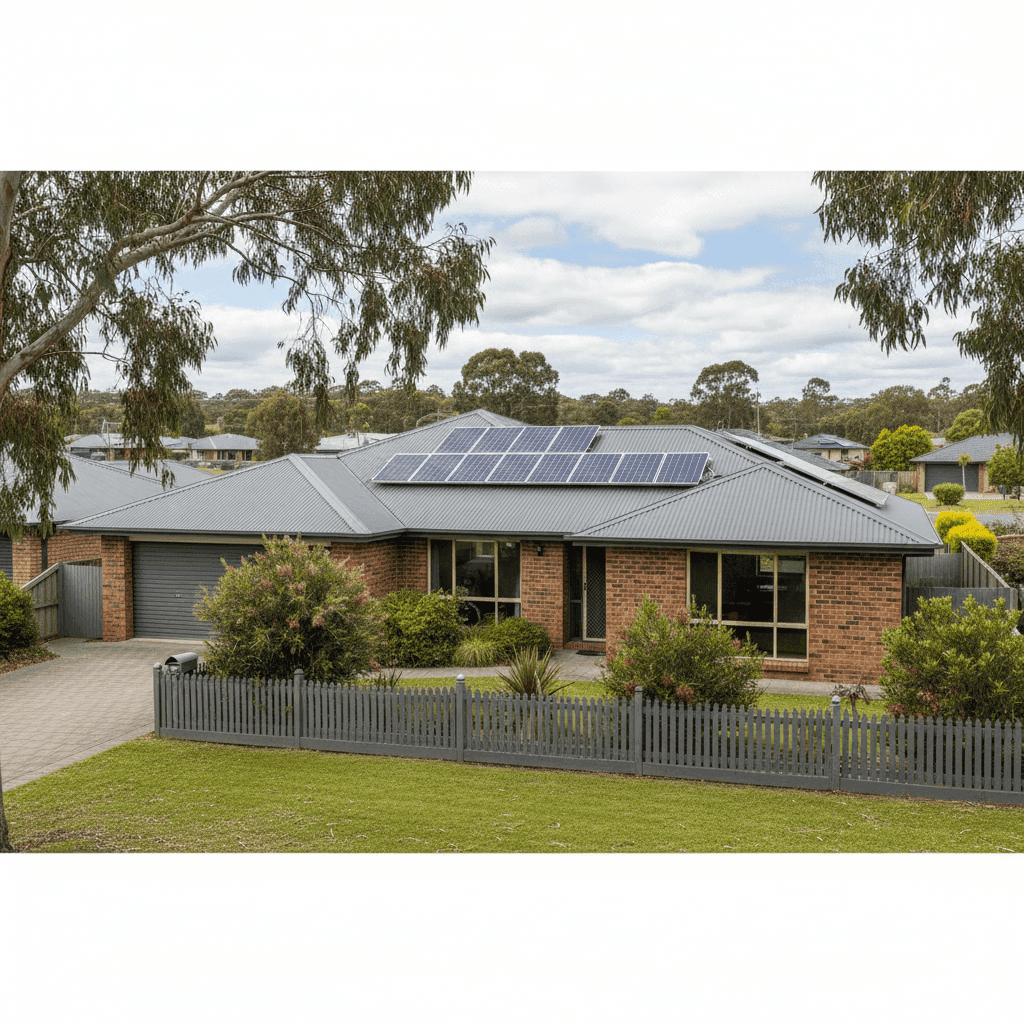
If you own a free standing home in Melrose, TAS 7310, you're probably curious about what your neighbours are paying for home insurance — and whether your own premium stacks up. This article breaks down a real home and contents insurance quote for a four-bedroom property in Melrose, compares it against Tasmanian and national benchmarks, and offers practical tips to help you get the most out of your cover.
---
Is This Quote Fair?
The short answer: yes — and then some. This quote came in at $1,610 per year (or roughly $154 per month), which our pricing analysis rates as Cheap (Below Average). That's a strong result for a property of this size and specification.
To put it in perspective, the average home insurance premium across Tasmania sits at $2,814 per year, with a state median of $2,326. This quote is well under both figures — sitting approximately 43% below the state average and 31% below the state median. Nationally, the picture is even more striking: the national average premium is $5,347 per year, meaning this Melrose homeowner is paying less than a third of what the typical Australian pays for equivalent cover.
Even when compared to the Latrobe (Tas.) LGA average of $2,263 per year, this quote still comes in noticeably cheaper. For a home insured at $547,000 for the building and $50,000 for contents, that's genuinely good value.
---
How Melrose Compares
Tasmania has long been one of the more affordable states for home insurance, largely due to its lower exposure to the extreme weather events — cyclones, severe flooding, and bushfire corridors — that push premiums sky-high in parts of Queensland, Western Australia, and New South Wales.
Here's a quick snapshot of how this quote lines up:
| Benchmark | Annual Premium |
|---|---|
| This Quote | $1,610 |
| LGA (Latrobe, Tas.) Average | $2,263 |
| TAS State Average | $2,814 |
| TAS State Median | $2,326 |
| National Average | $5,347 |
| National Median | $2,764 |
It's worth noting that no suburb-level comparison data is currently available for Melrose specifically. You can check the Melrose suburb stats page for updates as more data becomes available. That said, the LGA and state comparisons paint a clear picture: this is a below-average premium in an already affordable state.
---
Property Features That Affect Your Premium
Insurance pricing isn't arbitrary — every feature of your home feeds into the risk calculation. Here's how the characteristics of this particular property likely influence the quote:
Brick Veneer Walls Brick veneer is a popular and well-regarded construction type in Australia. It offers solid resistance to fire and wind, which insurers view favourably. Compared to weatherboard or timber-clad homes, brick veneer typically attracts lower premiums due to its durability and reduced susceptibility to damage.
Steel / Colorbond Roof A Colorbond steel roof is one of the best options from an insurance perspective. It's lightweight, highly resistant to fire, and performs well in heavy rain and hail. Insurers generally price these roofs competitively compared to older tile or fibrous cement alternatives.
Slab Foundation Concrete slab foundations are considered low-risk by most underwriters. They're structurally stable and less prone to the subsidence or pest-related issues that can affect raised timber stumped homes — a common concern in older Tasmanian properties.
Construction Year: 1985 A home built in 1985 is now over 40 years old. While this can sometimes nudge premiums upward due to ageing infrastructure (plumbing, wiring, roofing), the Colorbond roof and brick veneer construction suggest this home has been well-maintained or updated over the years. The $547,000 sum insured reflects a realistic rebuild cost for a 205 sqm home at current construction rates.
Solar Panels Solar panels add value to a property but also introduce a small additional risk — they can be damaged by hail or high winds and are expensive to replace. Most insurers include solar panels under building cover, though it's worth confirming this explicitly with your provider.
Ducted Climate Control Ducted heating and cooling systems are typically covered under building insurance as fixed fixtures. They add to the overall rebuild cost, which is already factored into the $547,000 sum insured.
No Pool The absence of a pool removes one common source of liability risk and additional premium loading, which is a modest but positive factor.
---
Tips for Homeowners in Melrose
Whether you're reviewing your current policy or shopping for the first time, here are four practical steps to make sure you're getting the right cover at the right price.
1. Validate Your Sum Insured Regularly Construction costs have risen sharply across Australia in recent years. A 205 sqm home in Tasmania that cost $400,000 to rebuild five years ago may cost significantly more today. Review your building sum insured annually and consider using an online rebuild cost calculator to ensure you're not underinsured.
2. Confirm Solar Panel Coverage If your panels are damaged in a storm or hailstorm, you'll want to know exactly what your policy covers. Ask your insurer whether solar panels are included under the building definition, whether there are any sub-limits, and how replacement is handled if the panels are no longer available in the same model.
3. Review Your Excess Carefully This quote carries a $5,000 excess on both building and contents — which is on the higher end. A higher excess generally lowers your premium, but it means you'll pay more out of pocket before your insurer steps in. Make sure this aligns with your financial buffer. If $5,000 would be a stretch in an emergency, it may be worth paying a slightly higher premium for a lower excess.
4. Don't Set and Forget Your Contents Value $50,000 in contents cover is a reasonable starting point, but it's easy to underestimate what you own. Walk through each room and consider electronics, furniture, clothing, appliances, and valuables. Many Australians discover they're underinsured on contents only after making a claim.
---
Compare Your Own Quote
Whether you're a long-time Melrose resident or new to the area, it pays to compare. Insurance premiums vary significantly between providers — even for identical properties — and the market changes constantly. CoverClub makes it easy to see what you should be paying and find a policy that fits.
Get a home insurance quote today and see how your premium stacks up against the suburb, state, and national benchmarks.