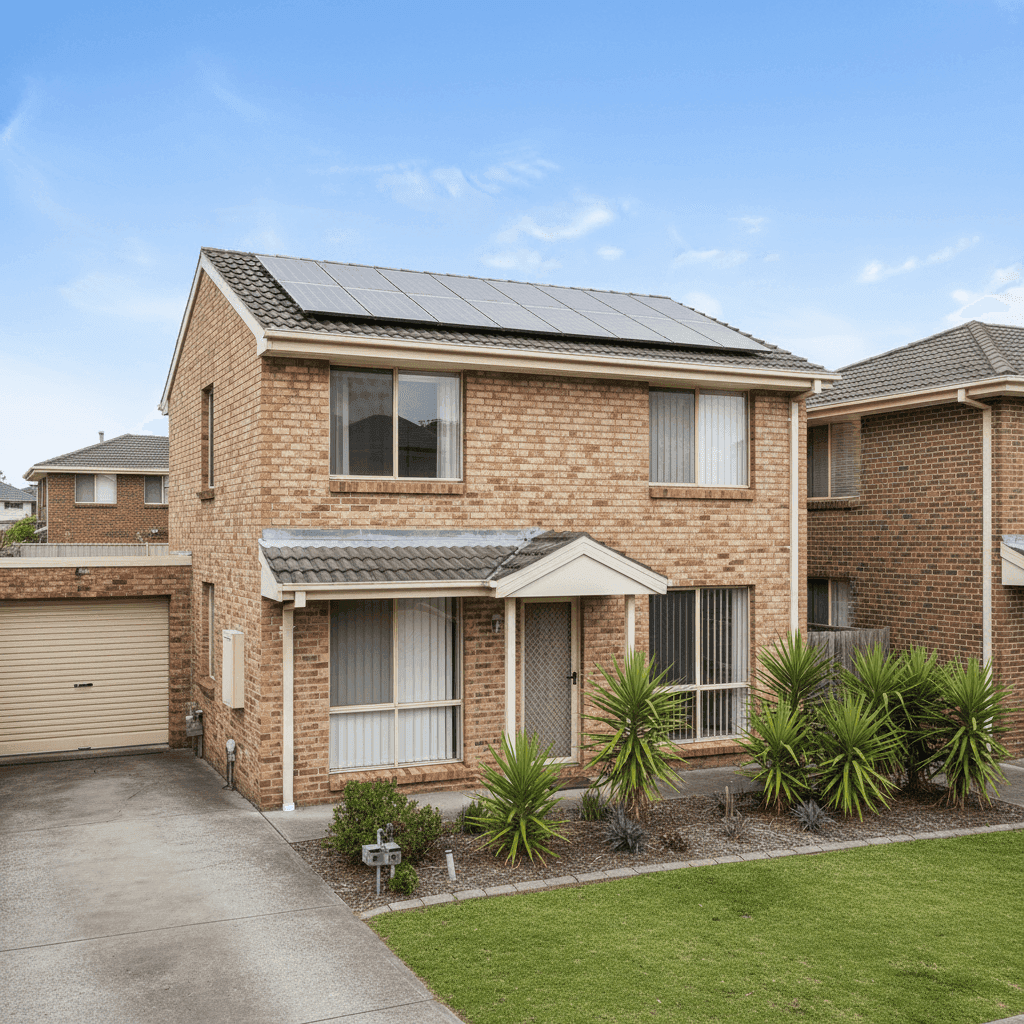
Melton West is one of Melbourne's fastest-growing outer-western suburbs, and with that growth comes an increasing number of homeowners asking a very practical question: am I paying the right amount for my home insurance? This article breaks down a real home and contents insurance quote for a 2-bedroom, 1-bathroom townhouse in Melton West (VIC 3337), compares it against local, state, and national benchmarks, and offers practical guidance for anyone looking to make sense of their own policy.
---
Is This Quote Fair?
The quote in question comes in at $1,668 per year (or around $160 per month) for combined home and contents cover, with a building sum insured of $557,000 and contents valued at $35,000. Both the building and contents excess sit at $1,000.
Our price rating for this quote is FAIR — Around Average, and the data backs that up. Within the Melton West suburb, the average annual premium across 45 quotes sits at $1,887, with a median of $1,808. At $1,668, this quote lands comfortably below both the suburb average and median — in fact, it falls between the 25th percentile ($1,526) and the median, meaning it's cheaper than more than half of comparable quotes in the area.
That's a reasonably solid result. It's not the cheapest quote on the market — the bottom quarter of Melton West premiums dip below $1,526 — but it's well clear of the pricier end, where the 75th percentile reaches $2,172. In other words, this homeowner is avoiding the top-end pricing that affects a significant portion of local properties.
The "Fair" rating reflects the fact that while the quote is below the suburb average, there may still be room to improve. A little comparison shopping could potentially push this closer to the 25th percentile range.
---
How Melton West Compares
Zooming out beyond the suburb reveals just how favourably Melton West sits in the broader insurance landscape. You can explore the full breakdown on the Melton West suburb stats page.
| Benchmark | Annual Premium |
|---|---|
| This quote | $1,668 |
| Melton West suburb average | $1,887 |
| Melton West suburb median | $1,808 |
| Macedon Ranges LGA average | $2,890 |
| Victoria state average | $3,000 |
| Victoria state median | $2,718 |
| National average | $5,347 |
| National median | $2,764 |
The contrast with state and national figures is striking. The Victorian state average sits at $3,000 per year, nearly double this quote. The national average of $5,347 is driven upward by high-risk regions — particularly cyclone-prone areas in Queensland and Western Australia — but even the national median of $2,764 is well above what this Melton West homeowner is paying.
The LGA average for Macedon Ranges ($2,890) is also considerably higher, suggesting that properties within the broader local government area face elevated risk factors — likely due to bushfire-prone rural and semi-rural pockets — that don't apply as strongly to urban Melton West. This is an important distinction: being in a lower-risk pocket of a higher-risk LGA can work in a homeowner's favour.
---
Property Features That Affect Your Premium
Several characteristics of this property play a meaningful role in shaping its insurance premium.
Brick veneer construction with a tiled roof is generally viewed favourably by insurers. Brick veneer offers solid fire resistance and structural durability, while tiled roofs are considered more resilient than Colorbond or corrugated iron in many risk assessments. Together, these features contribute to a more competitive premium.
Slab foundation is standard for properties of this era and construction type in Victoria. It's a low-maintenance foundation type that doesn't introduce the additional risks associated with older or more complex subfloor structures.
Timber and laminate flooring is worth noting from a contents and building perspective. Timber floors can be costly to repair or replace following water damage or flooding, so it's worth confirming your policy covers this adequately — particularly for escape of liquid events.
Above-average fittings quality means the building sum insured of $557,000 is likely well-considered. Higher-quality fixtures, fittings, and finishes cost more to replace, and underinsuring a property with above-average appointments is a common — and expensive — mistake.
Solar panels are present on this property, which is an increasingly common feature in Melbourne's growth corridors. It's essential to confirm that your policy explicitly covers solar panels as part of the building sum insured. Some policies cover them automatically; others require them to be listed separately. Given the replacement cost of a typical solar system, this is not a detail to overlook.
Ducted climate control is another fixed installation that adds to the replacement value of the building. Like solar panels, it should be factored into your building sum insured — and in this case, the $557,000 figure appears to account for these inclusions.
The absence of a pool removes one potential liability and premium-loading factor, which is a minor but positive influence on the final price.
---
Tips for Homeowners in Melton West
1. Review your building sum insured annually. Construction costs in Victoria have risen sharply in recent years. A sum insured that was accurate two years ago may no longer reflect the true cost of rebuilding your home today. Use a building cost calculator or speak with a quantity surveyor to make sure your $557,000 (or equivalent) still stacks up — being underinsured at claim time can be a costly surprise.
2. Confirm solar panel coverage explicitly. Don't assume your solar system is covered. Contact your insurer directly and ask whether panels are included under the building definition and to what value. If they're not covered — or the limit is too low — request an endorsement or consider switching to a policy that includes them as standard.
3. Shop around at renewal time. Insurance loyalty rarely pays off in Australia. Insurers frequently offer sharper pricing to new customers, and the gap between the cheapest and most expensive quotes in Melton West spans over $600 per year. Getting a fresh quote through CoverClub at renewal takes only a few minutes and could make a meaningful difference to your annual outgoings.
4. Consider your excess strategically. Both the building and contents excess on this policy sit at $1,000. Opting for a higher excess — say, $1,500 or $2,000 — can reduce your annual premium noticeably. If you have a solid emergency fund and are unlikely to make small claims, a higher excess is often a smart trade-off. Conversely, if cash flow is tight, keeping the excess manageable may be the right call.
---
Compare Your Own Quote
Whether you're a first-time buyer in Melton West or a long-time homeowner wondering if you're overpaying, comparing quotes is the single most effective way to find better value. CoverClub makes it easy to see how your premium stacks up against real data from your suburb and beyond. Start your comparison at CoverClub and find out if your current policy is truly working for you.