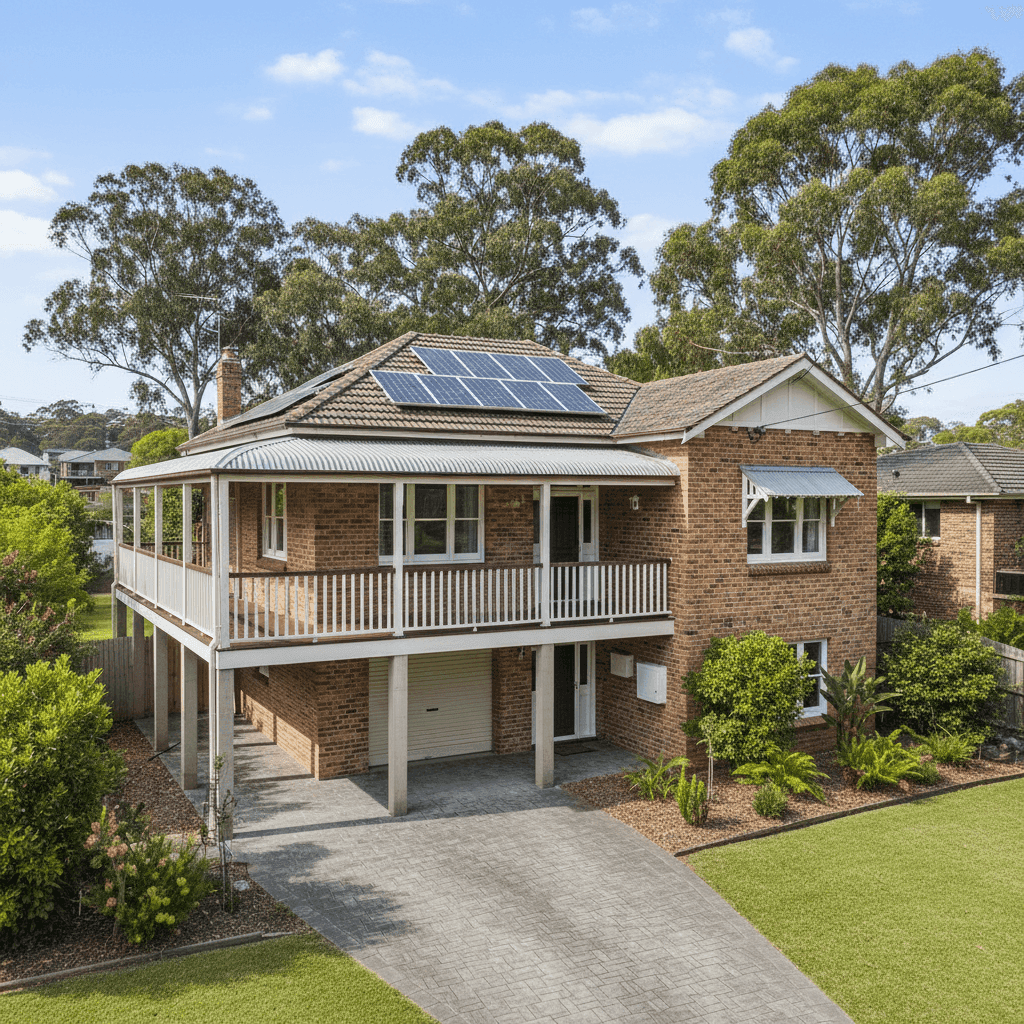
Menai is a well-established suburb in Sydney's Sutherland Shire, known for its leafy streets, family-friendly atmosphere, and solid mix of brick homes built during the 1970s and 80s. If you own a free-standing home here and you're wondering whether your building insurance premium stacks up, this analysis breaks down a real quote for a 5-bedroom property — and puts the numbers in context.
---
Is This Quote Fair?
The quote in question comes in at $3,159 per year (or $303/month) for building-only cover on a 277 sqm double-brick home with a sum insured of $878,000 and a $1,000 excess.
Our price rating for this quote is FAIR — Around Average, and the data backs that up. The suburb average for Menai sits at $3,041/yr, with a median of $2,957/yr. At $3,159, this premium lands comfortably within the interquartile range — between the 25th percentile ($2,465/yr) and the 75th percentile ($3,335/yr). In other words, it's neither a standout bargain nor an overpriced outlier. It's a reasonable market rate for this type of property in this location.
That said, "fair" doesn't mean you can't do better. There's still a meaningful gap between this quote and the cheapest competitive options in the suburb — so it's always worth comparing.
---
How Menai Compares
To put this premium in proper perspective, it helps to zoom out and look at the broader picture. Here's how Menai stacks up against state and national benchmarks:
| Benchmark | Average Premium | Median Premium |
|---|---|---|
| Menai (suburb) | $3,041/yr | $2,957/yr |
| NSW (state) | $9,528/yr | $3,770/yr |
| National | $5,347/yr | $2,764/yr |
| Sutherland LGA | $23,423/yr | — |
A few things stand out here. First, the NSW state average of $9,528/yr looks alarming — but that figure is heavily skewed by high-risk areas like flood zones and bushfire-prone regions across regional NSW. The state median of $3,770/yr is a much more representative number, and Menai sits below it, which is a positive sign.
The Sutherland LGA average of $23,423/yr is similarly distorted — likely pulled up by a small number of very high-risk or high-value properties within the LGA. Menai homeowners are clearly in a more favourable position than that figure suggests.
Nationally, the median premium is $2,764/yr — slightly below Menai's median, but not dramatically so. Sydney's higher property values and rebuild costs naturally push premiums a little higher than many regional or interstate equivalents.
You can explore Menai suburb insurance statistics, NSW state data, and national benchmarks on CoverClub to dig deeper into the numbers.
> Note: The suburb sample size for this analysis is 16 quotes, which is a reasonable dataset but worth keeping in mind — averages can shift as more data comes in.
---
Property Features That Affect Your Premium
Every property is different, and insurers assess risk based on a wide range of building characteristics. Here's how the features of this particular home influence its premium:
Double Brick Construction
Double brick is generally viewed favourably by insurers. It's durable, fire-resistant, and less susceptible to wind damage than timber-framed homes. This construction type can help keep premiums competitive compared to weatherboard or clad alternatives.
Tiled Roof
Terracotta or concrete tiles are a standard roofing material in Sydney's south, and insurers typically price them at a moderate risk level. They're more durable than Colorbond in some respects but can crack under impact. The age of the roof (given the 1982 construction year) may be a factor some insurers consider.
Elevated on Stumps (At Least 1m)
Being elevated by at least a metre is a double-edged sword. On the positive side, it significantly reduces flood and stormwater inundation risk — a meaningful benefit in parts of Sydney that experience heavy rainfall. However, elevated homes can be more exposed to wind uplift, and the subfloor space introduces additional maintenance considerations. Overall, the flood-risk reduction tends to be the dominant factor for insurers.
Age of Construction (1982)
Homes built in the early 1980s are well past the 40-year mark. While double brick construction ages well, some insurers apply age loadings to older homes due to the potential for dated electrical wiring, plumbing, and roofing materials. It's worth ensuring your sum insured reflects current rebuild costs, including any upgrades made since original construction.
Solar Panels
This property has solar panels installed, which adds a modest amount to the insured value and can slightly increase premiums. More importantly, you'll want to confirm your policy explicitly covers solar panel damage — not all standard building policies include this as a default.
Ducted Climate Control
Ducted air conditioning systems are a significant fixed asset and are typically covered under building insurance. Their presence contributes to the overall sum insured and can influence the premium accordingly.
No Pool, Standard Fittings
The absence of a pool removes a common source of liability and maintenance claims. Standard fittings (rather than premium) also help keep the rebuild cost — and therefore the sum insured — at a reasonable level.
---
Tips for Homeowners in Menai
1. Review your sum insured regularly With a rebuild cost of $878,000 on a 277 sqm home, you're looking at roughly $3,170/sqm — which is broadly in line with current Sydney construction rates. However, building costs have risen sharply in recent years. Make sure your sum insured is updated annually to avoid being underinsured in the event of a total loss.
2. Confirm solar panel coverage Don't assume your solar panels are automatically covered. Check your Product Disclosure Statement (PDS) to see whether panels are included under building cover, and whether damage from storms, hail, or electrical faults is explicitly listed.
3. Ask about loyalty discounts — or switch If you've been with the same insurer for several years, you may be paying a loyalty premium rather than enjoying a loyalty discount. Insurers often reserve their best rates for new customers. Comparing quotes annually is one of the simplest ways to avoid overpaying.
4. Consider your excess strategically This policy carries a $1,000 building excess. A higher excess (say, $2,500) can meaningfully reduce your annual premium — but only makes sense if you have the financial buffer to cover it in a claim. Conversely, if cash flow is tight, a lower excess might be worth the slightly higher premium.
---
Compare Your Options at CoverClub
Whether this quote is right for you depends on your circumstances, risk appetite, and what other insurers are offering right now. CoverClub makes it easy to benchmark your premium against real market data and find a policy that genuinely suits your home. Get a quote today and see how much you could save — or confirm that you're already getting a fair deal.