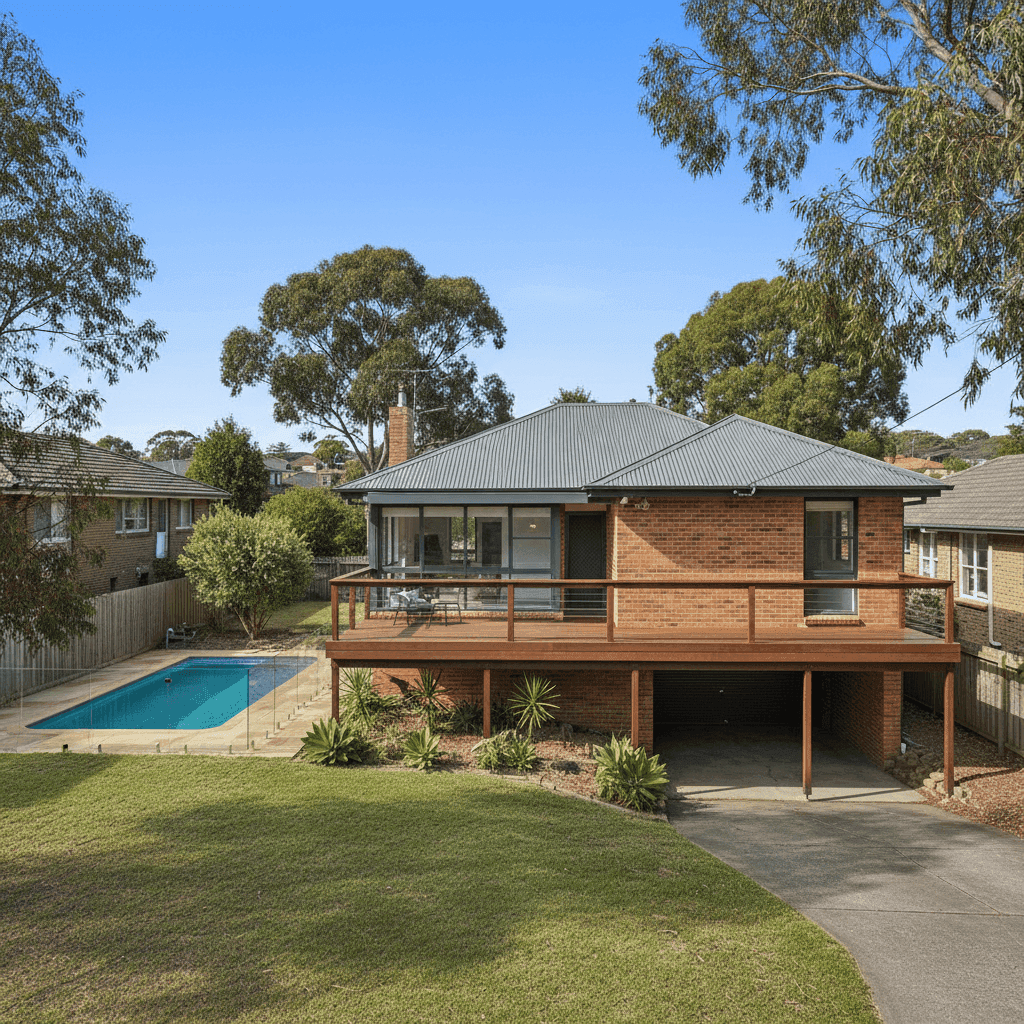
If you own a four-bedroom free standing home in Merewether Heights, NSW 2291, you're sitting in one of Newcastle's most sought-after elevated suburbs — a coastal hillside pocket known for its ocean views, established streetscapes, and a strong mix of mid-century and renovated homes. Like any property owner, one of the most important financial decisions you'll make each year is choosing the right home and contents insurance. But how do you know whether the quote in front of you is actually a good deal?
This article breaks down a real home and contents insurance quote for a property in Merewether Heights, compares it against local, state, and national benchmarks, and gives you practical guidance on what's driving the price.
---
Is This Quote Fair?
The quote under review comes in at $3,272 per year (or $336/month) for a four-bedroom, two-bathroom free standing home, with a building sum insured of $743,000 and contents cover of $161,000. The building excess is $3,000 and the contents excess is $1,000.
Our price rating for this quote is CHEAP — below the suburb average — and the data backs that up clearly.
The suburb average for Merewether Heights sits at $4,829 per year, with a median of $4,611. That means this quote is coming in roughly $1,557 below the suburb average — a meaningful saving of around 32%. Even compared to the suburb's 25th percentile (the cheapest end of the range at $3,302/yr), this quote still undercuts it slightly, placing it among the most competitive prices seen in the area.
In short: if you've received a quote at this level for a home of this size and value in Merewether Heights, it's worth taking seriously.
---
How Merewether Heights Compares
To put this quote in broader context, here's how Merewether Heights stacks up against NSW state figures and national benchmarks:
| Benchmark | Average Premium | Median Premium |
|---|---|---|
| Merewether Heights (2291) | $4,829/yr | $4,611/yr |
| Newcastle LGA | $3,835/yr | — |
| NSW | $9,528/yr | $3,770/yr |
| National | $5,347/yr | $2,764/yr |
| This Quote | $3,272/yr | — |
A couple of things stand out here. The NSW average of $9,528 is dramatically higher than the median of $3,770 — a sign that a small number of very high-risk or high-value properties are pulling the average up significantly. This is common in a state that includes flood-prone inland towns, bushfire-affected regions, and premium coastal properties.
The national average of $5,347 also sits well above the national median of $2,764, reflecting a similar skew. For Merewether Heights specifically, the suburb average of $4,829 is notably higher than the Newcastle LGA average of $3,835, suggesting that homes in this suburb — likely due to their size, age, and rebuild values — tend to attract higher premiums than the broader Newcastle area.
Against all of these benchmarks, a quote of $3,272 represents genuine value.
---
Property Features That Affect Your Premium
Every home is different, and insurers price risk based on a detailed picture of your property. Here's how the key features of this particular home are likely influencing its premium:
Brick Veneer Construction Brick veneer is one of the more insurer-friendly wall types in Australia. It offers solid fire resistance and durability, which generally translates to more competitive premiums compared to weatherboard or lightweight cladding.
Steel / Colorbond Roof Colorbond roofing is widely regarded as low-maintenance, highly durable, and resistant to fire and impact. It's a positive factor for insurers and tends to support more favourable pricing.
Stump Foundation (Elevated Under 1m) The home sits on stumps and is elevated by less than one metre. This style of construction — common in older NSW homes built in the 1970s — can introduce some complexity. Stumped homes may face higher costs to repair or replace subfloor elements, and some insurers factor this into their pricing. That said, the elevation is minimal here, so the impact is likely modest.
Timber / Laminate Flooring Timber and laminate floors can be more susceptible to water damage than tiled surfaces, which may nudge contents and building premiums slightly upward. However, with standard fittings quality, this is unlikely to be a major driver.
1975 Construction Year Homes built in the mid-1970s are now approaching 50 years old. While many are structurally sound, older homes can have ageing electrical wiring, plumbing, and roofing materials that increase the likelihood of a claim. Insurers often price older homes at a slight premium to account for this.
Swimming Pool The presence of a pool adds liability exposure and increases the potential cost of a claim (e.g., pool equipment, surrounds, fencing). It's a factor that can push premiums upward, though the effect varies by insurer.
No Solar Panels, No Ducted Climate Control The absence of solar panels and ducted air conditioning keeps the replacement cost profile simpler, which can work in the homeowner's favour when it comes to pricing.
---
Tips for Homeowners in Merewether Heights
1. Review your sum insured annually With a building sum insured of $743,000 for a 214 sqm home, it's worth checking this figure each year against current construction costs. Building costs in NSW have risen sharply in recent years, and being underinsured can leave you significantly out of pocket after a major claim. Use a building cost calculator or ask your insurer to confirm the figure is still adequate.
2. Consider the impact of your excess This policy carries a $3,000 building excess — on the higher end of the spectrum. A higher excess typically means a lower premium, but it also means you'll need to cover more out of pocket before your insurer steps in. Make sure this aligns with your financial comfort level, particularly for a home with older construction elements that could generate maintenance-related claims.
3. Keep your pool compliant and documented Pool fencing regulations in NSW are strict, and non-compliance can affect your ability to make a liability claim. Ensure your pool barrier meets current standards under the Swimming Pools Act 1992 and keep records of any inspections. Some insurers may also ask about pool safety as part of the underwriting process.
4. Get multiple quotes — even if you're happy with your current one This quote is priced well below the suburb average, but the insurance market is competitive and pricing can shift year to year. Using a comparison platform like CoverClub takes the legwork out of shopping around and ensures you're not paying more than you need to.
---
Ready to Compare Your Own Quote?
Whether you're a first-time buyer in Merewether Heights or a long-term homeowner reviewing your annual renewal, comparing quotes is one of the simplest ways to make sure you're getting fair value. CoverClub makes it easy to see what multiple insurers would charge for your specific property — so you can make a confident, informed decision.