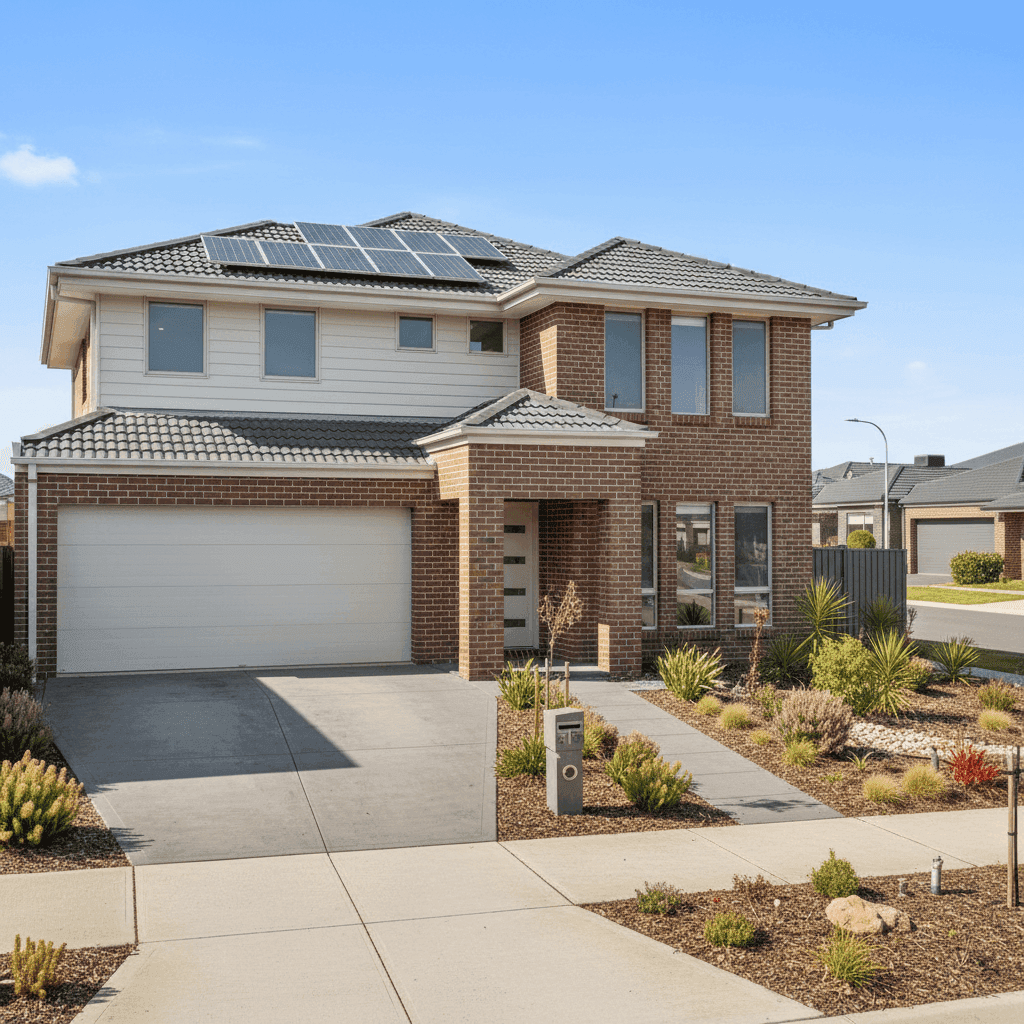
Mernda is a fast-growing suburb on Melbourne's northern fringe, popular with families drawn to its newer housing estates, green spaces, and improved rail connections. If you own a free standing home here, understanding what you should be paying for home and contents insurance is an important step in making sure you're not leaving money on the table — or leaving yourself underinsured.
This article breaks down a real home insurance quote for a 4-bedroom, 2-bathroom free standing home in Mernda (postcode 3754), built in 2019, and puts it in context against local, state, and national benchmarks.
---
Is This Quote Fair?
The quote in question comes in at $1,035 per year (or roughly $97 per month) for combined home and contents cover, with a building sum insured of $650,000 and contents valued at $50,000. The building excess is set at $4,000, while the contents excess is a more modest $500.
Our price rating for this quote is FAIR — around average for the Mernda area.
That "fair" rating deserves some unpacking. The suburb average premium sits at $1,679 per year, and the median is $1,577 per year, meaning this quote comes in meaningfully below both figures. In fact, at $1,035, it sits closer to the 25th percentile of $966 than it does to the median — which is a genuinely competitive result.
The catch? The building excess of $4,000 is on the higher side. A higher excess is one of the most common levers insurers (and policyholders) use to bring premiums down. So while the annual cost looks attractive, it's worth considering whether you'd be comfortable covering the first $4,000 of any building claim out of pocket. For many homeowners, that's a reasonable trade-off; for others, a lower excess with a slightly higher premium might be a better fit.
---
How Mernda Compares
To really appreciate this quote, it helps to zoom out and look at the broader picture. Here's how Mernda stacks up against Victoria-wide data and national benchmarks:
| Benchmark | Average Premium | Median Premium |
|---|---|---|
| Mernda (3754) | $1,679/yr | $1,577/yr |
| Victoria (VIC) | $2,921/yr | $2,694/yr |
| National | $2,965/yr | $2,716/yr |
| LGA (Nillumbik) | $4,494/yr | — |
A few things stand out here. Mernda premiums are significantly lower than the Victorian state average — roughly 42% cheaper on a median basis. They're also well below the national median.
Perhaps most striking is the comparison with the broader Nillumbik LGA average of $4,494 per year. Nillumbik encompasses areas with substantially higher bushfire risk — particularly in the hills to the north and east — which drives up premiums across the LGA considerably. Mernda, situated on the flat urban fringe, benefits from a much lower risk profile, which is reflected in its comparatively modest premiums.
This quote of $1,035, then, represents solid value — sitting well below the suburb average and dramatically below both state and LGA averages.
---
Property Features That Affect Your Premium
Several characteristics of this property work in the homeowner's favour from an insurance pricing perspective:
Brick Veneer Construction Brick veneer is one of the most common wall types in Australian suburban homes and is generally viewed favourably by insurers. It offers good fire resistance compared to timber-framed or clad exteriors, which can translate to lower premiums.
Tiled Roof Concrete or terracotta tiles are considered a durable, low-risk roofing material. They perform well in most weather conditions and tend to attract better rates than older materials like fibrous cement or corrugated iron on ageing homes.
Slab Foundation A concrete slab foundation is standard for homes of this era and construction type. It's associated with lower subsidence and pest-related risks compared to older suspended timber floors, which is a positive signal for underwriters.
Built in 2019 Newer homes benefit from modern building codes, which mandate higher standards for structural integrity, fire safety, and energy efficiency. A 2019 build is still relatively young, meaning lower likelihood of wear-related claims.
Solar Panels Solar panels do add a small layer of complexity to home insurance — they're typically covered under your building policy, but it's worth confirming this with your insurer. Some policies have specific sub-limits for solar systems, so check the Product Disclosure Statement (PDS) carefully.
Ducted Climate Control Ducted heating and cooling systems are a fixed installation and should be covered under your building sum insured. Make sure your $650,000 building cover is sufficient to account for the full replacement cost, including systems like these.
No Cyclone Risk Mernda is not in a cyclone-prone area, which removes one of the more significant risk factors that drives up premiums in northern parts of Australia.
Timber/Laminate Flooring While not a major premium driver, timber and laminate floors are worth noting in your contents and building cover — particularly if you have high-quality timber floors that could be costly to replace.
---
Tips for Homeowners in Mernda
1. Review your building sum insured regularly Construction costs have risen sharply in recent years. A $650,000 sum insured may have been accurate at the time of purchase, but it's worth using a building cost calculator to verify it still reflects the true cost of rebuilding your home from scratch — not its market value.
2. Understand your excess before you commit This quote carries a $4,000 building excess. Before locking in, consider requesting quotes at a lower excess (e.g., $1,000 or $2,000) to see how much the premium difference is. Sometimes the gap is smaller than expected, and a lower excess provides much better protection for mid-range claims.
3. Check your solar panel coverage With solar panels on the roof, confirm with your insurer exactly how they're covered — including storm damage, accidental breakage, and whether inverters are included. Not all policies treat solar systems the same way.
4. Don't underestimate your contents $50,000 in contents cover is a starting point, but for a 4-bedroom home it may not be sufficient. Do a room-by-room stocktake of your belongings — furniture, appliances, clothing, electronics, and valuables — to make sure you're not underinsured if the worst happens.
---
Compare Home Insurance Quotes in Mernda
Whether you're reviewing an existing policy or shopping for the first time, it pays to compare. CoverClub makes it easy to see how your quote stacks up against real data from your suburb and beyond. Get a home insurance quote today and find out if you're getting a fair deal — or if there's a better option waiting for you.