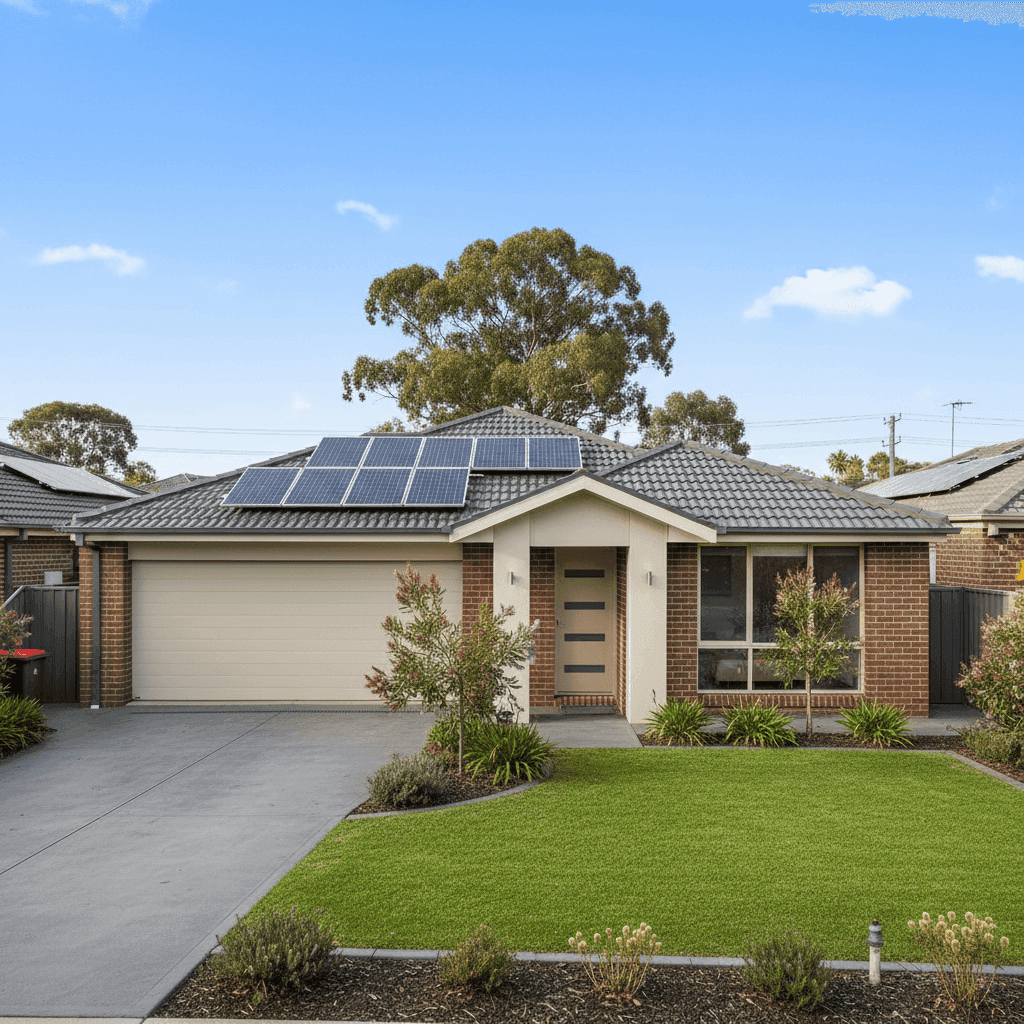
Mernda is a fast-growing outer northern suburb of Melbourne, popular with families drawn to its newer housing estates, open green spaces, and relatively affordable land. If you own a free-standing home in the area and you're shopping around for home and contents insurance, understanding what a fair premium looks like — and what drives the cost — can save you a significant amount each year.
This article breaks down a recent home and contents insurance quote for a four-bedroom, two-bathroom brick veneer home in Mernda, VIC 3754, built in 2008, with a building sum insured of $1,015,000 and contents cover of $180,000. The quoted annual premium came in at $2,405 per year (or $231 per month). Here's what that figure really means.
---
Is This Quote Fair?
Based on CoverClub's pricing data, this quote is rated Expensive — above average for the Mernda area. The suburb average annual premium sits at $1,570, with a median of $1,413. At $2,405, this quote is running roughly 53% above the suburb average and well above the 75th percentile of $1,930 — meaning fewer than one in four comparable quotes in the area come in this high.
That said, context matters. The building sum insured of $1,015,000 is on the higher end for the suburb, and the contents cover of $180,000 adds meaningful weight to the overall premium. Both excesses are set at $1,000, which is fairly standard and doesn't dramatically reduce the base cost. If your current quote is in this range, it's worth exploring whether your sum insured accurately reflects rebuild costs — over-insuring can push premiums up unnecessarily, while under-insuring creates risk at claim time.
The key takeaway: if you're paying close to $2,405 per year in Mernda, you're likely paying more than most of your neighbours. That doesn't automatically mean you're being overcharged — but it does mean shopping around is worthwhile.
---
How Mernda Compares
To put this quote in perspective, here's how Mernda stacks up against broader benchmarks:
| Benchmark | Annual Premium |
|---|---|
| Mernda suburb average | $1,570 |
| Mernda suburb median | $1,413 |
| Mernda 25th percentile | $1,052 |
| Mernda 75th percentile | $1,930 |
| VIC state average | $3,000 |
| VIC state median | $2,718 |
| National average | $5,347 |
| National median | $2,764 |
| Nillumbik LGA average | $3,693 |
Mernda is notably cheaper than the Victorian state average ($3,000) and considerably cheaper than the national average of $5,347 — which is heavily influenced by high-risk areas in Queensland and northern Australia. This reflects Mernda's relatively benign risk profile: it's not in a cyclone zone, doesn't sit in a high-bushfire-risk corridor, and doesn't face the coastal storm surge risks that push premiums sky-high in other parts of the country.
Interestingly, the Nillumbik LGA average of $3,693 is substantially higher than Mernda's suburb average. This is largely because Nillumbik encompasses areas like Hurstbridge, Panton Hill, and Eltham North — semi-rural localities with elevated bushfire exposure — which pull the LGA figure up. Mernda itself benefits from its more suburban, low-density character. You can explore more Victoria-wide insurance data here.
---
Property Features That Affect Your Premium
Several characteristics of this property directly influence what insurers charge:
Brick veneer construction and tile roof — This is one of the most common and insurer-friendly combinations in Australian suburban housing. Brick veneer offers solid fire resistance and structural durability, while tiled roofs are considered lower risk than metal or older materials. This combination generally attracts standard or slightly favourable pricing from most insurers.
Slab foundation — A concrete slab is the dominant foundation type for homes built in Melbourne's growth corridors during the 2000s. It's well understood by insurers and doesn't carry the subsidence or moisture risks sometimes associated with older pier-and-beam foundations.
Timber and laminate flooring — While aesthetically popular, timber and laminate floors can be more costly to repair or replace after water damage events compared to tiles. This is a minor but real factor in contents and building claims, and some insurers price it accordingly.
Solar panels — The presence of rooftop solar adds replacement cost to the building sum insured and can slightly increase premiums. Panels are vulnerable to hail damage and, if not properly listed, may be underinsured. It's worth confirming with your insurer that solar panels are explicitly covered under your policy.
Ducted climate control — Ducted heating and cooling systems are a significant fixed asset in the home. They're expensive to repair or replace, and their inclusion should be reflected in your building sum insured. This is another factor that can legitimately push a premium above the suburb average.
2008 construction — At around 17 years old, this home is relatively modern. Newer homes generally attract lower premiums than older properties, as they're built to more recent standards and are less likely to have ageing wiring, plumbing, or structural issues.
---
Tips for Homeowners in Mernda
1. Review your building sum insured annually Construction costs have risen sharply in Victoria over recent years. If your sum insured hasn't been updated since you took out the policy, you may be underinsured — or conversely, over-insured if you've been accepting automatic increases without checking. Use a quantity surveyor estimate or your insurer's calculator to validate the figure.
2. Confirm your solar panels are properly covered Many standard home insurance policies include solar panels as part of the building, but coverage limits and conditions vary. Check your Product Disclosure Statement (PDS) to ensure your panels are covered for storm, hail, and accidental damage — and that the replacement value is accurate.
3. Compare quotes before renewal With this quote rated above average for the suburb, it's a clear signal to get competing quotes before your renewal date. Insurers price risk differently, and the same property can attract premiums that vary by hundreds of dollars. Get a quote through CoverClub to see what other insurers are offering for your address.
4. Consider your excess level Both the building and contents excesses on this policy are set at $1,000. Opting for a higher excess — say $2,000 — can meaningfully reduce your annual premium. This is a reasonable trade-off if you have the financial buffer to cover a larger out-of-pocket cost in the event of a claim.
---
Compare Your Quote Today
Whether you're renewing an existing policy or taking out cover for the first time, it pays to compare. CoverClub makes it easy to see real premium data for your suburb and get quotes from multiple insurers in one place. Start your free quote at CoverClub and find out whether you're getting a fair deal on your Mernda home insurance.