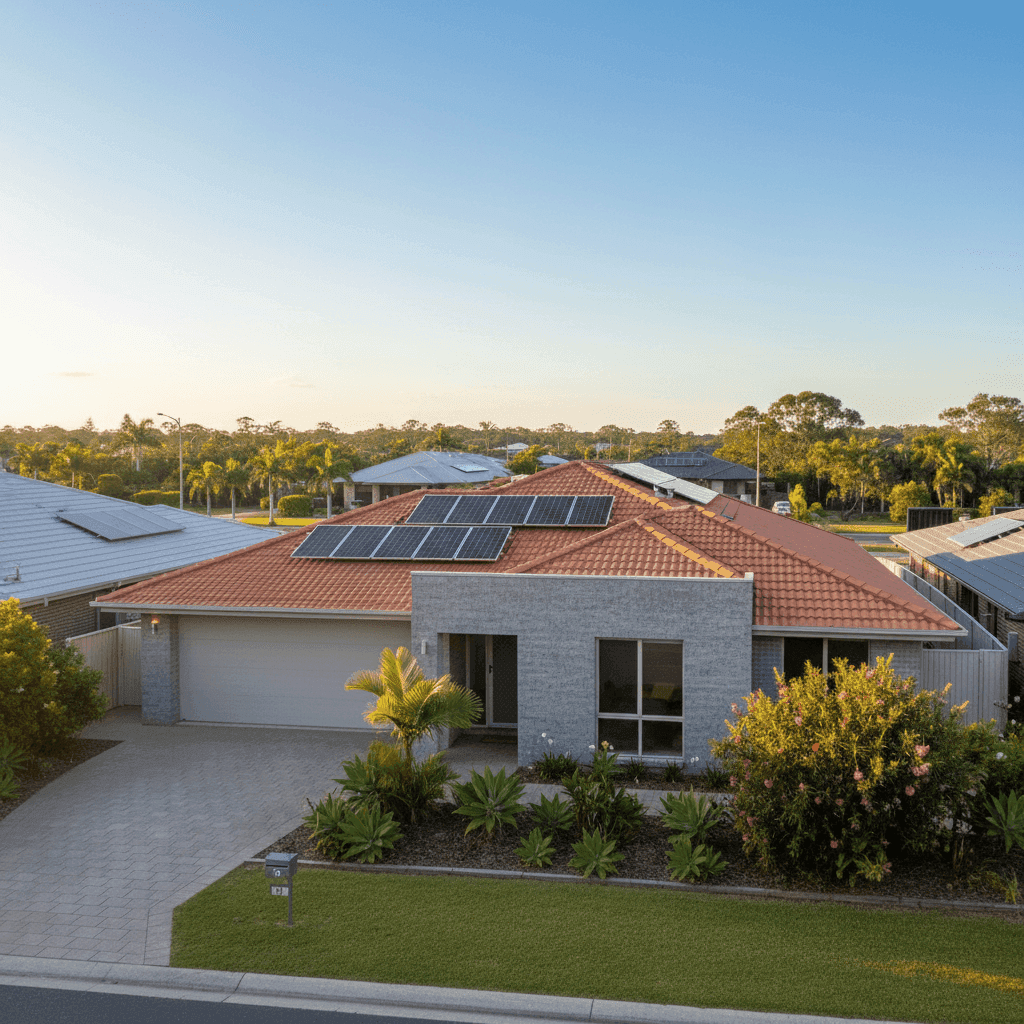
If you own a free standing home in Miami, QLD 4220, you're sitting in one of the Gold Coast's most sought-after beachside suburbs — and like many homeowners here, you've probably wondered whether you're paying too much (or too little) for your home insurance. This article breaks down a real home and contents insurance quote for a three-bedroom, two-bathroom property in Miami, comparing it against suburb, state, and national benchmarks to help you make a more informed decision.
---
Is This Quote Fair?
The quote in question comes in at $2,516 per year (or $241 per month) for combined home and contents cover, with a building sum insured of $620,000 and contents valued at $115,000. Both the building and contents excesses are set at $1,000.
Our analysis rates this quote as FAIR — Around Average, and the data backs that up. Based on 22 quotes collected for the Miami 4220 area, the suburb average sits at $2,633/yr and the median at $2,649/yr. This quote lands roughly $117–$133 below those central figures, which means it's competitive without being an outlier.
To put it in percentile terms: the suburb's 25th percentile is $2,075/yr and the 75th percentile is $3,147/yr. At $2,516, this quote falls comfortably within the middle band — not the cheapest available, but well clear of the more expensive end of the market. For a property of this size, age, and construction type, that's a reasonable outcome.
---
How Miami Compares to the Rest of QLD and Australia
One of the more striking findings in this analysis is just how dramatically insurance costs vary across Queensland. While Miami's median sits at around $2,649/yr, the QLD state average is a staggering $9,129/yr — with a state median of $3,903/yr. That enormous gap between average and median tells a familiar story: a subset of very high-risk properties (think flood-prone inland towns and cyclone-exposed far north Queensland) are dragging the average skyward.
For context, the Gold Coast LGA average is $8,161/yr — also well above what Miami homeowners are typically paying. This likely reflects the diversity of risk profiles across the Gold Coast, where some low-lying and flood-affected areas carry significantly higher premiums than coastal suburbs like Miami.
Zooming out to the national picture, the Australian average premium is $5,347/yr, with a national median of $2,764/yr. Again, Miami comes in slightly below the national median, which is a positive sign for local homeowners.
The takeaway? Miami is a relatively affordable suburb for home insurance by both Queensland and national standards — a reflection of its coastal but non-cyclone-zone position, established infrastructure, and predominantly solid construction stock.
---
Property Features That Affect Your Premium
Several characteristics of this particular property are worth noting when it comes to understanding the premium.
Concrete external walls are generally viewed favourably by insurers. Concrete construction is highly resistant to fire, termites, and storm damage, and tends to hold up well in the kind of severe weather events the Gold Coast occasionally experiences. This is one factor that likely contributes to a more competitive premium.
Tiled roof is another positive signal. Terracotta or concrete tiles are durable and perform well in hail and wind events compared to some other roofing materials, though they can be more costly to repair or replace if damaged.
The property was built in 1969, which means it's now over 55 years old. Older homes can sometimes attract slightly higher premiums due to ageing wiring, plumbing, and structural elements. However, a concrete construction from this era is often quite solid, and many insurers assess the condition rather than age alone.
Solar panels are present on this property. While solar systems add value to a home, they also add replacement cost risk — particularly if panels are damaged in a hailstorm or severe weather event. It's worth confirming with your insurer that your solar system is explicitly covered under your building policy and that the sum insured accounts for its replacement value.
A slab foundation and tiled flooring throughout are both practical choices in the Queensland climate, offering resistance to moisture and ease of maintenance. These features don't typically inflate premiums.
With standard fittings quality, the contents valuation of $115,000 appears reasonable for a three-bedroom home, though it's always worth doing a thorough audit of your possessions to ensure you're neither underinsured nor paying for more cover than you need.
---
Tips for Homeowners in Miami
1. Review your sum insured regularly Building costs have risen sharply in recent years. At $620,000, the building sum insured here needs to reflect full replacement cost — not market value. Use a building cost calculator or speak to a local builder to sense-check this figure annually.
2. Confirm solar panel coverage As mentioned above, solar panels aren't always automatically included in standard building policies. Check your Product Disclosure Statement (PDS) carefully, and ask your insurer specifically about storm, hail, and accidental damage cover for your system.
3. Consider your excess strategically A $1,000 excess is fairly standard, but increasing your excess can meaningfully reduce your annual premium. If you have a solid emergency fund and are unlikely to make small claims, a higher excess could save you money over time.
4. Shop around at renewal time Insurers often reserve their best pricing for new customers. Even if your current quote is fair, it's worth comparing at least two or three alternatives each year at renewal. Loyalty doesn't always pay in the insurance market.
---
Compare Your Own Quote
Whether you're a Miami local or shopping for cover elsewhere on the Gold Coast, the best way to know if you're getting a fair deal is to compare. At CoverClub, we help Australian homeowners benchmark their premiums against real data from their own suburb and state. Get a quote now at CoverClub and see exactly where you stand.