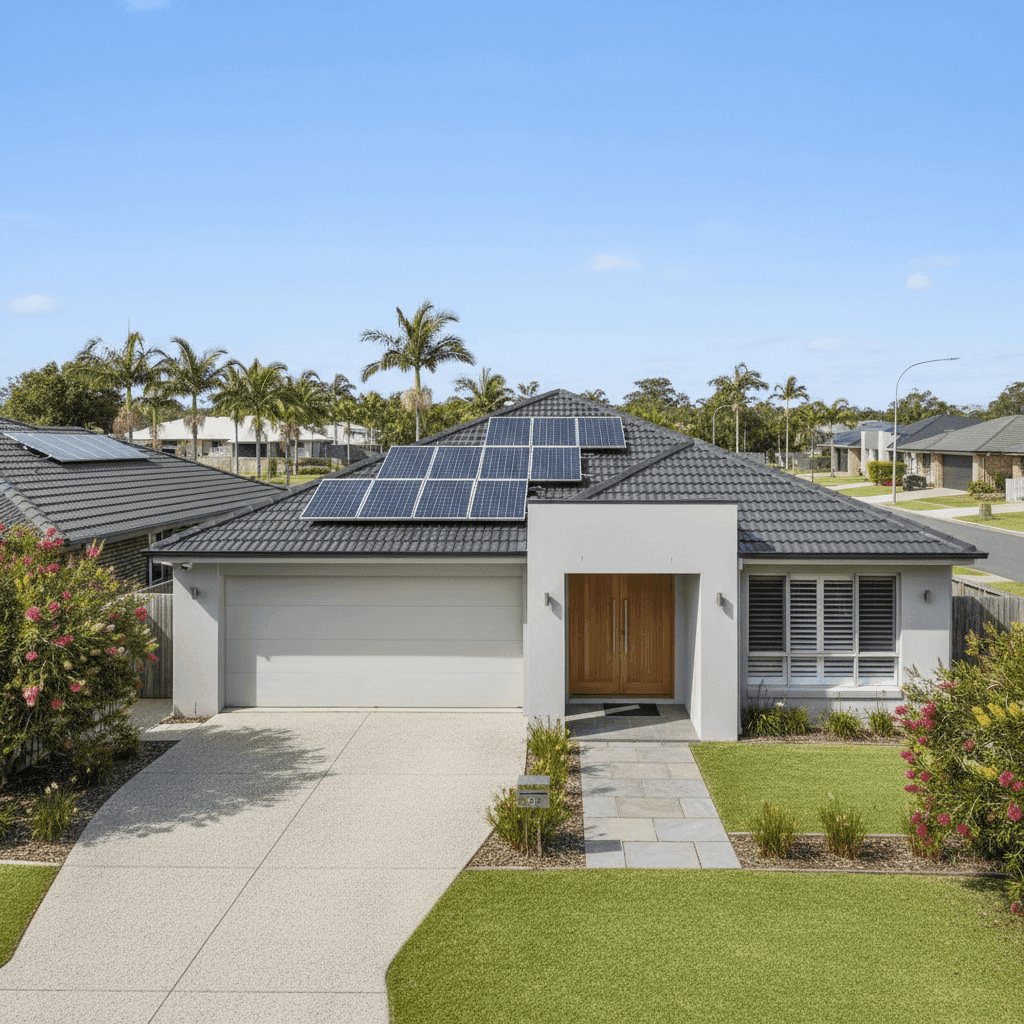
Miami is one of the Gold Coast's most sought-after coastal suburbs, and if you own a free standing home here, you already know the lifestyle perks that come with the postcode. But lifestyle comes with responsibility — and that includes making sure your home and contents are properly protected. This article breaks down a real home and contents insurance quote for a three-bedroom, two-bathroom free standing home in Miami, QLD 4220, and puts it in context against suburb, state, and national benchmarks.
---
Is This Quote Fair?
The annual premium for this property came in at $2,524 per year (or $242/month), covering a building sum insured of $624,000 and contents valued at $115,000. Both the building and contents excess are set at $1,000.
Our price rating for this quote is FAIR — Around Average, which is a reasonable result for a coastal Gold Coast suburb. It sits just below the Miami suburb average of $2,633/yr and the suburb median of $2,649/yr, meaning this homeowner is paying slightly less than most of their neighbours for comparable cover. That's a modest but meaningful saving — roughly $109–$125 less per year than the typical Miami quote.
It's worth noting that the suburb's 25th percentile sits at $2,075/yr and the 75th percentile reaches $3,147/yr. This quote lands comfortably in the middle of that range, confirming the "around average" assessment. For a coastal suburb with proximity to water and the associated risk factors that come with it, landing in the mid-range rather than the upper quartile is a positive outcome.
---
How Miami Compares to QLD and National Averages
To truly appreciate this quote, it helps to zoom out and look at the broader picture. You can explore the full data on the Miami suburb insurance stats page, but here's a quick summary:
| Benchmark | Average Premium | Median Premium |
|---|---|---|
| Miami (QLD 4220) | $2,633/yr | $2,649/yr |
| Queensland | $9,129/yr | $3,903/yr |
| National | $5,347/yr | $2,764/yr |
| Gold Coast LGA | $8,161/yr | — |
The contrast between averages and medians at the state and national level is striking. Queensland's average premium of $9,129/yr is dramatically higher than its median of $3,903/yr — a clear sign that extreme premiums in high-risk areas (think cyclone-prone Far North Queensland) are pulling the average upward. The same dynamic plays out nationally, where the national average of $5,347/yr is nearly double the national median of $2,764/yr.
For Miami homeowners, this context is reassuring. The suburb's average and median are closely aligned, suggesting a relatively consistent pricing environment without the wild outliers seen elsewhere in Queensland. At $2,524/yr, this quote sits below both the suburb average and the national median — a solid result by any measure.
The Gold Coast LGA average of $8,161/yr may look alarming at first glance, but again, this figure is heavily influenced by premium outliers across the broader LGA. Miami's own suburb data tells a more measured story.
---
Property Features That Affect Your Premium
Every property has a unique risk profile, and insurers weigh up a range of characteristics when calculating your premium. Here's how this home's features likely influenced the quote:
Concrete external walls are generally viewed favourably by insurers. Concrete is highly resistant to fire, termites, and impact damage — all factors that reduce the likelihood of a significant claim. Compared to timber-framed homes, concrete construction can contribute to a lower premium.
Tiled roof is another positive signal. Terracotta or concrete tiles are durable, fire-resistant, and perform well in moderate wind events. They're a preferred roofing material from an underwriting perspective.
Slab foundation is standard for Queensland homes of this era and presents no particular risk concerns for insurers in a non-flood-prone area.
Tiled flooring throughout is practical and resilient — it's less susceptible to water damage than carpet or timber, which can be a minor premium consideration.
Built in 1969, this home is over 50 years old. Older homes can attract higher premiums due to ageing infrastructure (plumbing, wiring, roofing materials), so it's important to ensure your sum insured accurately reflects the cost to rebuild — not just the market value.
Solar panels are increasingly common on Gold Coast homes and are generally covered under building insurance. However, it's worth confirming with your insurer that your panels are explicitly included in your policy and that the building sum insured accounts for their replacement cost.
No pool and no ducted climate control means fewer ancillary structures and mechanical systems to insure — keeping complexity (and cost) down.
Not in a cyclone risk area is a significant factor. Many parts of Queensland attract cyclone-specific loadings that can dramatically increase premiums. Miami's location on the southern Gold Coast places it outside the designated cyclone risk zone, which is a meaningful advantage.
---
Tips for Homeowners in Miami
1. Review your building sum insured regularly. With construction costs rising across South East Queensland, the cost to rebuild a 139 sqm concrete home has increased significantly in recent years. Make sure your $624,000 sum insured still reflects today's rebuild costs — not what it would have cost five years ago. Underinsurance is one of the most common and costly mistakes homeowners make.
2. Confirm solar panel coverage. Solar panels are a valuable asset, and their replacement cost should be factored into your building sum insured. Ask your insurer explicitly whether panels are covered for storm damage, hail, and accidental breakage.
3. Shop around at renewal time. A "Fair" rating is good, but it doesn't mean you can't do better. Insurance markets shift, and the quote that was competitive last year may not be the sharpest this year. Use a comparison tool like CoverClub to benchmark your renewal premium against the market before you auto-renew.
4. Consider your contents value carefully. $115,000 in contents cover is a reasonable starting point, but it's easy to underestimate what you own. Walk through each room and think about electronics, furniture, clothing, appliances, and valuables. A contents calculator can help ensure you're not left short after a burglary or fire.
---
Compare Your Home Insurance on CoverClub
Whether you're a long-term Miami local or new to the suburb, it pays to know where your premium stands. CoverClub makes it easy to see how your quote compares to real data from your suburb and beyond. Get a home insurance quote today and find out if you're getting the cover you deserve at a price that makes sense.