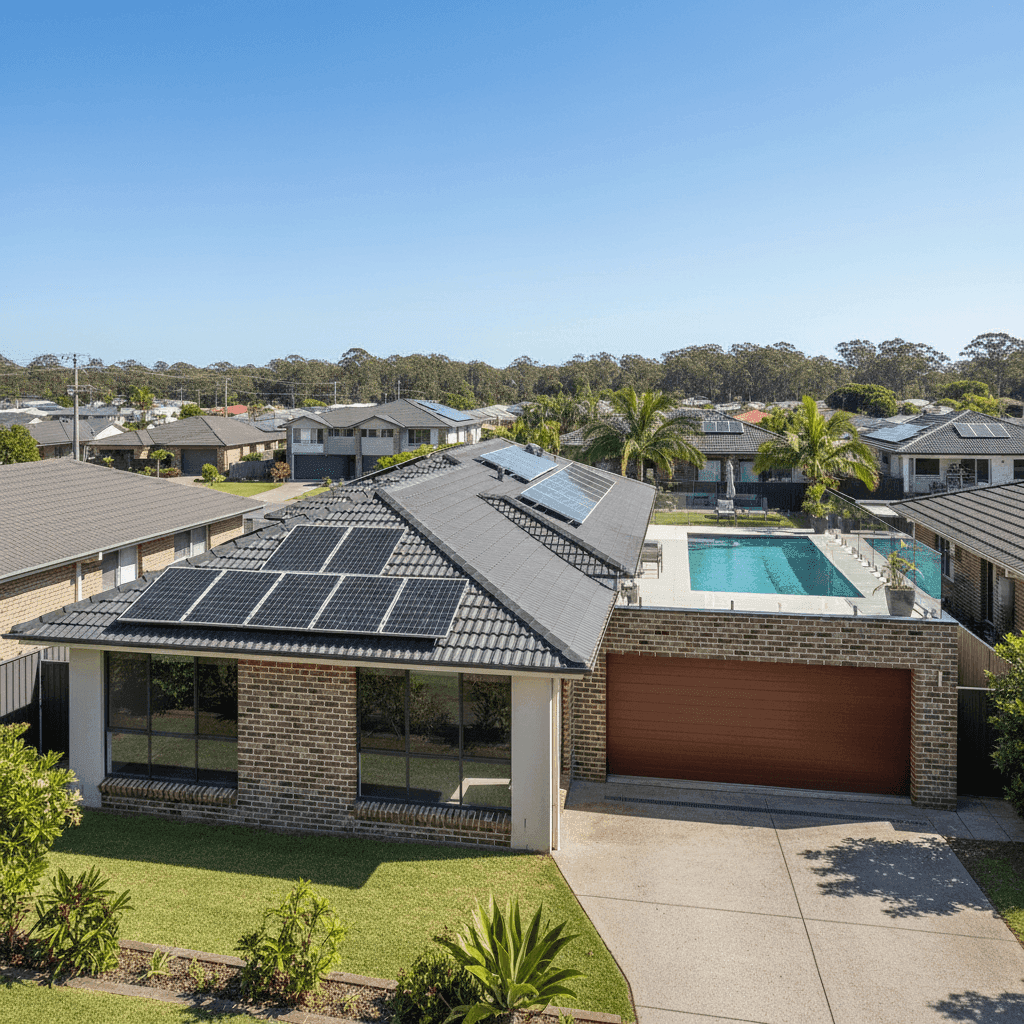
Miami, QLD is one of the Gold Coast's most sought-after southern suburbs — a laid-back coastal community sitting between Burleigh Heads and Broadbeach. For owners of a free standing home in this area, getting the right home and contents insurance is a critical financial decision. This article takes a close look at a real insurance quote for a four-bedroom, two-bathroom brick veneer home in Miami (postcode 4220), breaks down whether the price is reasonable, and offers practical advice for local homeowners looking to protect their most valuable asset.
---
Is This Quote Fair?
The quote in question comes in at $2,892 per year (or $277/month) for combined home and contents cover, with a building sum insured of $810,000 and contents valued at $50,000. Both the building and contents excess are set at $1,000 — a fairly standard arrangement.
Our pricing analysis rates this quote as FAIR — Around Average. That's a reasonable outcome, but it's worth unpacking what "average" actually means in this context.
Within the Miami suburb itself, this premium sits comfortably above the suburb average of $2,633/yr and median of $2,649/yr — placing it in the upper half of local quotes, but still well below the 75th percentile of $3,147/yr. In other words, roughly a quarter of comparable properties in Miami are paying more than this. The quote isn't a bargain, but it's far from the most expensive option on the market either.
For a 214 sqm home built in 1972 with a pool, solar panels, and ducted climate control, a premium in this range reflects the genuine replacement cost complexity of the property. The $810,000 building sum insured is a significant figure — and rightly so for a home of this size and specification.
---
How Miami Compares to the Rest of Queensland and Australia
One of the most striking data points here is just how affordable Miami is compared to broader Queensland benchmarks. According to Queensland state insurance data, the average home insurance premium across QLD is a staggering $9,129/yr, with a state median of $3,903/yr. The Gold Coast LGA average sits at $8,161/yr — more than double what this Miami homeowner is paying.
That enormous state average is heavily skewed by high-risk areas in Far North Queensland, where cyclone exposure, flooding, and extreme weather events push premiums into the tens of thousands. Miami, notably, is not classified as a cyclone risk area — a significant factor that keeps local premiums far more manageable.
Zooming out to the national picture, the Australian average premium is $5,347/yr, with a national median of $2,764/yr. This quote of $2,892/yr sits just above the national median — a reassuring sign that Miami homeowners are not being penalised by their location.
| Benchmark | Premium |
|---|---|
| This Quote | $2,892/yr |
| Miami Suburb Average | $2,633/yr |
| Miami Suburb Median | $2,649/yr |
| QLD State Average | $9,129/yr |
| QLD State Median | $3,903/yr |
| National Average | $5,347/yr |
| National Median | $2,764/yr |
| Gold Coast LGA Average | $8,161/yr |
Note: Suburb data is based on a sample of 22 quotes in the Miami area.
---
Property Features That Affect Your Premium
Several characteristics of this particular property have a direct influence on the premium calculated. Understanding these factors helps homeowners make informed decisions about their cover.
Brick Veneer Construction & Tiled Roof Brick veneer walls combined with a tiled roof is one of the most common and well-regarded construction types in Australian suburbia. Insurers generally view this combination favourably — brick veneer offers solid fire resistance and structural durability, while tiles are long-lasting and perform well in most weather conditions. This likely contributes to a more competitive premium compared to homes with timber cladding or metal roofing in storm-prone areas.
Age of the Home (Built 1972) At over 50 years old, this home is well into its second half-century. Older homes can attract slightly higher premiums due to the potential for ageing plumbing, electrical systems, and roofing materials that may be more susceptible to damage or failure. Insurers factor in the increased likelihood of maintenance-related claims on properties of this vintage.
Swimming Pool A pool adds both value and liability to a property. From an insurance perspective, pools can increase the contents or liability component of a policy, and may also affect the overall building sum insured if the pool structure itself is covered. Homeowners should confirm whether their pool — including fencing, pumps, and filtration equipment — is explicitly included in their policy.
Solar Panels Solar panels are increasingly common on Gold Coast homes, and most insurers now include them as part of the building sum insured. However, it's worth verifying that your policy explicitly covers solar panels for damage from storms, hail, or fire. Given the investment involved, this is not a detail to overlook.
Ducted Climate Control Ducted air conditioning is a significant fixed asset that forms part of the building's infrastructure. At replacement costs that can easily exceed $10,000–$20,000, ensuring it's adequately covered under your building sum insured is essential — particularly for a home of this size.
Slab Foundation A concrete slab foundation is generally viewed positively by insurers. It provides good structural stability and is less susceptible to subsidence or pest damage compared to homes on stumps or piers.
---
Tips for Homeowners in Miami
1. Review Your Building Sum Insured Annually Construction costs have risen sharply across Australia in recent years. A sum insured of $810,000 may have been accurate when the policy was first taken out, but building costs per square metre continue to climb. Use a building cost calculator or speak with a quantity surveyor to ensure you're not underinsured — the consequences of getting this wrong at claim time can be devastating.
2. Confirm Your Pool and Solar Panels Are Explicitly Covered Don't assume these features are automatically included. Read your Product Disclosure Statement (PDS) carefully and ask your insurer directly whether the pool structure, solar panel system, and associated equipment are covered — and up to what value.
3. Consider a Higher Excess to Reduce Your Premium With both the building and contents excess set at $1,000, there may be room to increase the excess in exchange for a lower annual premium. If you have a solid emergency fund and are primarily insuring against major catastrophic events rather than minor claims, a higher excess could save you money over time.
4. Compare Quotes Before Renewal Insurance loyalty rarely pays off in Australia. Insurers frequently offer better rates to new customers than to those who simply let their policy roll over. Before your renewal date, take 10 minutes to compare quotes through CoverClub and see whether you can get equivalent cover for less — or better cover for the same price.
---
Ready to Compare?
Whether you're a Miami local or shopping for cover anywhere in Australia, CoverClub makes it easy to see how your premium stacks up. Get a home insurance quote today and compare your options side by side. You can also explore detailed insurance pricing data for Miami and the surrounding area or browse Queensland-wide statistics to better understand what's driving premiums in your region.