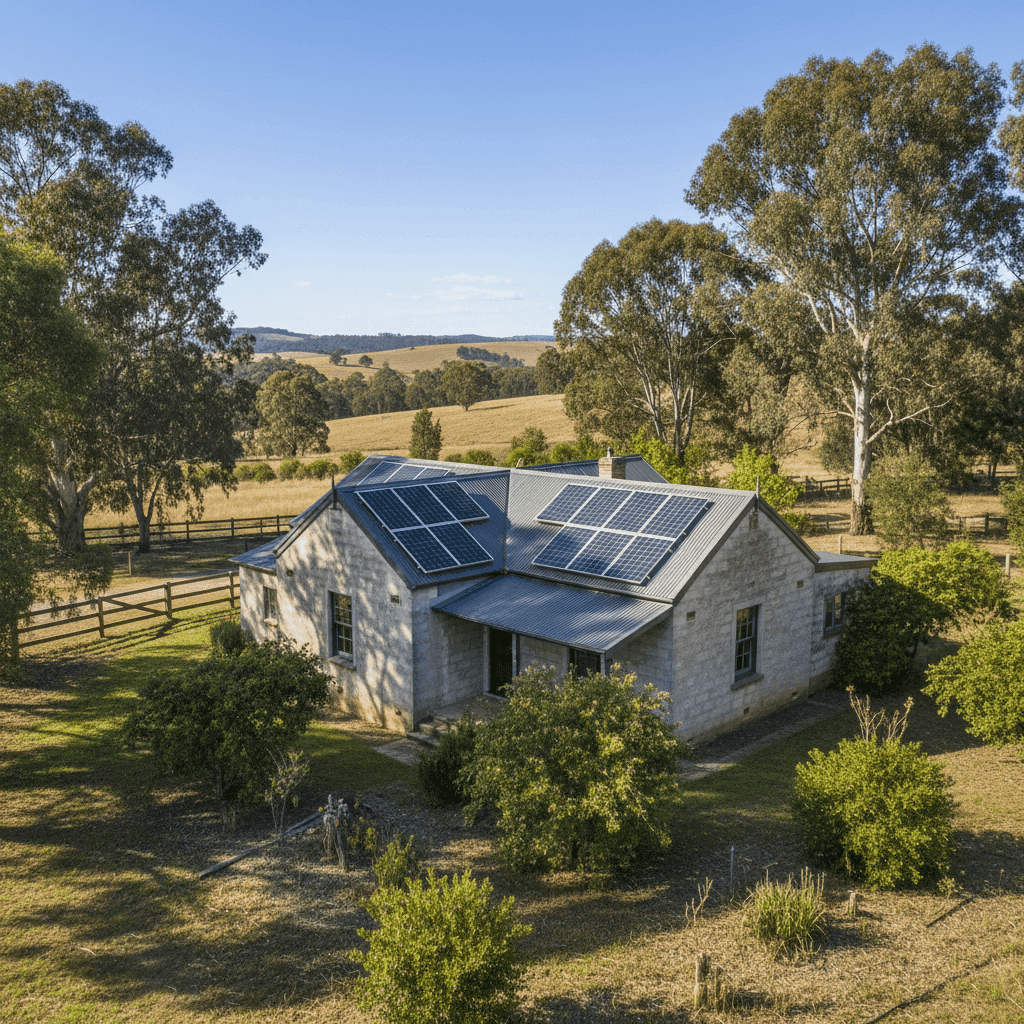
Middle Arm is a quiet rural locality in the Southern Tablelands of New South Wales, sitting within the Wingecarribee Local Government Area. For owners of a free standing home in this part of NSW 2580, understanding what a fair home insurance premium looks like — and why — can make a real difference to your household budget. This article breaks down a recent Home and Contents insurance quote for a 3-bedroom, 1-bathroom free standing home in Middle Arm, comparing it against local, state, and national benchmarks so you can make a truly informed decision.
---
Is This Quote Fair?
The quote in question comes in at $3,506 per year (or $336/month), covering both building (sum insured: $563,000) and contents ($50,000), each with a $1,000 excess. Our price rating for this quote is CHEAP — below average — which is genuinely good news for the homeowner.
To put that in perspective: the NSW state average premium sits at $9,528 per year, with a state median of $3,770. This quote comes in well below the NSW median, which means more than half of NSW homeowners with comparable cover are paying more. Against the national average of $5,347 and national median of $2,764, this quote sits in a competitive position — above the national median, but significantly below the NSW average.
In short: for a heritage-era property on a slab foundation in regional NSW, this is a solid result.
---
How Middle Arm Compares
Without suburb-level data available for Middle Arm specifically, the most relevant local benchmark is the Wingecarribee LGA average of $3,312 per year. This quote of $3,506 sits just slightly above that LGA average — roughly $194 more annually — which is a modest difference likely explained by the property's age, size, and specific features (more on those below).
Here's a quick snapshot of how the numbers line up:
| Benchmark | Annual Premium |
|---|---|
| This Quote | $3,506 |
| Wingecarribee LGA Average | $3,312 |
| NSW State Median | $3,770 |
| NSW State Average | $9,528 |
| National Median | $2,764 |
| National Average | $5,347 |
For more detail on pricing trends across the postcode and state, you can explore the Middle Arm and NSW 2580 insurance stats and broader NSW home insurance data.
The wide gap between the NSW average ($9,528) and median ($3,770) is worth noting — it suggests a relatively small number of high-risk or high-value properties are pulling the average upward significantly. Most NSW homeowners are paying closer to the median, and this quote is right in that territory.
---
Property Features That Affect Your Premium
Several characteristics of this property have a meaningful influence on what insurers charge. Understanding them helps you see why this quote landed where it did.
Age of construction (1860): This is one of the most significant factors. A home built in 1860 is over 160 years old, placing it firmly in the heritage category. Older homes can carry higher rebuild costs due to non-standard materials, craftsmanship requirements, and compliance with modern building codes during reconstruction. Insurers factor this in when assessing risk.
External walls — Concrete: Concrete construction is generally viewed favourably by insurers. It's fire-resistant, durable, and less susceptible to pest damage than timber-framed homes. This likely works in the homeowner's favour when it comes to pricing.
Roof — Steel/Colorbond: Colorbond roofing is a popular and well-regarded choice in Australia. It's lightweight, resistant to corrosion, and performs well in a range of weather conditions. Insurers typically rate steel roofing positively compared to older materials like terracotta tiles or corrugated iron.
Foundation — Slab: Slab foundations are standard across much of Australia and are generally considered low-risk from an insurance standpoint, particularly in areas not prone to significant soil movement.
Flooring — Timber/Laminate: Timber flooring in an 1860s home adds character but can also add replacement cost. Laminate is more affordable to replace, but the mix of both materials means the contents and building valuation needs to account for varied replacement costs.
Solar panels: The presence of solar panels adds to the insured value of the building. Many policies cover solar panels as part of the building sum insured, so it's worth confirming this is captured in the $563,000 building cover.
Ducted climate control: Ducted systems are a significant fixed asset and contribute to the overall building replacement cost. At 205 sqm, this is a reasonably sized home, and the ducted system would represent a meaningful portion of the rebuild value.
No pool, no cyclone risk zone: The absence of a pool removes a common liability and maintenance risk from the equation. Being outside a cyclone risk area also keeps premiums lower — a significant advantage compared to properties in Far North Queensland or WA's north-west.
---
Tips for Homeowners in Middle Arm
1. Review your building sum insured regularly With a construction year of 1860 and a 205 sqm footprint, rebuild costs can be difficult to estimate accurately. Heritage construction often requires specialist trades and materials that cost considerably more than standard builds. Make sure your $563,000 sum insured reflects current rebuild costs — not just the market value of the land and structure. Consider using a quantity surveyor for a formal assessment.
2. Confirm solar panels are covered Solar panels are a valuable asset and not all policies automatically include them under building cover. Check your Product Disclosure Statement (PDS) carefully to confirm your panels are listed and that the sum insured accounts for their replacement value.
3. Keep records of your contents With $50,000 in contents cover, maintaining an up-to-date home inventory — including photos, receipts, and serial numbers for valuables — makes claims significantly smoother. Cloud storage is a practical option for keeping records safe and accessible.
4. Ask about heritage property considerations Some insurers offer specific provisions or endorsements for heritage-listed or pre-Federation homes. If your property has any heritage listing, it's worth discussing with your insurer to ensure you're not underinsured in the event of a significant claim requiring period-appropriate restoration.
---
Ready to Compare?
Whether you're reviewing your existing policy or shopping around for the first time, comparing quotes is the smartest way to ensure you're getting genuine value. Head to CoverClub to enter your property details and see how your current cover stacks up — it takes just a few minutes and could save you hundreds of dollars a year.