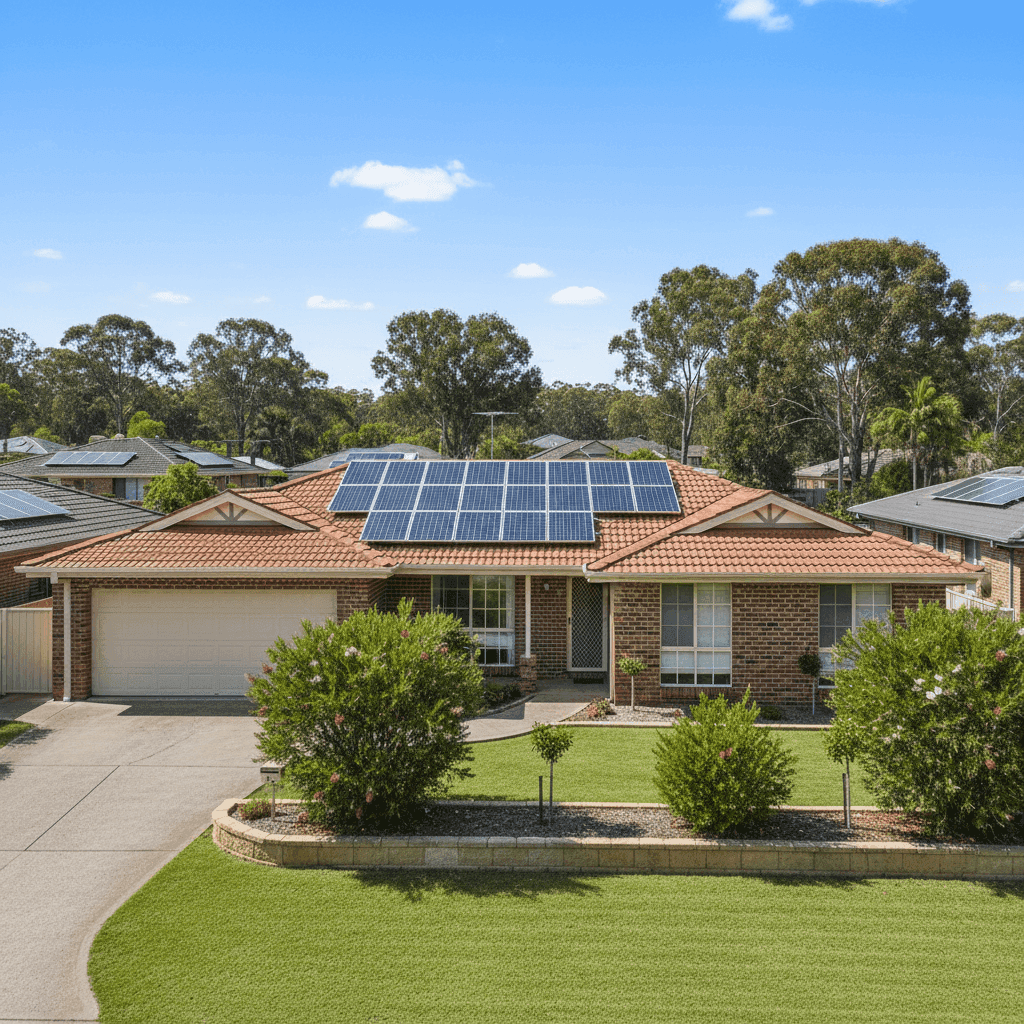
If you own a free standing home in Middle Ridge, QLD 4350, you've probably wondered whether you're paying a fair price for home and contents insurance — or whether you're leaving money on the table. This article breaks down a real insurance quote for a four-bedroom, two-bathroom brick veneer home in the suburb, and puts it in context against local, state, and national benchmarks so you can make a genuinely informed decision.
---
Is This Quote Fair?
The short answer: yes — and then some. This quote came in at $1,264 per year (or roughly $125 per month) for combined home and contents cover, with a building sum insured of $740,000 and contents valued at $100,000. Our pricing model rates this as CHEAP, meaning it sits well below the average for the area.
To put that in perspective, the suburb average for Middle Ridge is $4,075 per year, and the median sits at $3,430 per year. Even at the 25th percentile — meaning only one in four quotes come in lower — the figure is $2,377 per year. This quote undercuts even that benchmark by a significant margin, suggesting the policyholder has either found an exceptionally competitive insurer, benefits from a very favourable risk profile, or both.
For a property with a $740,000 building sum insured, paying $1,264 annually works out to roughly 0.17% of the insured value per year — a very efficient use of premium dollars relative to the coverage on offer.
---
How Middle Ridge Compares
Understanding where Middle Ridge sits in the broader insurance landscape is useful context for any homeowner reviewing their policy.
| Benchmark | Annual Premium |
|---|---|
| This quote | $1,264 |
| Middle Ridge 25th percentile | $2,377 |
| Middle Ridge median | $3,430 |
| Middle Ridge average | $4,075 |
| Middle Ridge 75th percentile | $5,500 |
| Toowoomba LGA average | $2,535 |
| QLD state average | $4,547 |
| QLD state median | $3,931 |
| National average | $2,965 |
| National median | $2,716 |
A few things stand out here. First, Middle Ridge premiums are notably higher than the national average — the suburb average of $4,075 is around 37% above the national figure of $2,965. This is consistent with broader trends across Queensland, where the state average of $4,547 per year is the highest in the country, driven by elevated weather risk, particularly from storms, hail, and flooding events that affect much of inland and coastal QLD.
Interestingly, the Toowoomba LGA average of $2,535 is considerably lower than the Middle Ridge suburb average, which suggests that pricing within the broader Toowoomba region can vary quite a bit at a suburb level. Middle Ridge, as an established residential area on Toowoomba's southern ridge, may attract slightly different risk assessments depending on the insurer.
You can explore detailed pricing data for the area on the Middle Ridge suburb stats page, compare it against the QLD state overview, or see how it stacks up on the national insurance stats page.
---
Property Features That Affect Your Premium
Several characteristics of this particular property work in the homeowner's favour when it comes to insurance pricing.
Brick veneer construction is generally well-regarded by insurers. While not as robust as full brick, brick veneer walls offer solid weather resistance and are far less susceptible to fire damage than timber-framed homes with weatherboard cladding. Combined with a tiled roof, this property presents a relatively low-risk construction profile — tiles are durable, non-combustible, and widely accepted by insurers without loading.
The slab foundation is another positive. Slab-on-ground homes tend to be straightforward to assess and repair, and they avoid some of the subsidence and pest-related risks that can affect older stumped or suspended floor systems.
Tiled flooring throughout is also worth noting. Hard flooring is typically cheaper to replace than carpet and is more resistant to water damage — a factor that can influence contents claims in particular.
The solar panels on this property are worth a mention. Many insurers now include solar panels under building cover automatically, but it's worth confirming this with your insurer and ensuring the sum insured adequately accounts for the replacement cost of the system. A standard 6.6kW system can cost $5,000–$10,000 to replace, so it's not a figure to overlook.
The property was built in 1997, which places it in a relatively modern construction era — post the major building code reforms of the late 1980s and early 1990s. This generally means better structural standards than older homes, which can positively influence risk assessments.
Finally, the absence of a swimming pool removes a liability exposure that some insurers price into their policies, and the standard fittings quality keeps the replacement cost estimate grounded — high-end fixtures and finishes can push rebuilding costs (and therefore premiums) significantly higher.
---
Tips for Homeowners in Middle Ridge
1. Review your building sum insured regularly A $740,000 building sum insured for a 214 sqm home in Middle Ridge works out to approximately $3,458 per square metre — broadly in line with current construction costs for a brick veneer home in regional Queensland. However, building costs have risen sharply in recent years. It's worth reassessing this figure annually to avoid being underinsured, particularly as labour and materials costs continue to fluctuate.
2. Confirm your solar panels are covered Check your policy documents to verify that your solar panel system is explicitly included under building cover. Some policies treat panels as a standard fixture; others may require you to list them separately or may apply sublimits. Given the replacement cost involved, this is a detail worth confirming directly with your insurer.
3. Don't let a cheap premium become a reason to set and forget This quote is excellent value, but insurance markets shift. Insurers reprice their books regularly, and a premium that's competitive today may not be in two or three years. Set a reminder to compare quotes at renewal — even a 15-minute check could save you hundreds of dollars annually.
4. Consider your excess structure carefully This policy carries a $3,000 building excess and a $500 contents excess. A higher building excess typically reduces your premium, but it also means more out-of-pocket costs in the event of a claim. Make sure your emergency savings can comfortably absorb the excess before you need to call on it.
---
Ready to See What You Could Pay?
Whether you're reviewing an existing policy or shopping for cover for the first time, comparing quotes is the single most effective way to ensure you're not overpaying. Get a home insurance quote at CoverClub and see how your property stacks up against the market in minutes — no obligation, no jargon.