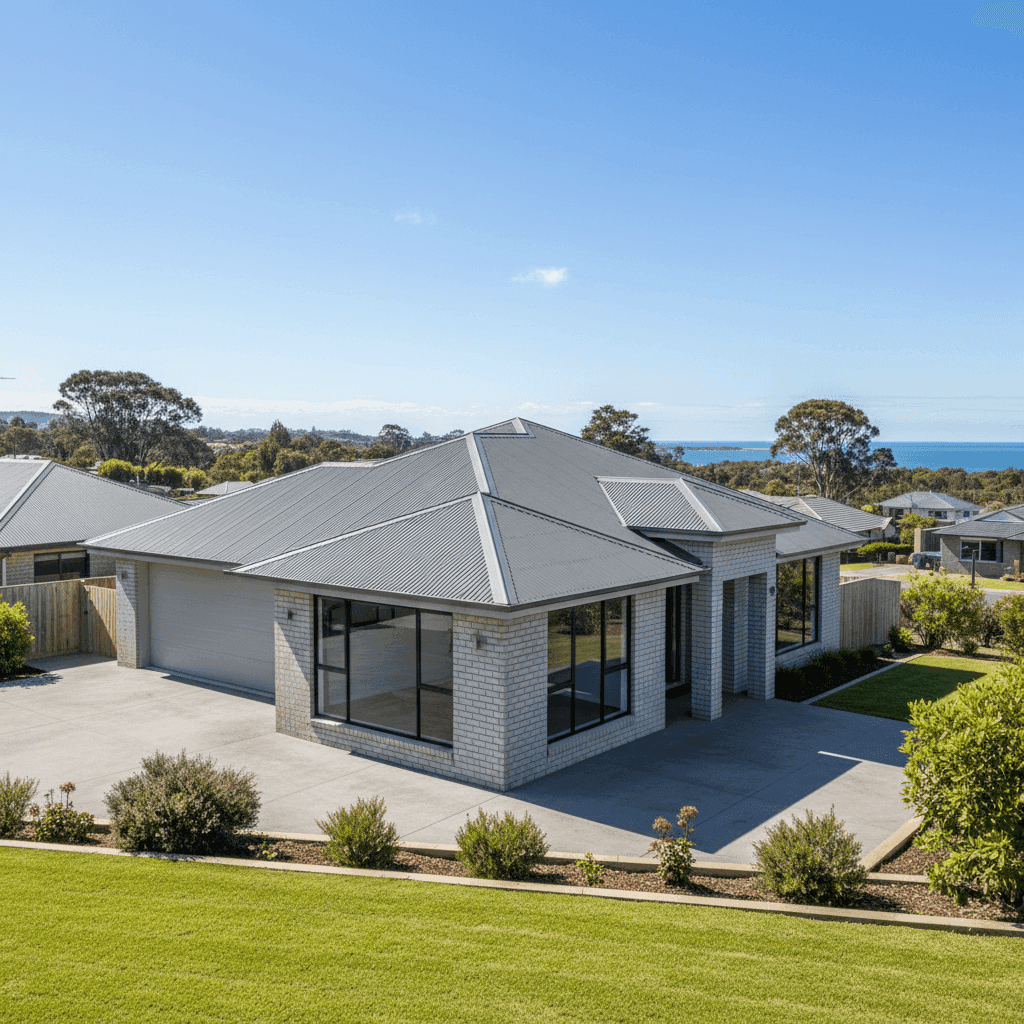
Midway Point is a quiet residential suburb on the Sorell Causeway in Tasmania's south-east, sitting between the Pitt Water estuary and the open waters of Frederick Henry Bay. It's a popular spot for families and sea-changers alike, and the local housing stock reflects that — a mix of established homes and newer builds on generous blocks. This article takes a close look at a real home insurance quote for a three-bedroom, two-bathroom free standing home in Midway Point (postcode 7171), breaking down whether the price stacks up and what factors are driving it.
---
Is This Quote Fair?
The short answer: yes — and then some. This quote came in at $859 per year (or roughly $86 per month) for combined home and contents cover, with a building sum insured of $670,000 and contents valued at $200,000. Our price rating for this quote is CHEAP, meaning it sits well below the average for comparable properties in the area.
To put that in context, the suburb average for Midway Point sits at $1,487 per year, and the median is $1,374 per year. That means this homeowner is paying nearly 42% less than the suburb average — a substantial saving on what is already a relatively affordable market compared to the rest of Tasmania and the country.
Even against the 25th percentile (the cheapest quarter of quotes in the suburb, at $1,077/yr), this quote is still notably cheaper. That's a strong result and suggests the insurer has assessed this particular property favourably — likely due to its modern construction, quality build features, and low-risk profile.
The building excess on this policy is $3,000 and the contents excess is $1,000. A higher excess is one way premiums are kept lower, so it's worth factoring that into your comparison. If you ever need to make a claim, you'll need those amounts on hand before your insurer contributes.
---
How Midway Point Compares
Understanding where Midway Point sits in the broader insurance landscape helps put this quote into perspective. Here's a quick snapshot:
| Benchmark | Annual Premium |
|---|---|
| This quote | $859 |
| Suburb average (Midway Point) | $1,487 |
| Suburb median (Midway Point) | $1,374 |
| LGA average (Sorell) | $2,249 |
| State average (TAS) | $2,814 |
| State median (TAS) | $2,326 |
| National average | $5,347 |
| National median | $2,764 |
The figures above are drawn from real quote data — you can explore the full Midway Point suburb insurance stats, Tasmania state-wide data, and national home insurance benchmarks on CoverClub.
A few things stand out here. First, Midway Point is genuinely affordable relative to the broader Sorell LGA — the LGA average of $2,249 is more than 50% higher than the suburb average. Second, Tasmania as a whole comes in well below the national average, which is heavily influenced by high-risk markets in Queensland and Western Australia where cyclone, flood, and bushfire exposure pushes premiums up significantly. Tasmanians generally benefit from a more temperate, lower-risk climate.
It's worth noting that the suburb sample size for Midway Point is 18 quotes, which gives a reasonable indication of the local market, though it's a relatively small dataset. As more data comes in, these averages will sharpen.
---
Property Features That Affect Your Premium
Several characteristics of this particular property work in the homeowner's favour when it comes to pricing.
Modern construction (built 2020): Newer homes are generally cheaper to insure. A 2020 build means the property meets contemporary Australian building standards, with updated electrical systems, better structural integrity, and materials less prone to deterioration. Insurers reward this with lower risk assessments.
Brick veneer external walls: Brick veneer is one of the most common and well-regarded wall types for insurance purposes. It offers solid fire resistance and structural durability, which reduces the likelihood of major damage claims.
Steel/Colorbond roof: Colorbond roofing is highly regarded in the insurance industry. It's lightweight, resistant to corrosion, fire-rated, and holds up well in high winds — all factors that reduce claim risk compared to older tile or corrugated iron roofs.
Concrete slab foundation: A slab foundation is considered low-risk for subsidence and moisture-related damage. It's a stable base that doesn't carry the same vulnerabilities as older pier-and-beam or strip footings.
Above-average fittings quality: Higher-quality fittings typically mean higher replacement costs, which can push premiums up. However, in this case, the sum insured of $670,000 appears to reflect this appropriately, and the overall risk profile of the home keeps the premium competitive.
No pool, no solar panels, no cyclone risk: Each of these can add complexity (and cost) to a home insurance policy. A pool increases liability exposure, solar panels add to the replacement value and can be tricky to insure correctly, and cyclone-rated areas attract significant loadings. This property has none of those factors, which simplifies the risk assessment.
---
Tips for Homeowners in Midway Point
1. Don't set and forget your sum insured. Building costs have risen sharply in recent years, and a sum insured set even two or three years ago may no longer be sufficient to fully rebuild your home. Review your $670,000 building cover annually against current construction costs in Tasmania — your insurer or a quantity surveyor can help you get this right.
2. Consider your excess carefully. This policy carries a $3,000 building excess, which is on the higher side. While it's contributed to a lower premium, make sure you have that amount readily accessible in case of a claim. If cash flow is a concern, it may be worth comparing policies with a lower excess, even if the annual premium is slightly higher.
3. Shop around at renewal time. Insurance loyalty rarely pays off. Even with a competitive quote like this one, it's worth running a fresh comparison each year at renewal. Insurers re-price risk constantly, and a new quote could be lower — or could reveal that your current policy is still the best deal. Compare quotes on CoverClub to see what's available.
4. Check your contents cover reflects reality. A $200,000 contents sum insured is a reasonable starting point for a three-bedroom home with above-average fittings, but it's easy to underestimate. Do a room-by-room inventory of your belongings — furniture, electronics, appliances, clothing, jewellery, and tools — to make sure you're not underinsured. Many Australians discover they're significantly short only after a claim.
---
Ready to Compare Your Own Quote?
Whether you're a Midway Point local or just researching what home insurance should cost in Tasmania, CoverClub makes it easy to see how your current policy stacks up. Enter your address and get a quote in minutes — no obligation, no jargon, just clear comparisons so you can make an informed decision.