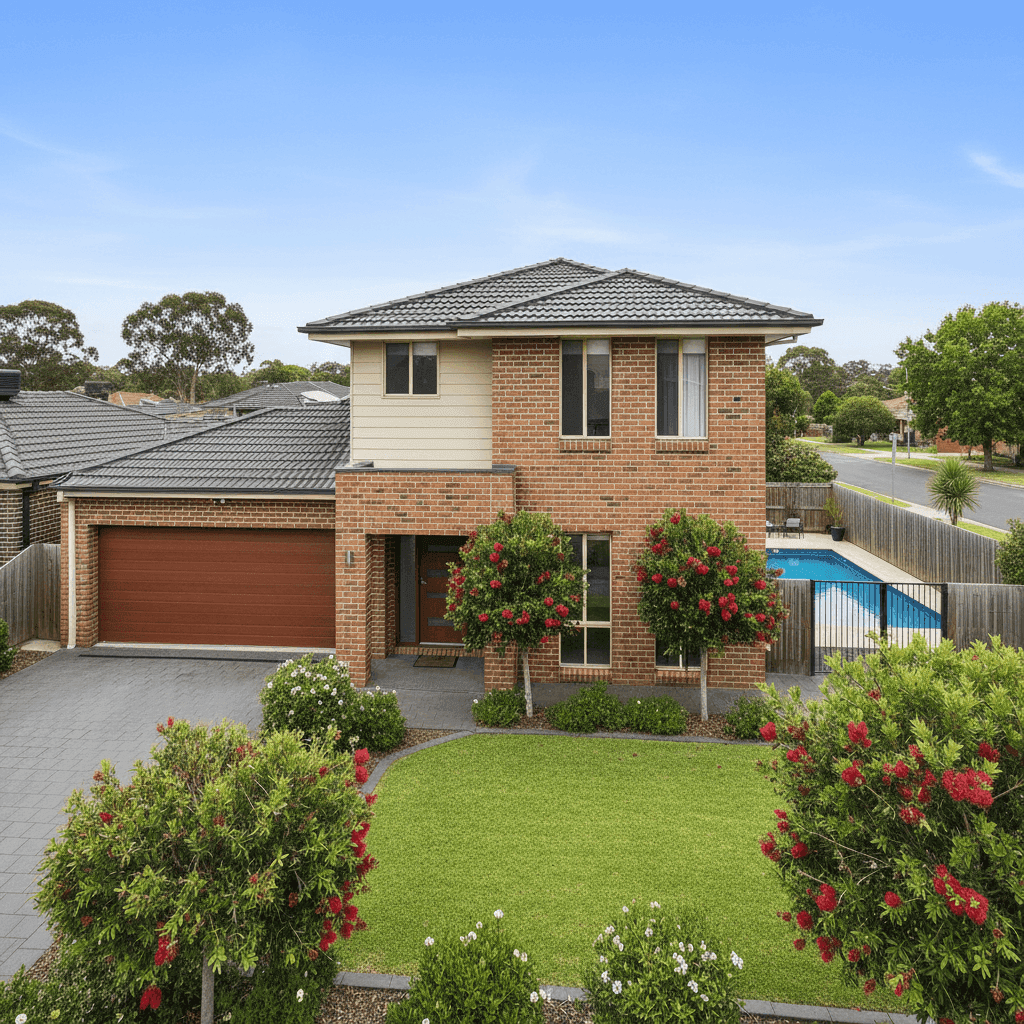
Mill Park is a well-established residential suburb in Melbourne's northern corridor, sitting within the City of Whittlesea. It's a popular choice for families drawn to its leafy streets, quality schools, and easy freeway access. For owners of a free standing home in this area, understanding what drives your home and contents insurance premium — and whether you're paying a fair price — can make a real difference to your household budget.
This article breaks down a recent insurance quote for a four-bedroom, two-bathroom free standing home in Mill Park, compares it against local, state, and national benchmarks, and offers practical tips to help you get the best value cover.
---
Is This Quote Fair?
The annual premium for this property came in at $2,489 per year (or $250/month), covering both building and contents. The building is insured for $1,103,000, with $120,000 in contents cover, and a $1,000 excess applies to both.
Our price rating for this quote is FAIR — Around Average.
That assessment is well-supported by the data. Based on 138 quotes collected for Mill Park (3082), the suburb average sits at $2,342/year and the median at $2,161/year. At $2,489, this quote lands in the upper half of the local range — above the median but comfortably below the 75th percentile of $2,803. In other words, roughly half of Mill Park homeowners are paying less, but a quarter are paying noticeably more.
This isn't a bargain, but it's not cause for alarm either. Given the property's above-average fittings quality, larger-than-typical floor area of 235 sqm, and the inclusion of a swimming pool, a premium that sits modestly above the suburb median is entirely reasonable. There's still room to shop around, but this quote reflects genuine market pricing for a well-appointed home.
---
How Mill Park Compares
Zooming out provides useful perspective on just how competitively priced home insurance is in this part of Melbourne.
| Benchmark | Average Premium |
|---|---|
| Mill Park (3082) average | $2,342/yr |
| Mill Park (3082) median | $2,161/yr |
| City of Whittlesea (LGA) average | $1,774/yr |
| Victoria average | $3,000/yr |
| Victoria median | $2,718/yr |
| National average | $5,347/yr |
| National median | $2,764/yr |
Mill Park premiums are notably lower than the Victorian state average of $3,000/year, and dramatically below the national average of $5,347/year. Much of that national figure is skewed by high-risk regions — particularly cyclone-prone areas of Queensland and Western Australia — where premiums can run into the tens of thousands. Mill Park carries no cyclone risk, which is a significant factor keeping local premiums grounded.
Interestingly, the Whittlesea LGA average of $1,774/year is lower than the Mill Park suburb average of $2,342/year. This likely reflects the mix of property types, sizes, and ages across the broader LGA, with some lower-value or smaller dwellings bringing the council-wide figure down. Mill Park itself tends to feature larger, newer homes — like the one analysed here — which naturally attract higher replacement costs and premiums.
---
Property Features That Affect Your Premium
Several characteristics of this property directly influence its insurance cost, for better or worse.
Brick veneer construction and tiled roof are generally viewed favourably by insurers. Brick veneer is resistant to fire and rot, while tiled roofs are durable and widely repairable. Together, these materials reduce the likelihood of catastrophic structural damage and can help moderate premiums compared to timber-clad or iron-roofed homes.
Stump foundations are worth noting. While stumps are common in older Melbourne homes, they do introduce some exposure to movement, subsidence, and pest ingress — particularly in areas with reactive soils. Insurers may factor this into pricing, and it's worth confirming your policy covers damage arising from foundation movement.
Timber and laminate flooring is a popular choice in modern homes but can be expensive to replace or repair after water damage events. This is a relevant consideration given the contents and building sums insured.
The swimming pool adds a layer of complexity. Pools increase liability exposure (particularly relevant if children visit the property), and pool equipment — pumps, filters, heating systems — can be costly to replace. Some policies cover pool infrastructure under building cover; others require it to be specified separately. It's worth confirming exactly what your policy includes.
Above-average fittings — think stone benchtops, quality cabinetry, premium tapware, and high-end appliances — directly increase the cost to rebuild or repair. The $1,103,000 building sum insured reflects this, and it's important that figure is accurate. Underinsurance is one of the most common and costly mistakes homeowners make.
Ducted climate control is another feature that adds to rebuild costs. Ducted systems are expensive to install and must be factored into your building sum insured.
---
Tips for Homeowners in Mill Park
1. Verify your building sum insured annually. Construction costs have risen significantly in recent years. A sum insured of $1,103,000 for a 235 sqm home with above-average fittings is substantial, but it's worth using an independent building cost calculator each year to make sure you're not drifting into underinsurance territory. Your insurer's estimate and a quantity surveyor's estimate can differ meaningfully.
2. Clarify pool and equipment cover. Ask your insurer directly whether your pool shell, fencing, pump, and filtration equipment are covered under the building section — and to what limit. Some policies treat pool equipment as a separate item with its own sub-limit. Knowing this before you need to claim is far better than discovering a gap afterwards.
3. Review your contents sum insured. $120,000 in contents cover is a reasonable starting point for a four-bedroom home, but it's easy to underestimate. Walk through each room and consider furniture, electronics, clothing, jewellery, sporting equipment, and white goods. Many households find their true contents value is higher than they initially assumed.
4. Compare quotes before renewal. A "fair" rating means this quote is competitive, but the insurance market changes constantly. Spending 15 minutes comparing quotes at renewal can reveal meaningful savings — or confirm that your current insurer is genuinely offering good value. Either outcome is worth knowing.
---
Ready to Compare?
Whether you're reviewing a quote you've received or shopping for cover on a new home, CoverClub makes it easy to see how your premium stacks up. Get a home insurance quote today and compare your options side by side — so you can buy with confidence, not guesswork. You can also explore detailed premium data for Mill Park and the surrounding area to better understand what your neighbours are paying.