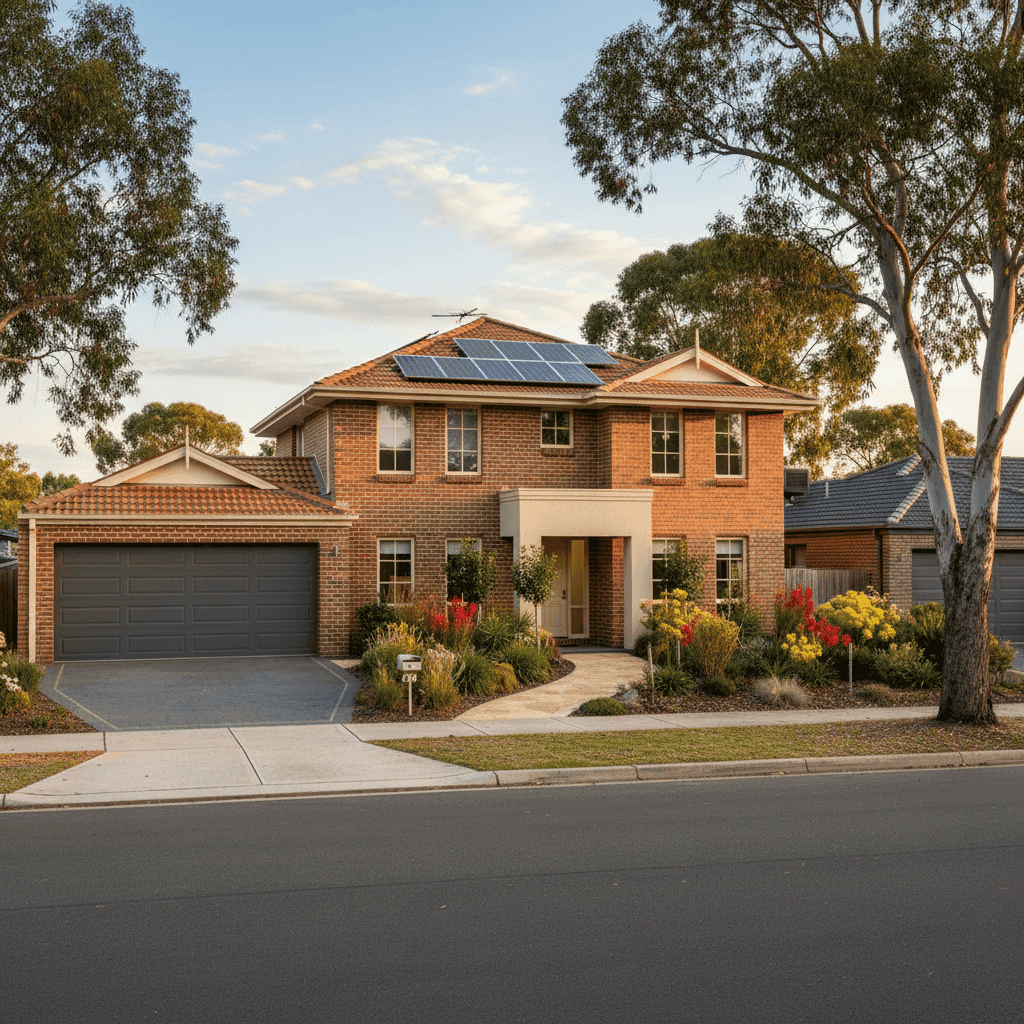
Mill Park, a well-established suburb in Melbourne's northern growth corridor, is home to a mix of 1980s and 1990s brick veneer properties sitting on generous suburban blocks. This analysis looks at a home and contents insurance quote for a five-bedroom, three-bathroom free standing home in Mill Park (VIC 3082) — a substantial family residence built in 1988 with a building size of 286 sqm. We've crunched the numbers to help you understand whether this quote represents good value, and what's driving the premium.
---
Is This Quote Fair?
The annual premium for this property comes in at $3,440 per year (or $318/month), covering a building sum insured of $1,357,000 and contents valued at $364,000, each with a $1,000 excess.
Our price rating for this quote is Expensive — Above Average.
To put that in context, the suburb average for Mill Park sits at just $2,342/yr, with a median of $2,161/yr across 138 quotes in our dataset. This quote lands well above the suburb's 75th percentile of $2,803/yr — meaning it's pricier than roughly three-quarters of comparable quotes in the area.
That said, it's worth noting that this is a large home. At 286 sqm with five bedrooms and three bathrooms, the building sum insured of $1.357 million is significantly higher than what a smaller, more typical Mill Park property might carry. A higher rebuild cost naturally pushes the premium upward, so the comparison isn't entirely apples-to-apples. Still, even accounting for the property's size, there may be room to shop around.
---
How Mill Park Compares
Understanding where your suburb sits relative to broader benchmarks is a useful sanity check when evaluating any insurance quote.
| Benchmark | Average Premium | Median Premium |
|---|---|---|
| Mill Park (3082) | $2,342/yr | $2,161/yr |
| Whittlesea LGA | $1,774/yr | — |
| Victoria | $3,000/yr | $2,718/yr |
| National | $5,347/yr | $2,764/yr |
A few things stand out here. First, Mill Park premiums are notably lower than the Victorian state average of $3,000/yr — suggesting the suburb is considered relatively low-risk by insurers. The Whittlesea LGA average of $1,774/yr is even lower, which may reflect a broader mix of property types and sizes across the council area.
When you zoom out to the national picture, the average of $5,347/yr is heavily skewed by high-risk coastal and cyclone-prone regions in Queensland and Western Australia. The national median of $2,764/yr is a more grounded reference point — and this quote sits above it.
For a property of this size and value, the $3,440/yr premium is not outrageous in absolute terms, but it does suggest that comparing multiple insurers could yield meaningful savings.
---
Property Features That Affect Your Premium
Several characteristics of this home will influence how insurers assess risk and price the policy.
Brick veneer construction and tiled roof are generally viewed favourably by Australian insurers. Brick veneer offers solid fire resistance and structural durability, while tiled roofs are considered more resilient than Colorbond or corrugated iron in many risk models. These features typically work in the homeowner's favour when it comes to pricing.
Stump foundations are worth flagging. Homes on stumps — common in Victoria for properties built in the mid-to-late 20th century — can be more susceptible to subsidence and movement over time, particularly in areas with reactive clay soils. Some insurers price this risk into the premium or apply specific exclusions around foundation movement.
Timber and laminate flooring adds to the contents and building replacement cost, and can also be a consideration in bushfire or water damage scenarios. It's important to ensure the sum insured adequately reflects the cost of replacing these finishes.
Solar panels are an increasingly common feature in Mill Park homes, but they do add to the building's replacement value. Homeowners should confirm with their insurer that solar panels are explicitly covered under the building policy — not all standard policies include them automatically, or they may be subject to sub-limits.
Ducted climate control is another high-value fixed installation that should be factored into the building sum insured. Systems of this type can cost tens of thousands of dollars to replace, and underinsurance is a real risk if this isn't accounted for in the coverage amount.
At 286 sqm, this is a sizeable home, and the $1,357,000 building sum insured reflects the genuine cost of rebuilding a property of this scale and specification in Melbourne's current construction market.
---
Tips for Homeowners in Mill Park
1. Review your sum insured annually Construction costs in Victoria have risen sharply in recent years. The cost to rebuild a 286 sqm brick veneer home today may be meaningfully different from what it was even two or three years ago. Use a building cost calculator or speak with a quantity surveyor to ensure your coverage keeps pace with reality.
2. Confirm solar panels and ducted systems are covered Before renewing or switching policies, ask your insurer specifically whether solar panels and ducted air conditioning are included in the building cover. Check for any sub-limits that might leave you underinsured if these systems need to be replaced.
3. Compare quotes — not just at renewal The insurance market moves constantly, and loyalty doesn't always pay. With this quote sitting above the suburb average, it's worth getting at least two or three competing quotes. Even a modest saving of $300–$500/yr compounds significantly over time.
4. Consider your excess carefully Both the building and contents excess on this policy are set at $1,000. Opting for a higher voluntary excess (say, $2,500) can reduce your annual premium noticeably — though it's a trade-off that depends on your financial comfort with out-of-pocket costs at claim time.
---
Find a Better Deal with CoverClub
Whether you're renewing your current policy or shopping for the first time, comparing quotes is the single most effective way to make sure you're not paying more than you need to. CoverClub makes it easy to see how your premium stacks up against real data from your suburb and across Australia. Get a home insurance quote today and find out if you could be paying less for the same level of cover.