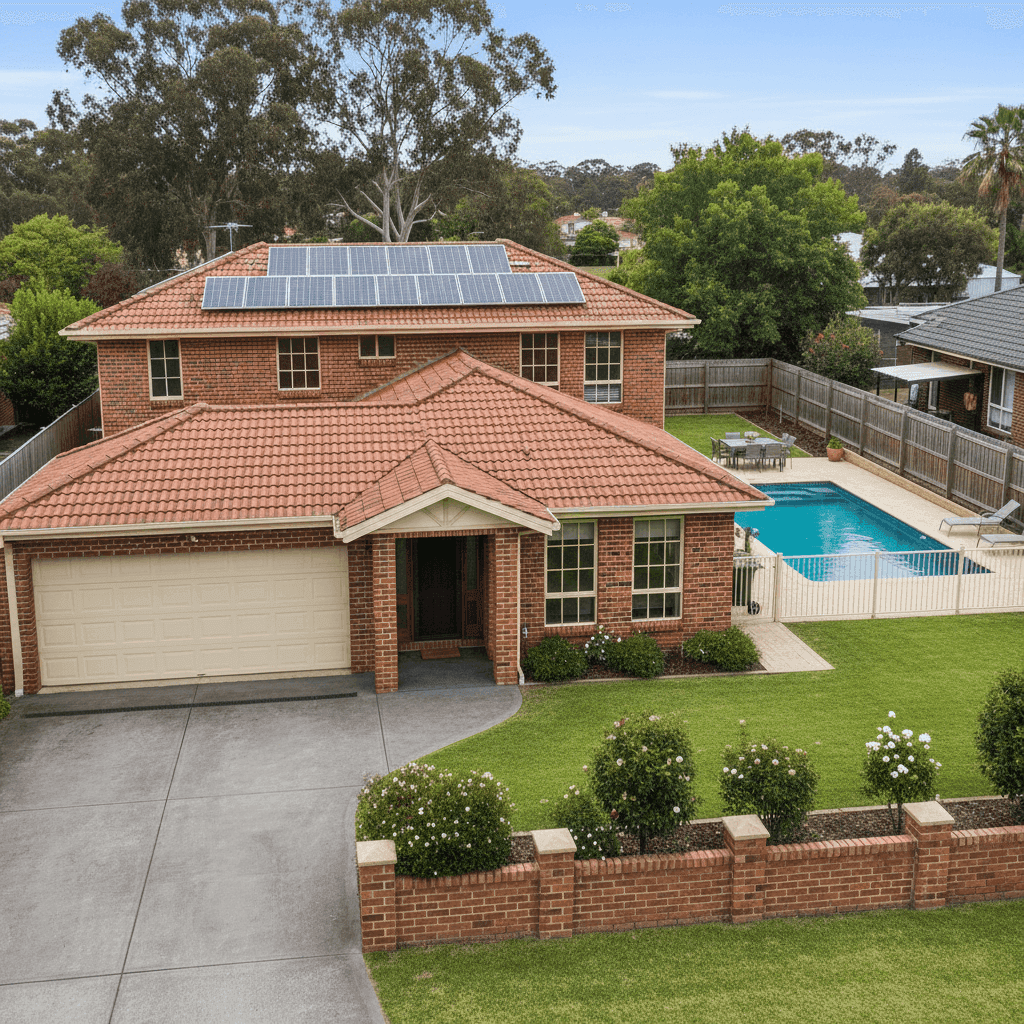
If you own a four-bedroom free standing home in Mill Park, VIC 3082, you're likely no stranger to the annual ritual of reviewing your home insurance. Whether you've just received a renewal notice or you're shopping around for the first time, understanding what drives your premium — and how it stacks up against comparable properties — can save you hundreds of dollars a year.
This article breaks down a real home and contents insurance quote for a four-bedroom, two-bathroom brick veneer home in Mill Park, built in 1995, with a building sum insured of $800,000 and contents valued at $150,000. The annual premium came in at $2,812 (or $266/month), with a $1,000 excess on both building and contents.
---
Is This Quote Fair?
The short answer: it's above average for the suburb, but sits in a reasonable range when you consider the full picture.
Our pricing analysis rates this quote as Expensive relative to other Mill Park properties in our database. Based on 138 quotes collected for the Mill Park area, the suburb average sits at $2,342/year and the median at $2,161/year — meaning this quote is roughly $470 above the suburb average and $651 above the median.
That said, context matters. The suburb's 75th percentile premium is $2,803/year, which means this quote of $2,812 places it right at the top quarter of the local market. It's not an outlier, but it's certainly not a bargain either. Homeowners who find themselves in this bracket should take it as a cue to compare options rather than simply auto-renew.
One important note: the $800,000 building sum insured is on the higher end and will naturally push the premium upward. If your rebuild cost estimate is lower, adjusting that figure (with care — never underinsure) could bring the premium down.
---
How Mill Park Compares
To put this quote in broader perspective, here's how Mill Park stacks up against Victorian and national benchmarks:
| Benchmark | Average Premium | Median Premium |
|---|---|---|
| Mill Park (3082) | $2,342/yr | $2,161/yr |
| LGA (Whittlesea) | $1,774/yr | — |
| Victoria | $3,000/yr | $2,718/yr |
| National | $5,347/yr | $2,764/yr |
A few things stand out here. Mill Park premiums are notably lower than the Victorian state average ($3,000/yr), which reflects the suburb's relatively low exposure to natural hazards such as bushfire, flooding, and cyclones. Mill Park is not classified as a cyclone risk area, and the established streetscapes of the northern suburbs tend to attract more competitive pricing from insurers.
The LGA average for Whittlesea ($1,774/yr) is considerably lower than the Mill Park suburb average — a reminder that averages across large local government areas can mask significant variation at the postcode level. Mill Park, as one of the more established and densely populated suburbs in the Whittlesea LGA, tends to attract slightly higher premiums than some of its neighbours.
On a national level, the $2,812 quote looks quite reasonable. Australia's national average of $5,347/year is heavily skewed by high-risk areas in Queensland, Western Australia, and Northern Australia — regions exposed to cyclones, severe flooding, and extreme weather events. For a Melbourne suburban home, paying under $3,000/year is broadly in line with expectations.
---
Property Features That Affect Your Premium
Several characteristics of this property influence its insurance cost — some favourably, others less so.
Brick veneer construction is generally viewed positively by insurers. It offers solid fire resistance and structural durability, which can help keep premiums competitive compared to timber-framed or clad homes.
Tiled roof is another tick in the right column. Terracotta and concrete tiles are considered durable and weather-resistant, typically attracting lower premiums than Colorbond or older roofing materials in poor condition.
Slab foundation is standard for homes of this era and region, and presents no particular risk flag for insurers in this part of Victoria.
Timber and laminate flooring can be a mild cost factor for contents and building claims — these materials can be expensive to replace or repair following water damage, which may nudge the premium slightly higher.
Swimming pool adds liability and replacement cost considerations to the policy. Pools require specific coverage for the structure itself, and insurers factor in the increased liability risk that comes with them.
Solar panels are an increasingly common feature and one that insurers are still calibrating. Panels add to the insured value of the home and can be damaged in storms or hail events. Confirming your policy explicitly covers solar panels — including the inverter — is essential.
Ducted climate control is a significant fixed asset that contributes to the building's replacement value. Systems like these can cost tens of thousands of dollars to replace, so ensuring the building sum insured accounts for this is important.
---
Tips for Homeowners in Mill Park
1. Review your building sum insured annually Construction costs have risen sharply in recent years. The $800,000 sum insured on this property is substantial — make sure it reflects the current cost to rebuild (not the market value of the land). Underinsurance is one of the most common and costly mistakes Australian homeowners make. Use a building calculator or speak with a quantity surveyor if you're unsure.
2. Ask about bundling discounts Many insurers offer a discount when you combine building and contents cover under a single policy. This quote already covers both, but it's worth confirming you're receiving any applicable multi-policy discount — and comparing that bundled rate against separate policies from different providers.
3. Confirm solar panel and pool coverage Don't assume these features are automatically covered to their full value. Check your Product Disclosure Statement (PDS) to confirm that solar panels (including the inverter and mounting hardware) and the pool structure are explicitly listed and adequately insured.
4. Compare quotes before renewing This quote sits above the suburb median, which is a clear signal to shop around. Premiums for the same property can vary by hundreds — sometimes thousands — of dollars between insurers. Even if you're happy with your current provider, getting a comparison quote costs nothing and could result in meaningful savings.
---
Compare Your Home Insurance Today
Whether this quote matches your own or you're simply curious about what other Mill Park homeowners are paying, CoverClub makes it easy to benchmark your premium and find a better deal. Get a home insurance quote now and see how your property compares against real data from your suburb, your LGA, and across Victoria. You might be surprised at what you find.