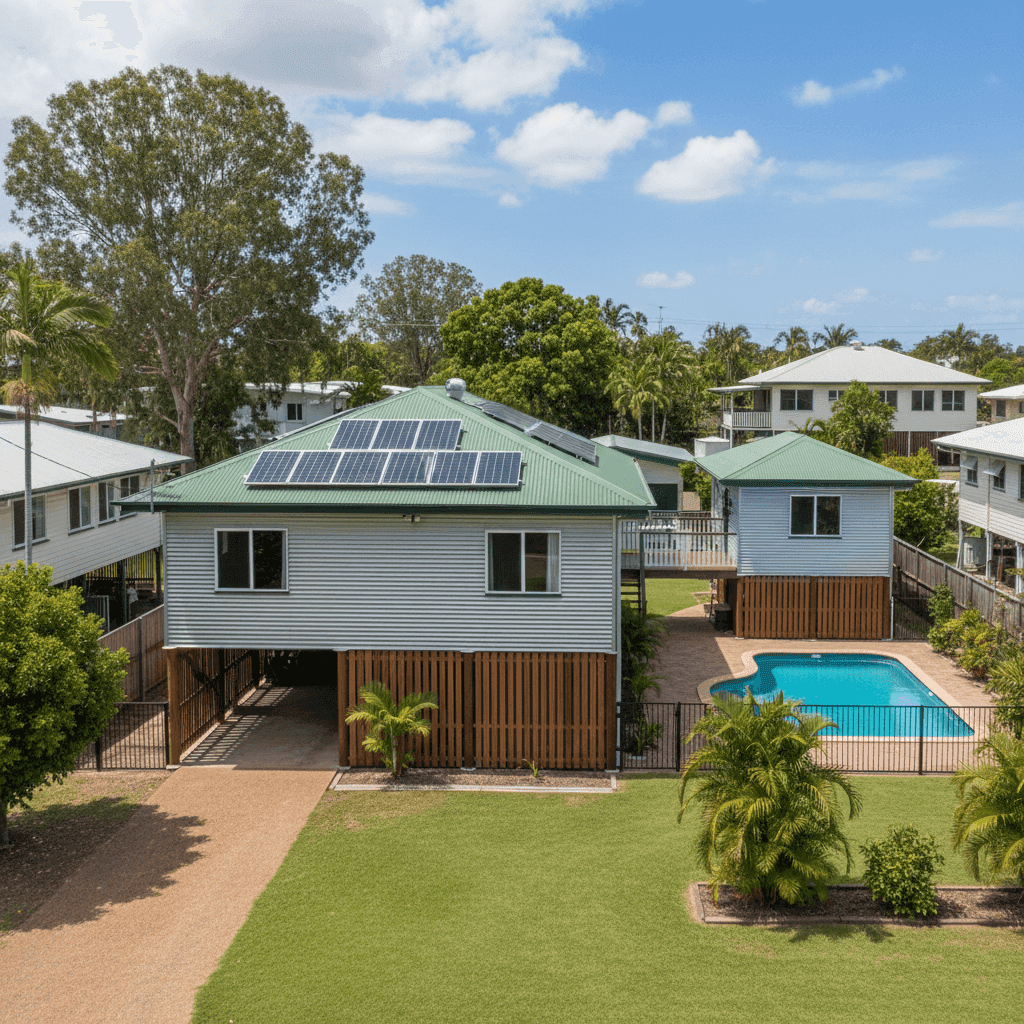
Millner is a quiet, leafy suburb sitting just a few kilometres from Darwin's CBD, popular with families who appreciate its established streetscapes and relatively affordable housing stock. Like much of the Northern Territory, insuring a home here comes with its own set of considerations — from cyclone exposure to older building stock — and premiums can vary enormously depending on the property. In this article, we analyse a real home and contents insurance quote for a four-bedroom, two-bathroom free-standing home in Millner, NT 0810, and place it in context against suburb, state, and national benchmarks.
---
Is This Quote Fair?
The annual premium for this property came in at $3,053 per year (or $293/month), covering $500,000 in building sum insured and $10,000 in contents, each with a $1,000 excess. CoverClub's pricing engine rates this quote as CHEAP — below average for the area.
That's a meaningful finding. Darwin and its surrounding suburbs are widely regarded as one of the most expensive home insurance markets in Australia, largely due to cyclone risk. A sub-$3,100 annual premium for a property of this size and age, in a cyclone-rated zone, is genuinely competitive. Homeowners who receive a quote in this range should take it seriously — it's not the norm.
That said, "cheap" doesn't automatically mean the right cover. It's worth scrutinising the policy terms, especially around cyclone and storm damage definitions, to ensure the lower price isn't a reflection of narrower coverage.
---
How Millner Compares
The price comparison data for this suburb tells a striking story. Here's how this quote stacks up:
| Benchmark | Premium |
|---|---|
| This quote | $3,053/yr |
| Suburb median (Millner) | $8,419/yr |
| Suburb 25th percentile | $7,178/yr |
| Suburb 75th percentile | $12,919/yr |
| Suburb average | $142,040/yr |
| NT state median | $3,402/yr |
| NT state average | $10,773/yr |
| LGA (Darwin) average | $15,687/yr |
| National median | $2,764/yr |
| National average | $5,347/yr |
A few things stand out immediately. The suburb average of $142,040 per year is extraordinarily high — almost certainly skewed by one or more outlier quotes in the small sample of nine properties. The median of $8,419 is a far more representative figure, and this quote sits well below it.
At $3,053, this premium is also below the NT state median of $3,402 and sits close to the national median of $2,764 — remarkable for a property in a cyclone-risk zone. Compared to the Darwin LGA average of $15,687, the saving is substantial.
You can explore more suburb-level data on the Millner insurance stats page, compare it against NT-wide figures, or view national home insurance benchmarks.
> Note: The suburb sample size is only nine quotes, so averages should be interpreted with caution. More data points would give a clearer picture of the true market range in Millner.
---
Property Features That Affect Your Premium
Several characteristics of this property have a direct bearing on what insurers charge — and in this case, some features push the price up while others may help keep it manageable.
Cyclone Risk Zone
This is the single biggest pricing factor for any Darwin-area property. Millner sits within a designated cyclone risk area, which means insurers apply significant loadings to account for the potential for severe wind, rain, and storm surge damage. Cyclone cover is typically included in standard policies in the NT, but the excess for cyclone events is often higher than the standard excess — always worth checking the Product Disclosure Statement (PDS).
Age and Construction (Built 1965)
At roughly 60 years old, this home predates modern building codes that were introduced following Cyclone Tracy in 1974. Older homes can attract higher premiums because they may not meet current cyclone-resilience standards. However, the Colorbond steel roof is a positive — it's a durable, modern roofing material that performs well in high-wind events and is viewed favourably by many insurers.
Elevated on Stumps
The property is elevated by at least one metre on stumps — a classic Darwin-era design that provides natural ventilation and some flood mitigation. Elevation can be a double-edged sword: it may reduce flood risk (a plus for insurers) but can increase vulnerability to wind uplift. The timber and laminate flooring typical of stump-set homes also carries its own replacement cost considerations.
Pool, Solar Panels, and Ducted Climate Control
These three features all add to the replacement value and complexity of the home. A swimming pool introduces liability considerations and its own repair/replacement costs. Solar panels are increasingly common in Darwin but add to the building sum insured. Ducted climate control — essentially a necessity in the Top End — is an expensive system to repair or replace and is factored into building cover.
Granny Flat
The presence of a granny flat adds additional floor space and structural complexity. Homeowners should confirm with their insurer that the granny flat is explicitly included in the building sum insured, as some policies treat ancillary structures differently.
Building Size and Sum Insured
At 130 sqm with a $500,000 sum insured, the implied rebuild cost per square metre is approximately $3,846 — on the higher end, but not unusual for Darwin given the cost of materials and labour in the NT, particularly for elevated, older homes with non-standard features.
---
Tips for Homeowners in Millner
1. Review your cyclone excess carefully Many NT policies include a separate, higher excess specifically for cyclone-related claims. This can be $2,500, $5,000, or more — quite different from the standard $1,000 excess on this policy. Read the PDS thoroughly before assuming your standard excess applies to all events.
2. Get your sum insured independently verified Underinsurance is a serious risk in Darwin. Building costs in the NT are among the highest in the country due to remoteness, labour shortages, and freight costs. Consider commissioning a professional building valuation to ensure your $500,000 sum insured genuinely reflects what it would cost to rebuild — especially given the home's age, elevation, and additional structures.
3. Check granny flat and pool coverage explicitly Don't assume your insurer automatically covers every structure on your property. Ask specifically whether the granny flat, pool, and solar system are covered under the building sum insured, and whether any sub-limits apply to items like solar panels or pool equipment.
4. Compare at renewal, every year The Darwin insurance market can shift significantly from year to year, particularly as insurers reassess cyclone risk modelling. Even if this quote is competitive today, it pays to compare at each renewal. Loyalty doesn't always equal savings in the NT.
---
Ready to Compare?
Whether you're a first-time buyer in Millner or reviewing your existing cover, comparing quotes is the single most effective way to ensure you're not overpaying. CoverClub makes it easy to see multiple options side by side, with transparent pricing data drawn from real quotes across the NT.