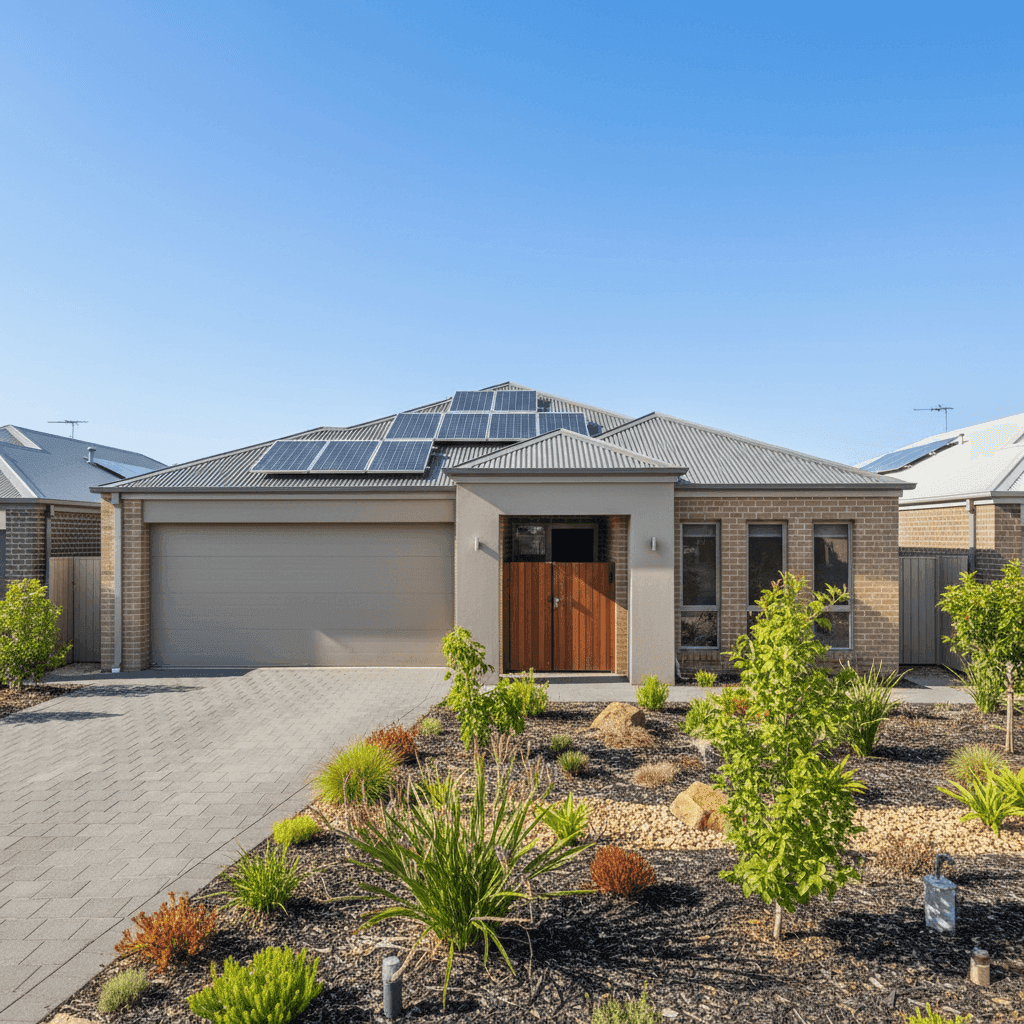
Mindarie is one of Perth's most sought-after coastal suburbs — a well-established community in the City of Wanneroo that blends beachside living with modern family homes. If you own a free standing home here, understanding what you should be paying for home and contents insurance is just as important as knowing your property's market value. This article breaks down a real insurance quote for a four-bedroom, double brick home in Mindarie, and puts the numbers in context so you can make a more informed decision at renewal time.
---
Is This Quote Fair?
The quote in question comes in at $1,461 per year (or $149/month) for combined home and contents cover, with a building sum insured of $950,000 and contents valued at $100,000. The building excess is $3,000 and the contents excess is $1,000.
Our price rating for this quote is FAIR — Around Average.
That verdict holds up well under scrutiny. The premium sits comfortably below both the suburb average ($1,695/yr) and the suburb median ($1,609/yr), meaning this homeowner is paying less than the majority of comparable properties in Mindarie. It's not a rock-bottom price — the cheapest 25% of quotes in the suburb come in under $939/yr — but those lower premiums often reflect reduced cover levels, higher excesses, or older properties with lower rebuild costs. For a modern 214 sqm home with a $950,000 building sum insured, $1,461 represents solid value.
---
How Mindarie Compares
To really appreciate this quote, it helps to zoom out and look at the broader pricing landscape.
| Benchmark | Premium |
|---|---|
| This quote | $1,461/yr |
| Mindarie suburb average | $1,695/yr |
| Mindarie suburb median | $1,609/yr |
| Mindarie 25th percentile | $939/yr |
| Mindarie 75th percentile | $2,211/yr |
| LGA (Wanneroo) average | $1,550/yr |
| WA state average | $2,811/yr |
| WA state median | $2,127/yr |
| National average | $5,347/yr |
| National median | $2,764/yr |
The numbers tell a clear story. Mindarie — and Western Australia more broadly — enjoys significantly lower home insurance premiums compared to the national average. The national average of $5,347/yr is driven up by high-risk regions in Queensland and Northern Australia, where cyclone, flood, and storm exposure can send premiums soaring. WA's relatively benign risk profile (particularly in the Perth metro corridor) keeps costs more manageable.
At $1,461/yr, this quote is 14% below the Mindarie suburb average, 6% below the LGA (Wanneroo) average, and a remarkable 48% below the WA state average. Against the national average, it's less than a third of the cost.
You can explore more local pricing data on the Mindarie suburb stats page, compare it against all of WA, or see how it stacks up against national benchmarks.
---
Property Features That Affect Your Premium
Insurance pricing isn't arbitrary — every feature of your home feeds into the risk assessment. Here's how the characteristics of this particular property influence what you pay.
Double Brick Construction
Double brick is widely regarded as one of the most durable and fire-resistant wall types available in Australia. Insurers tend to view it favourably because it's less susceptible to fire spread, wind damage, and structural failure compared to timber-framed or clad homes. This construction type is a genuine premium-lowering factor.
Tiled Roof
Terracotta or concrete tiles are a standard and well-regarded roofing choice for Perth homes. They're durable, relatively low-maintenance, and perform well in the local climate. Compared to older materials like fibro or corrugated iron in poor condition, a tiled roof signals lower risk to underwriters.
Slab Foundation
A concrete slab is the most common foundation type for homes built in WA over the past few decades, and it's generally considered low-risk from an insurance perspective. There's no underfloor cavity to trap moisture or pests, and slabs perform well in Perth's stable, clay-dominant soils.
Built in 2016
A relatively modern build date works in your favour. Homes constructed after 2010 typically comply with updated Australian building codes, including improved cyclone and wind-load standards, better waterproofing, and more fire-safe materials. Newer homes also tend to have fewer maintenance-related claims.
Solar Panels
Solar panels do introduce a small degree of additional risk — they're an electrical system installed on your roof, and damage from storms or fire can be costly to repair. Some insurers include them automatically under building cover; others may require you to confirm they're listed. It's worth checking your Product Disclosure Statement (PDS) to make sure your panels are explicitly covered.
Ducted Climate Control
Ducted air conditioning systems are a significant fixed asset and are generally covered under building insurance as a permanently installed fixture. The presence of ducted climate control contributes to the higher building sum insured, which is appropriate given the replacement cost of these systems.
Timber and Laminate Flooring
Timber and laminate floors are more susceptible to water damage than tiles, which is worth keeping in mind. Escape of liquid (burst pipes, leaking appliances) is one of the most common home insurance claims in Australia, and flooring is often a significant component of those repair costs.
---
Tips for Homeowners in Mindarie
1. Review your building sum insured annually Construction costs in Perth have risen sharply since 2020. A building sum insured of $950,000 for a 214 sqm home equates to roughly $4,439/sqm — which is on the higher end but may be appropriate given the quality of finishes and the cost of rebuilding with double brick. Use a building cost calculator each year to make sure you're not underinsured.
2. Confirm your solar panels are covered As noted above, solar panel coverage varies between insurers. Check your PDS and, if necessary, contact your insurer to confirm the panels are listed under your building cover. Some policies cover them automatically; others treat them as an optional addition.
3. Consider your excess carefully This policy carries a $3,000 building excess and a $1,000 contents excess. A higher excess typically reduces your premium, but make sure you're comfortable covering that amount out-of-pocket in the event of a claim. If $3,000 would cause financial stress, it may be worth exploring policies with a lower building excess, even if the annual premium is slightly higher.
4. Compare quotes at renewal — not just at purchase The insurance market shifts constantly. The fact that this quote is below the suburb average today doesn't mean it will remain competitive at renewal. Insurers often increase premiums for existing customers more aggressively than for new ones. Set a reminder to compare quotes at least 30 days before your renewal date.
---
Ready to Compare?
Whether you're reviewing your current policy or shopping for cover on a new property, comparing quotes is the single best way to make sure you're not overpaying. Get a home insurance quote at CoverClub and see how your premium stacks up against real data from your suburb, your LGA, and across Australia.