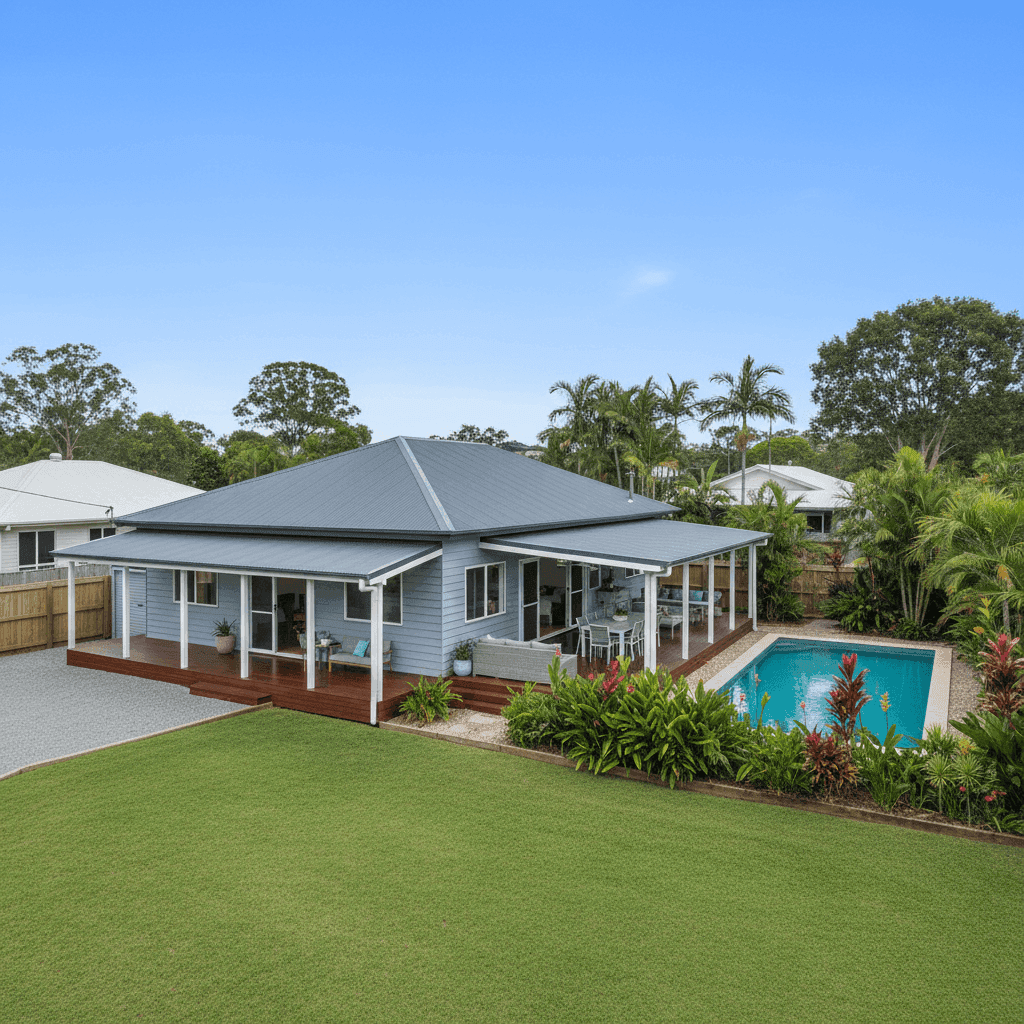
Nestled in the lush hinterland of Far North Queensland, Mirriwinni (postcode 4871) is a small rural locality that sits within one of Australia's most climatically dynamic regions. For owners of free standing homes in this area, securing the right building insurance is not just a financial decision — it's a practical necessity given the environmental risks that come with the territory. This article breaks down a real building-only insurance quote for a four-bedroom, two-bathroom weatherboard home in Mirriwinni, and puts the numbers in context so you can make a more informed decision about your own cover.
---
Is This Quote Fair?
The quote in question comes in at $3,676 per year (or $352 per month) for building-only cover on a home insured for $602,000. According to CoverClub's price rating system, this quote is rated CHEAP — meaning it sits below the average for comparable properties. That's genuinely good news for the homeowner.
To put it plainly: in a region where cyclone risk, tropical rainfall, and humidity can send premiums soaring, landing a below-average quote is no small feat. Insurers price Far North Queensland properties conservatively due to the elevated exposure to natural hazards, so a below-average result here carries more weight than it might in, say, a temperate southern suburb.
The building excess is set at $2,000, which is on the higher end of the standard range but is a common trade-off in high-risk areas — accepting a higher excess in exchange for a lower annual premium is a strategy many Far North Queensland homeowners use deliberately.
---
How Mirriwinni Compares
While there isn't enough localised data to produce a suburb-level benchmark for Mirriwinni specifically, we can draw meaningful comparisons using Queensland state data and national figures.
| Benchmark | Premium |
|---|---|
| This quote | $3,676/yr |
| QLD state average | $9,129/yr |
| QLD state median | $3,903/yr |
| National average | $5,347/yr |
| National median | $2,764/yr |
| LGA (Carpentaria) average | $5,066/yr |
A few things stand out here. The Queensland state average of $9,129 is extraordinarily high — a reflection of how heavily cyclone-prone and flood-affected properties skew the data in this state. The median of $3,903 is a more representative figure for typical Queensland homeowners, and this quote sits just below that threshold.
Compared to the national average of $5,347, this quote is about 31% cheaper. Against the LGA average for the Carpentaria region of $5,066, it's also meaningfully lower. The one benchmark where this quote sits slightly above is the national median of $2,764 — but that figure is heavily influenced by lower-risk properties in southern states, making it a less relevant comparison for a cyclone-zone property.
You can explore more localised data for this area on the Mirriwinni suburb stats page.
---
Property Features That Affect Your Premium
Several characteristics of this particular property have a direct bearing on how insurers calculate the premium. Understanding these factors helps explain both the quote result and the broader pricing landscape.
Weatherboard timber construction is one of the most significant rating factors. Timber-framed, weatherboard-clad homes are considered more vulnerable to cyclone damage and fire than brick or concrete alternatives. Insurers typically apply a loading for this wall type, particularly in tropical Queensland. That this quote still comes in below average despite a timber exterior is noteworthy.
Steel/Colorbond roofing is generally viewed more favourably than older roofing materials like terracotta tiles or fibrous cement sheeting. Colorbond is durable, lightweight, and performs reasonably well in high-wind events when properly installed and maintained — a relevant consideration in a cyclone risk area.
Cyclone risk designation is arguably the single biggest premium driver for this property. Mirriwinni falls within a recognised cyclone risk zone, and insurers factor in the statistical likelihood of wind damage, storm surge, and associated water ingress when pricing cover in this region. Cyclone-rated premiums in Far North Queensland can be multiples of what a similar home would attract in Brisbane or Sydney.
The swimming pool adds a modest but real component to the insured risk. Pools are typically included in building cover and contribute to the overall sum insured. They also introduce liability considerations, though those are more relevant to home and contents or landlord policies.
Slab foundation and tile flooring are both neutral-to-positive factors. Concrete slabs are structurally sound and less susceptible to termite damage than raised timber floors — a real concern in tropical Queensland. Tiled floors are durable and easy to remediate after water ingress events.
The 1985 construction year places this home in a bracket that insurers watch carefully. Homes built before modern cyclone building codes (which were significantly strengthened after Cyclone Tracy in 1974 and further refined through the 1980s and 1990s) may have structural characteristics that increase risk. Some insurers apply age-based loadings for homes in this era, particularly in cyclone zones.
Ducted climate control adds to the replacement cost of the building, which is reflected in the $602,000 sum insured. Ducted systems are expensive to replace and are factored into building valuations.
---
Tips for Homeowners in Mirriwinni
1. Review your sum insured annually. Construction costs in regional Queensland have risen significantly in recent years. A sum insured of $602,000 for a 235 sqm weatherboard home may be appropriate today, but it's worth revisiting each year — especially as labour and materials costs continue to shift. Underinsurance is a serious risk in the event of a total loss.
2. Understand your cyclone excess. Many insurers apply a separate, higher excess specifically for cyclone-related claims. This is distinct from the standard building excess of $2,000 noted in this quote. Read your Product Disclosure Statement (PDS) carefully to understand exactly what you'd be liable for in a cyclone event.
3. Maintain your roof and external walls. Colorbond roofs and weatherboard cladding both benefit from regular inspection and maintenance. Loose fixings, deteriorating paint, or damaged boards can not only accelerate wear but may also affect your ability to make a successful claim if an insurer determines that poor maintenance contributed to the damage.
4. Compare quotes at renewal — every year. A below-average quote today doesn't guarantee a competitive renewal premium next year. Insurers adjust their pricing models regularly, and loyalty doesn't always pay. Running a fresh comparison at renewal takes minutes and can save hundreds of dollars.
---
Ready to Compare Home Insurance in Mirriwinni?
Whether you're reviewing an existing policy or shopping for cover for the first time, CoverClub makes it easy to see how your premium stacks up. Get a quote today and compare building insurance options for your Mirriwinni property — so you can feel confident you're getting the right cover at a fair price.