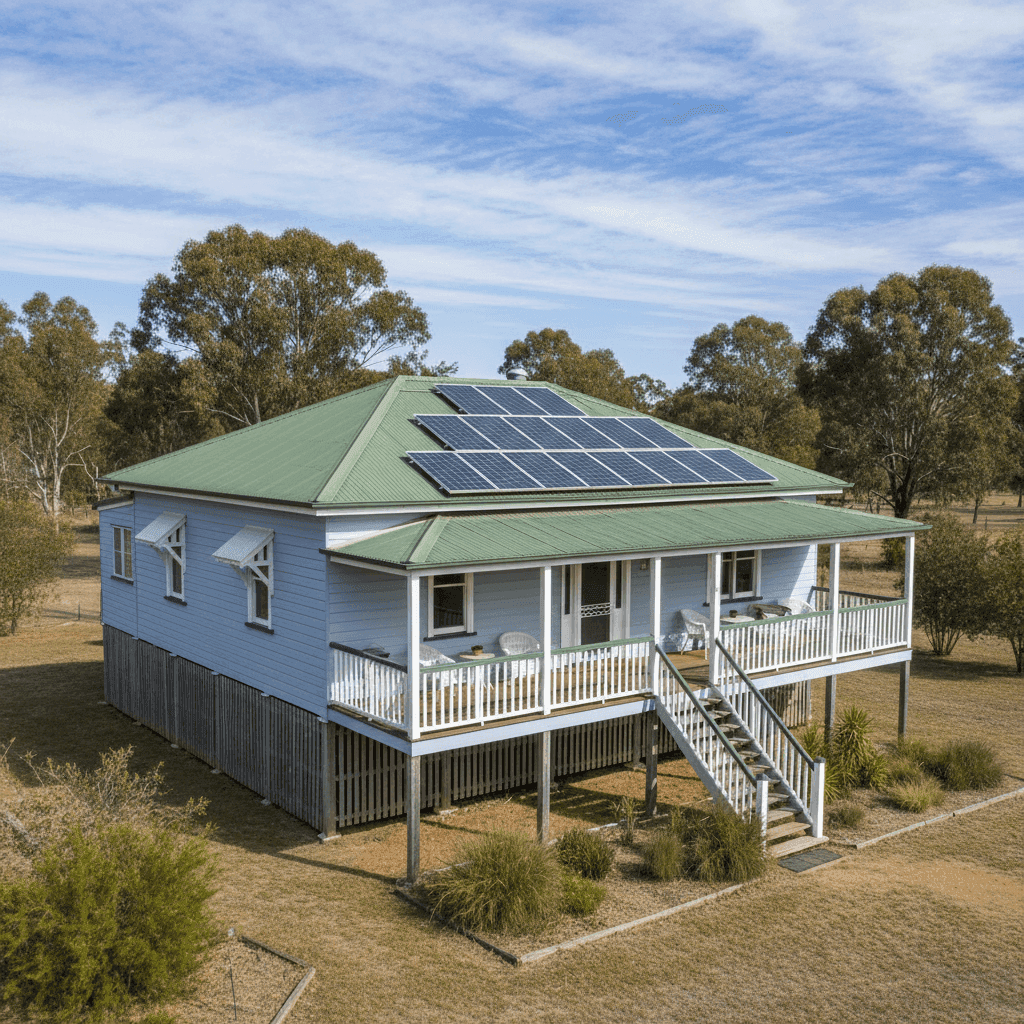
If you own a free standing home in Mitchell, QLD 4465, you already know that insuring a property in regional Queensland comes with its own set of challenges — and costs. This article breaks down a real home and contents insurance quote for a 3-bedroom, 1-bathroom weatherboard home in Mitchell, compares it against local, state, and national benchmarks, and offers practical tips to help you get better value on your cover.
---
Is This Quote Fair?
The quote in question sits at $21,390 per year (or $2,050/month) for combined home and contents cover, with a building sum insured of $500,000 and contents valued at $29,000. The building excess is $2,000, and the contents excess is $1,000.
Our price rating for this quote is EXPENSIVE — Above Average.
To put that in context: the median home insurance premium across Mitchell (postcode 4465) sits at $14,996 per year, meaning this quote is roughly 43% above the local median. The suburb average, however, is considerably higher at $37,333/yr — which tells us there's a wide spread of premiums in this area, likely driven by varying property ages, construction types, and sum insured levels.
So while this quote is above the local median, it's well below the suburb average, suggesting it's not the worst outcome — but there's still meaningful room to improve. Checking Mitchell suburb insurance stats gives you a clearer picture of where your premium sits relative to neighbours.
---
How Mitchell Compares
The numbers paint a striking picture of just how expensive home insurance can be in rural Queensland compared to the rest of the country.
| Benchmark | Annual Premium |
|---|---|
| This Quote | $21,390 |
| Mitchell Suburb Median | $14,996 |
| Mitchell Suburb Average | $37,333 |
| Maranoa LGA Average | $24,979 |
| QLD State Average | $9,129 |
| QLD State Median | $3,903 |
| National Average | $5,347 |
| National Median | $2,764 |
This quote is nearly 4× the national median and more than double the Queensland state average. That's a significant gap — but it reflects the realities of insuring older, elevated properties in remote regional areas where insurers price in higher risk and limited competition.
The QLD state insurance data shows that premiums across Queensland vary enormously, with coastal and remote inland areas consistently attracting higher rates than south-east Queensland suburbs. Nationally, home insurance benchmarks confirm that metro and coastal areas enjoy far more competitive pricing than properties in regional Queensland.
With only 33 quotes in the suburb sample, Mitchell is a relatively thin market — which itself can mean less insurer competition and higher baseline pricing.
---
Property Features That Affect Your Premium
Several characteristics of this property directly influence what insurers charge. Understanding them can help you have more informed conversations with insurers.
Weatherboard Timber Construction
Weatherboard wood external walls are one of the most significant premium drivers for older Australian homes. Timber is considered higher risk than brick or rendered masonry due to its susceptibility to fire, termite damage, and general wear. Insurers typically apply a loading to timber-framed and clad homes, particularly those built before modern building codes.
Construction Year: 1949
At over 75 years old, this home predates many of the structural and fire-safety standards that modern buildings must meet. Older homes often have outdated wiring, plumbing, and structural elements that can increase the likelihood and cost of a claim. This is a meaningful factor in how insurers assess risk.
Elevated on Stumps
Being elevated by at least one metre on stumps is a classic feature of Queensland vernacular architecture — and it can actually work in your favour when it comes to flood risk. Elevated homes are less vulnerable to inundation from surface water and minor flooding events, which may offset some premium loading in flood-prone areas. That said, stumped foundations can also introduce additional risks around subfloor access and structural movement.
Steel / Colorbond Roof
A Colorbond steel roof is generally viewed favourably by insurers. It's durable, fire-resistant, and low-maintenance compared to older tile or fibrous cement roofing. This is likely a modest positive factor in the premium calculation.
Solar Panels
The presence of solar panels adds replacement value to the building and introduces some additional risk (electrical faults, storm damage). Ensure your sum insured accounts for the full replacement cost of your solar system — many homeowners underestimate this.
Ducted Climate Control
Ducted air conditioning systems are a significant asset and add to the overall replacement cost of the home. They also introduce mechanical failure risk. Check that your policy covers breakdown or damage to these systems under the appropriate section of your cover.
No Pool, No Cyclone Risk Zone
The absence of a pool removes a common liability and structural risk factor. Being outside a designated cyclone risk area is also a meaningful premium relief — cyclone-rated properties in northern Queensland can attract substantially higher premiums.
---
Tips for Homeowners in Mitchell
1. Shop the Market Actively
With only 33 quotes in the local sample and a wide spread between the 25th percentile ($11,886/yr) and the 75th percentile ($16,830/yr), there's clearly significant variation between what different insurers charge for similar properties in Mitchell. Don't accept a renewal without comparing — get a quote at CoverClub to see what's available.
2. Review Your Sum Insured Carefully
A $500,000 building sum insured is substantial for a 130 sqm home in Mitchell. While it's always better to be adequately covered than underinsured, overinsuring your building means you're paying premiums on value you may never recover. Consider getting a professional building replacement cost estimate to ensure your sum insured is accurate — not just a round number.
3. Consider Adjusting Your Excess
Raising your excess from $2,000 to a higher level (where financially comfortable) can meaningfully reduce your annual premium. In a market where premiums are already elevated, a higher voluntary excess can be a practical lever — particularly if you wouldn't make small claims anyway due to the impact on future premiums.
4. Document and Protect Your Timber Exterior
Because weatherboard construction is a known premium driver, taking proactive steps to maintain and protect your timber cladding — regular painting, treating for termites, repairing any damaged boards — not only protects the property but demonstrates good maintenance to insurers. Some insurers may also look more favourably on homes with documented maintenance records.
---
Compare Your Options with CoverClub
Home insurance in Mitchell is undeniably more expensive than the national norm, but that doesn't mean you have to overpay. The difference between the 25th and 75th percentile premiums in this suburb is nearly $5,000 per year — proof that the insurer you choose matters enormously.
CoverClub makes it easy to compare home and contents insurance quotes for properties across regional Queensland. Whether you're reviewing your current policy or insuring for the first time, start your comparison at CoverClub and make sure you're getting the right cover at the right price.