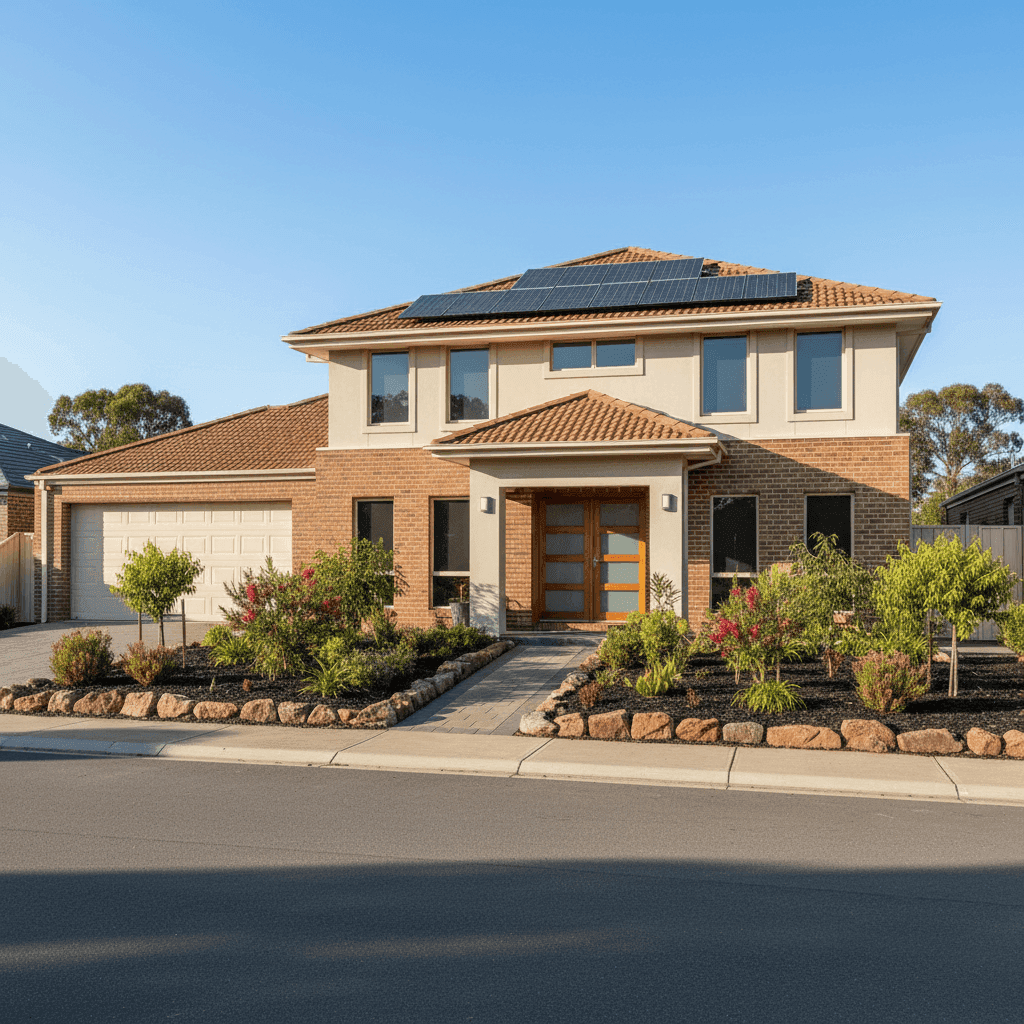
Moama is one of those quintessentially Australian border towns — sitting on the Murray River in southern New South Wales, it attracts families, retirees, and holiday-home owners alike. If you own a free standing home here, you already know the lifestyle appeal. But what does it actually cost to insure a sizeable property in this part of NSW — and is the quote you've received giving you fair value? Let's break it down.
---
Is This Quote Fair?
The quote in question covers a 5-bedroom, 3-bathroom free standing home in Moama (NSW 2731), built in 2017 on a slab foundation with brick veneer walls and a tiled roof. The policy is Home and Contents, with a building sum insured of $893,000, contents cover of $100,000, and both building and contents excesses set at $1,000.
The annual premium comes in at $4,435 per year (or $418/month).
Our rating for this quote is Expensive (Above Average) — and the data backs that up. Based on 41 quotes collected for the Moama area, the suburb median premium sits at $2,534/year, meaning this quote is paying roughly 75% more than the typical Moama homeowner. Even the 75th percentile — the point at which only one in four quotes is more expensive — sits at $3,849/year, still well below this figure.
That said, context matters. This is a large, well-appointed home with a high building sum insured of $893,000 and a relatively recent construction year. Larger homes with higher replacement values will always attract higher premiums, so a direct comparison to the suburb median isn't entirely apples-to-apples. Still, it's worth shopping around to ensure the price reflects the property — not just the postcode.
---
How Moama Compares
To understand whether this quote is out of step with broader benchmarks, it helps to look at the numbers side by side:
| Benchmark | Premium |
|---|---|
| This Quote | $4,435/yr |
| Moama Suburb Average | $4,411/yr |
| Moama Suburb Median | $2,534/yr |
| NSW State Average | $3,801/yr |
| NSW State Median | $3,410/yr |
| National Average | $2,965/yr |
| National Median | $2,716/yr |
Interestingly, this quote is almost exactly in line with the suburb average of $4,411/year — which suggests that higher-value properties in Moama do tend to attract premiums in this range. However, the wide gap between the suburb average and median (nearly $1,900) tells us there's significant variation in the local market. Many Moama homeowners are paying considerably less, likely because they hold smaller homes or lower sums insured.
Compared to NSW state averages, this quote sits about 17% above the state average premium and nearly 30% above the state median. Against national benchmarks, the gap is even larger — roughly 50% above the national average.
One figure that stands out is the Murray River LGA average of $24,396/year — an extraordinarily high figure that likely reflects a small number of very high-value rural and agricultural properties skewing the dataset. This is a good reminder that LGA-level data can be misleading; suburb-level comparisons are far more meaningful for residential homeowners. You can explore Moama-specific insurance data on our stats page.
---
Property Features That Affect Your Premium
Several characteristics of this property directly influence the cost of cover. Here's how they play out:
Brick Veneer Walls & Tiled Roof Brick veneer with a tiled roof is one of the most common construction types in NSW and is generally viewed favourably by insurers. It's considered durable and fire-resistant, which can help moderate premiums compared to more combustible materials like timber cladding or Colorbond in certain risk areas.
2017 Construction A relatively modern build year is a genuine advantage. Newer homes are built to more recent Australian Standards, with better electrical systems, plumbing, and structural integrity. Insurers tend to price this risk lower than older homes that may have ageing infrastructure or non-compliant wiring.
286 sqm Floor Area & High Sum Insured At 286 square metres across five bedrooms and three bathrooms, this is a substantial home. The $893,000 building sum insured reflects the true replacement cost — and that figure is the single biggest driver of the premium. Larger homes simply cost more to rebuild, and the insurance premium scales accordingly.
Solar Panels The property has solar panels installed, which adds a modest layer of complexity for insurers. Panels are typically covered under the building policy, but they do represent an additional asset to insure — both for replacement value and for any liability risk associated with installation or malfunction.
Ducted Climate Control Ducted air conditioning is a meaningful inclusion in the building sum insured. These systems can cost tens of thousands of dollars to replace, and ensuring they're adequately captured in your sum insured is important to avoid being underinsured.
Slab Foundation A concrete slab is a solid, low-maintenance foundation type that is standard in modern NSW construction. It generally doesn't attract any premium loading compared to more complex foundation types.
No Pool The absence of a swimming pool removes one source of potential liability and maintenance risk, which can be a minor premium-reducing factor with some insurers.
---
Tips for Homeowners in Moama
1. Review Your Sum Insured Annually Building costs have risen significantly across Australia in recent years. The $893,000 sum insured on this property is substantial, but it's worth verifying it reflects current construction costs in regional NSW — not just the original estimate. Underinsurance is one of the most common and costly mistakes homeowners make.
2. Compare at Least Three Quotes The spread between the suburb's 25th percentile ($1,690/yr) and this quote ($4,435/yr) is enormous. While much of that gap is explained by property size and sum insured, it's still worth getting multiple quotes to ensure you're not overpaying for the same level of cover. Use CoverClub to compare quotes side by side.
3. Check That Solar Panels Are Explicitly Covered Not all policies automatically extend to solar panel systems, or they may apply sub-limits. Confirm with your insurer that your panels — including inverters and mounting hardware — are fully covered under your building policy, and that the replacement value is factored into your sum insured.
4. Consider Your Excess Strategically Both the building and contents excess on this policy are set at $1,000. Opting for a higher voluntary excess (say, $2,000 or $2,500) can meaningfully reduce your annual premium. If you have a solid emergency fund and are unlikely to make small claims, this trade-off often makes financial sense.
---
Ready to See If You Can Do Better?
Whether you're renewing your policy or insuring a new purchase, it always pays to compare. CoverClub makes it easy to get home and contents quotes tailored to your property in Moama — so you can see exactly where your current premium sits and whether there's a better deal available.