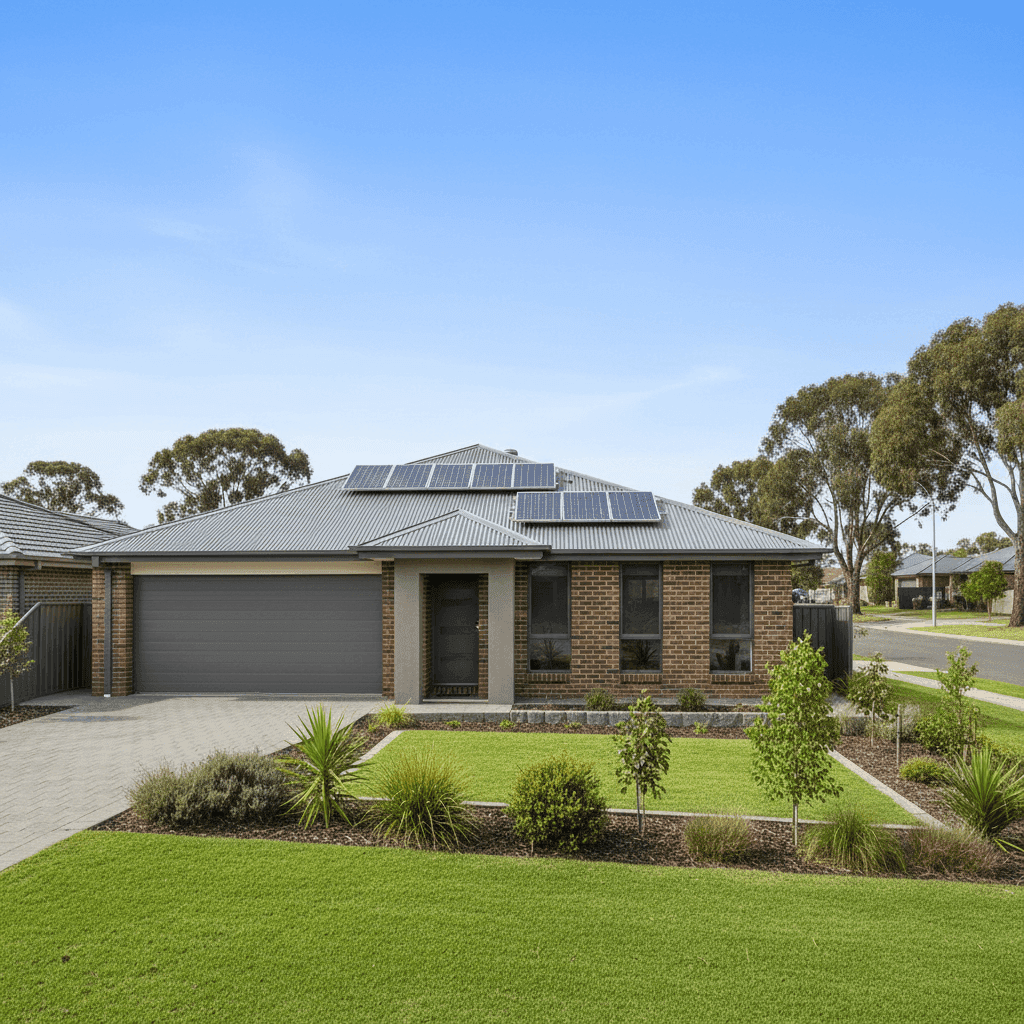
If you own a free standing home in Moe, VIC 3825, you've probably noticed that home insurance premiums can vary enormously — even between neighbouring streets. This article breaks down a real home and contents insurance quote for a four-bedroom brick veneer property in Moe, compares it against local, state, and national benchmarks, and offers practical guidance for homeowners looking to get better value from their cover.
---
Is This Quote Fair?
The quote in question comes in at $4,094 per year (or roughly $405 per month) for combined home and contents insurance, covering a building sum insured of $802,000 and contents valued at $201,000. The building excess is $3,000, with a separate $1,000 excess applying to contents claims.
Our price rating for this quote is Expensive — Above Average.
To put that in perspective, the suburb average for home and contents insurance in Moe sits at $3,181 per year, and the median is even lower at $2,854 per year. That means this particular quote is running about $913 above the suburb average and nearly $1,240 above the suburb median. It also sits above the 75th percentile for the area ($3,946/yr), meaning fewer than one in four quotes in Moe come in this high.
That said, the relatively high sum insured — $802,000 for the building alone — is a significant driver of the premium. Larger insured values naturally attract higher premiums, and it's worth checking whether that figure accurately reflects the rebuild cost of your home (not the market value). Overcooking your sum insured is a common and costly mistake.
---
How Moe Compares
Understanding where Moe sits in the broader insurance landscape helps frame whether a quote is genuinely expensive or simply reflective of local risk factors.
| Benchmark | Average Premium | Median Premium |
|---|---|---|
| Moe (3825) | $3,181/yr | $2,854/yr |
| Victoria (VIC) | $2,921/yr | $2,694/yr |
| National | $2,965/yr | $2,716/yr |
| Wellington LGA | $4,409/yr | — |
A few things stand out here. First, Moe's suburb average ($3,181) is already above both the Victorian state average ($2,921) and the national average ($2,965) — suggesting that insurers price this area at a modest premium compared to the broader market. You can explore the full breakdown on the Moe suburb stats page, or compare it against all Victorian suburbs and the national picture.
Perhaps most striking is the Wellington LGA average of $4,409 per year — considerably higher than both the suburb and state figures. This suggests that while Moe itself sits at a moderate risk level within the region, the broader Wellington local government area contains properties that attract significantly higher premiums, likely due to a mix of bushfire exposure, flood risk, and remoteness factors affecting surrounding towns.
With a sample of 48 quotes underpinning the Moe suburb data, these averages are reasonably reliable — though individual circumstances will always cause premiums to vary.
---
Property Features That Affect Your Premium
Several characteristics of this particular property will be influencing what insurers charge. Here's how each one plays out:
Brick Veneer Walls Brick veneer is generally viewed favourably by insurers. It offers solid fire resistance and structural durability compared to timber weatherboard, which can translate into more competitive premiums. This is a tick in the right column.
Steel / Colorbond Roof Colorbond roofing is another positive signal for insurers. It's durable, low-maintenance, and performs well in both high-wind and bushfire-adjacent conditions. Older terracotta or concrete tile roofs often attract higher premiums due to replacement costs and vulnerability to storm damage.
Slab Foundation A concrete slab foundation is standard and well-regarded. It carries less risk of subsidence or pest-related structural damage compared to raised timber stumps, and most insurers treat it as a neutral-to-positive factor.
Solar Panels Solar panels are an increasingly common feature, and this property has them. Importantly, solar panels installed on the roof are generally covered under the building component of a home and contents policy — but it's worth confirming this with your insurer, as some policies treat them differently or apply sub-limits.
Slightly Elevated (Less Than 1m) The property is noted as being elevated by less than one metre. This minor elevation can offer a small degree of protection against surface water flooding, though it's unlikely to dramatically shift the premium on its own.
Construction Year: 1995 A home built in 1995 is now approaching 30 years old. While this isn't particularly old in insurance terms, it does mean some systems (electrical, plumbing, roofing) may be nearing the end of their typical service life. Insurers factor in age when assessing risk, and some may apply age-related conditions or exclusions to older properties.
No Pool, No Ducted Climate Control The absence of a pool removes a common liability risk, while the lack of ducted climate control means one fewer major mechanical system to insure. Both contribute to keeping the premium lower than it might otherwise be.
---
Tips for Homeowners in Moe
1. Review Your Building Sum Insured The $802,000 building sum insured is the single biggest lever on this premium. Make sure this figure reflects the actual cost to rebuild your home from scratch — including demolition, professional fees, and current construction costs — rather than its market sale price. Tools like the Cordell Sum Sure Calculator can help you arrive at a more accurate figure. Underinsurance is a real risk, but so is paying for cover you don't need.
2. Compare Multiple Quotes Before Renewing Insurers price risk differently, and the gap between the cheapest and most expensive quotes in Moe spans thousands of dollars per year. Don't simply accept your renewal notice — compare quotes at CoverClub to see what the broader market is offering for your specific property.
3. Consider Your Excess Strategy This policy carries a $3,000 building excess. A higher excess typically reduces your annual premium, but make sure you can comfortably cover that amount out of pocket if you need to make a claim. If cash flow is a concern, a lower excess with a slightly higher premium may make more sense for your situation.
4. Confirm Solar Panel Cover With solar panels on the roof, it's worth calling your insurer directly to confirm exactly how they're covered — what the sub-limit is (if any), whether damage during storms is included, and whether inverter failure is covered. Don't assume — get it in writing.
---
Ready to Find a Better Deal?
Whether you're renewing your policy or shopping around for the first time, comparing quotes is the single most effective way to ensure you're not overpaying. CoverClub makes it easy to see what multiple insurers would charge for your specific home in Moe. Get a quote today and find out where your premium really sits — you might be surprised by the difference.