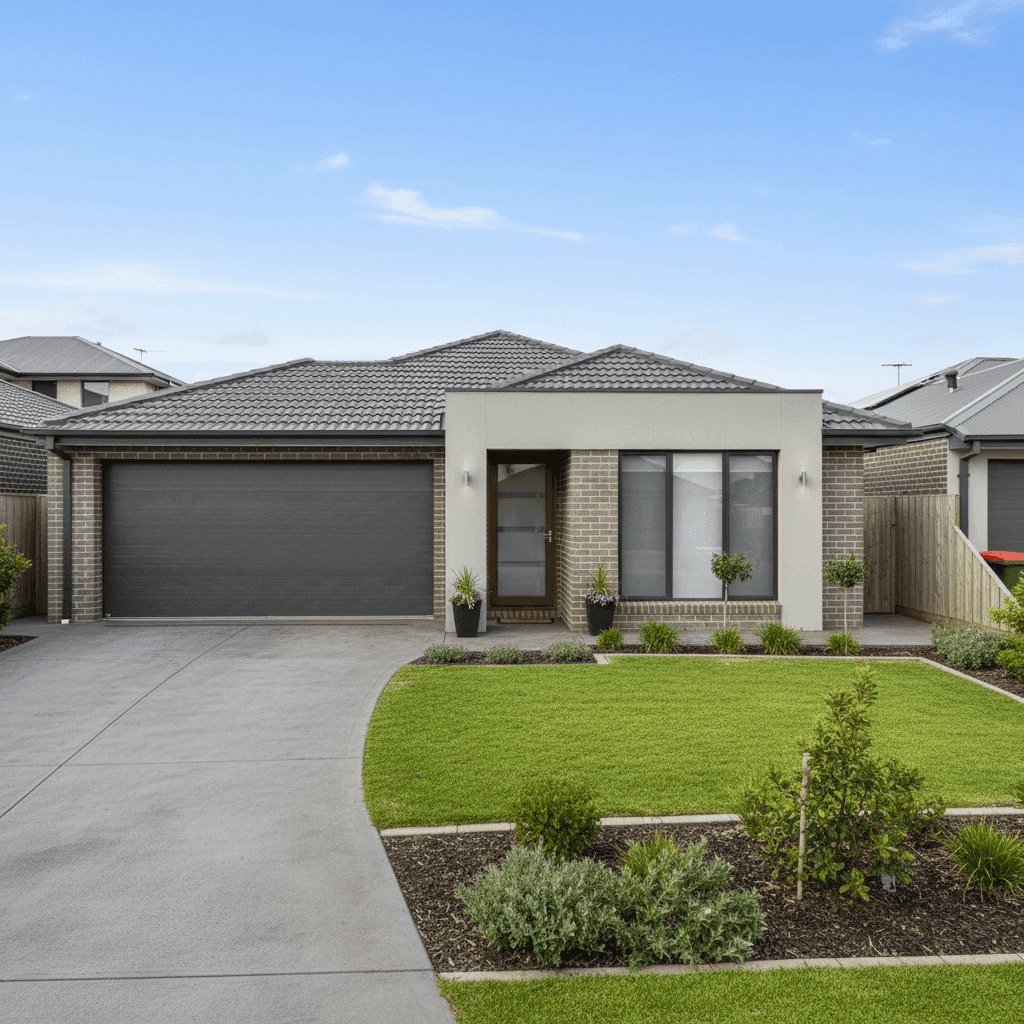
If you own a free standing home in Moncrieff, ACT 2914, you've probably wondered whether you're paying a fair price for your home insurance — or leaving money on the table. This article breaks down a real building insurance quote for a four-bedroom, two-bathroom brick veneer home in Moncrieff, compares it against local, state, and national benchmarks, and offers practical tips to help you get the best value cover.
---
Is This Quote Fair?
The quote in question comes in at $741 per year (or around $69 per month) for building-only cover on a free standing home with a sum insured of $351,000. Our price rating for this quote is CHEAP — below average — which is excellent news for the homeowner.
To put that in perspective: the average home insurance premium across the ACT sits at $2,203 per year, with a state median of $2,112. Nationally, Australian homeowners pay an average of $2,965 per year, with a median of $2,716. This quote is a fraction of those figures — roughly 66% below the ACT average and 75% below the national average.
Of course, it's worth noting that this is a building-only policy, meaning contents are not covered. Homeowners who also want protection for their furniture, appliances, and personal belongings would need to add a contents component, which would increase the total premium. That said, even with contents added, there's a strong chance this property would remain competitively priced relative to state and national norms.
The $4,000 building excess is on the higher side, which is one lever insurers use to reduce the annual premium. Choosing a higher excess means you agree to cover more out-of-pocket in the event of a claim — in exchange for lower ongoing costs. For homeowners who are confident in the structural integrity of a relatively new home (built in 2018), this trade-off can make good financial sense.
---
How Moncrieff Compares
While suburb-level data for Moncrieff isn't available in our current dataset, we can draw meaningful comparisons using broader benchmarks. Check out the Moncrieff suburb stats page as more data becomes available, and explore the ACT state overview for a broader picture of how Canberra-region homeowners are faring.
| Benchmark | Annual Premium |
|---|---|
| This Quote | $741 |
| ACT Average | $2,203 |
| ACT Median | $2,112 |
| LGA (Unincorporated ACT) Average | $2,352 |
| National Average | $2,965 |
| National Median | $2,716 |
The LGA average for Unincorporated ACT — which encompasses much of the broader Canberra region — sits at $2,352 per year, further reinforcing how competitive this quote is. You can explore national home insurance statistics to see how the ACT stacks up against other states and territories.
Moncrieff is a relatively new suburb in the Gungahlin district of Canberra, characterised by modern housing stock, well-maintained streetscapes, and low bushfire risk compared to many other ACT localities. These factors generally contribute to more favourable insurance pricing.
---
Property Features That Affect Your Premium
Several characteristics of this particular property work in the homeowner's favour when it comes to insurance pricing:
Construction year (2018): Newer homes are built to modern Australian Standards, incorporating updated fire, structural, and waterproofing requirements. Insurers typically view post-2010 construction as lower risk, which can translate to meaningfully lower premiums.
Brick veneer external walls: Brick veneer is one of the most common and well-regarded wall materials in Australian suburban construction. It offers solid fire resistance and durability, which insurers tend to reward with more competitive pricing compared to timber-framed or clad exteriors.
Tiled roof: Concrete or terracotta tiles are considered a low-risk roofing material. They're durable, fire-resistant, and less susceptible to storm damage than some alternatives like Colorbond sheeting in hail-prone areas — though tiles can crack under significant hail impact.
Slab foundation: A concrete slab is a stable and common foundation type in the ACT. It reduces the risk of subsidence-related claims and is straightforward for insurers to assess.
No pool or solar panels: Both swimming pools and solar panel systems can add complexity (and cost) to a home insurance policy. The absence of these features simplifies the risk profile.
Ducted climate control: While ducted HVAC systems are a valuable inclusion in the home, they are a mechanical system that can be costly to repair or replace. Insurers factor this into the sum insured calculation, so it's important to ensure your building sum insured adequately reflects the replacement cost of installed systems like these.
No cyclone risk: The ACT is not a designated cyclone risk area, which removes a significant premium loading that homeowners in Queensland or northern Western Australia routinely face.
---
Tips for Homeowners in Moncrieff
1. Review your sum insured regularly Your home was built in 2018 and construction costs have risen significantly since then. The $351,000 sum insured should reflect the full cost of rebuilding your home from scratch — including labour, materials, demolition, and professional fees. Use a building cost calculator or consult a quantity surveyor to verify this figure is still accurate, especially given recent inflation in the construction sector.
2. Consider adding contents cover A building-only policy protects the structure of your home but leaves your possessions uninsured. If a fire, storm, or break-in were to damage or destroy your furniture, electronics, and valuables, you'd be covering those losses out of pocket. Get a combined building and contents quote to see whether the additional premium is worthwhile for your situation.
3. Assess whether your excess is right for you The $4,000 building excess on this policy is relatively high. While it's contributed to a lower annual premium, make sure you could comfortably cover that amount if you needed to make a claim. If your financial buffer is limited, it may be worth comparing quotes with a lower excess — the premium difference might be less than you expect.
4. Shop around at renewal time Even if you're happy with your current insurer, it pays to compare quotes each year. Insurance pricing can shift significantly between renewal periods, and loyalty doesn't always translate to the best deal. Use a comparison platform to benchmark your renewal quote before automatically accepting it.
---
Compare Home Insurance Quotes in Moncrieff
Whether you're a first-time buyer in Gungahlin or a long-term Moncrieff resident reviewing your existing cover, comparing quotes is the single most effective way to ensure you're not overpaying. At CoverClub, we make it easy to see how your premium stacks up — and to find better value if it doesn't. Get a home insurance quote today and see what you could be saving.